
41% of American Kids Think Bacon Comes from Plants, Study Says

In Light of Cop26, It’s More Important Than Ever to Know Where Our Food Comes From. but a New Study Has Revealed That American Children Have a Bit of Confusion...
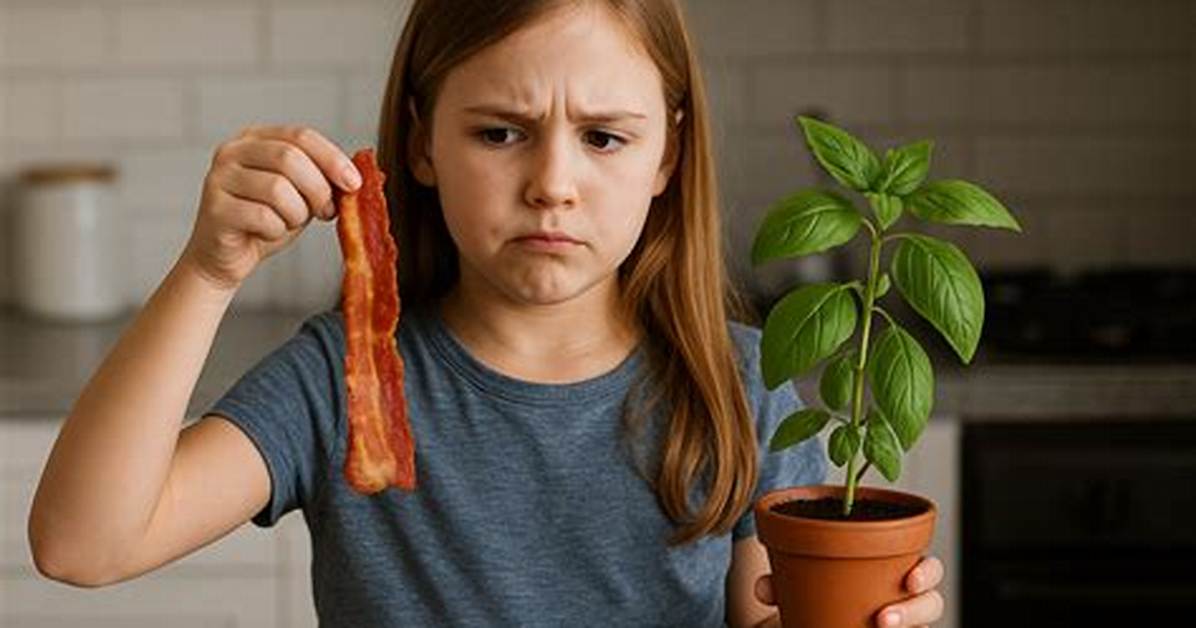
In light of COP26, it’s more important than ever to know where our food comes from. But a new study has revealed that American children have a bit of confusion over where their meat comes from.
A large percentage are apparently under the impression meat products like bacon and hamburgers come from plants.1 The study gave further insight into where this confusion might have come from, and the different ways children morally value animal life compared to adults.
The study
This study was carried out on 176 American children aging from 4-7 years old and looked at children's knowledge of the origins of common foods and their moral judgements on killing animals using two sorting tasks.
The first task showed the children pictures of different foods, including almonds, French fries, hamburgers, bacon and popcorn. They then had to sort the pictures into boxes labelled as animal and plant depending on where they believed it came from. The researchers did leave some room for minor errors given how young the children were, for example if the children marked hotdogs as coming from sausage, they were considered correct.
The second task involved showing the kids more pictures of plants and animals and asked them to sort the pictures into boxes depending on whether they thought it was ok to eat them or not.
The results
About 36% of children thought that hamburgers came from plants, and 41% thought bacon had similar leafy origins. Even chicken nuggets (where the clue is in the name) were categorised as plant-based by over a third of the subjects.
French fries were the biggest miss for this sample of kids tough, with almost 47% of children categorizing them as animal-based. Popcorn and almonds were also frequently missed by the kids, with more than 30% identifying each of them incorrectly.
Children in this study also reported to value animals on a higher moral level than adults.
Following the second task, researchers were able to identify the children, especially at younger ages, assumed animals were not eaten. And 85% of their errors in the second task were the times where children had sorted foods as not ok to eat incorrectly.
The majority of young children presented mammals as not ok to eat, with mammals in general being the highest that they put in this category. Whereas the majority thought of fish as OK to eat.
Sophia analyzes international trade, startup ecosystems, retail transformation, and supply chain logistics for modern digital publications.
