
90Hz vs 60Hz Display Refresh Rate Revisited: Can People Tell the Difference This Time?

Reviewers Often Rave About the Smoothness of 90Hz Displays and How They Can’t Go Back to Using a Phone with a Standard 60Hz Screen. Phone Manufacturers Also...
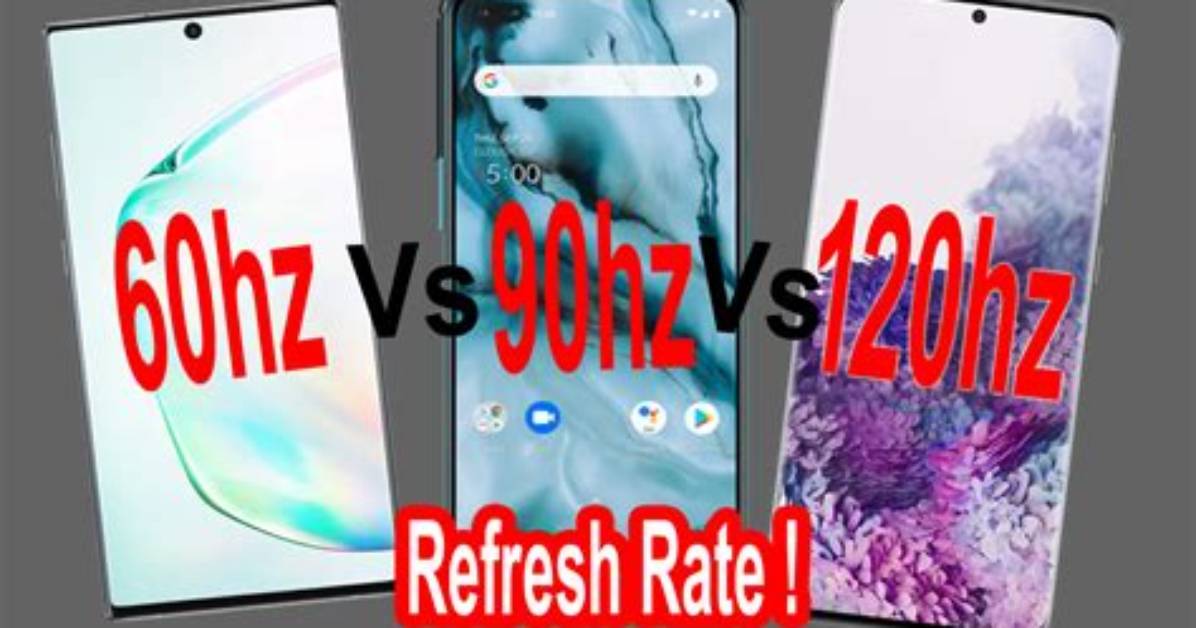
What is a 90Hz refresh rate exactly? Well, in short, the display's refresh rate is the number of times the picture on it is updated. This happens 60 times per second on a 60Hz display, 90 times per second on a 90Hz one, and so on. When there's movement, a 90Hz screen can display 30 more "steps" as objects move across your display, making the motion look more pleasing for the eye. But is the difference really so stark?
Back in July, we did our own 60Hz vs 90Hz display test, but while the results were interesting, they weren't conclusive as we only had one phone with a 90Hz display. Now that we have a bunch, we decided to redo the test using the OnePlus 7 Pro and the 7T Pro which have identical OLED displays, with the same resolution and diagonal size. We made sure to have the same color mode and brightness setting on both to make the screens appear identical. Then we set one to 90Hz and the other to 60Hz and went on to find some test subjects.
60Hz vs 90Hz: Confused average users edition
We handed the two phones side by side to 15 people with a Gmail inbox opened on both, where one could scroll up and down to their heart's desire. Then we told the participant to play with the phones without navigating to different pages. After that, we asked them to tell us if they could see any differences between the two displays. If they did, we asked what they were.
Getting a definitive answer during our 90Hz vs 60Hz test proved to be harder than expected. Because we couldn't say exactly which aspect of the displays we wanted people to compare, they interacted with the devices suspiciously. From comparing viewing angles to checking if the curvature of the edges was the same, it was clear that nothing struck them as different right off the bat.
Must Read
11 people didn’t notice any difference in smoothness. 3 people said one looked smoother and picked the one set to 90Hz. 1 person said one looked smoother and picked the one set to 60Hz... for some reason.
Granted, the participants were limited in what they could do and how much time they had to experience the displays, but at the same time, having two almost identical displays side by side is when it should be the easiest to see the difference.
Robert Thorne covers electric vehicle innovations, autonomous driving systems, global mobility trends, and automotive engineering developments.
