
An Introduction to Apache Yarn

Apache Yarn 101 Here We Describe Apache Yarn, Which Is a Resource Manager Built into Hadoop. but It Also Is a Stand-Alone Programming Framework That Other...
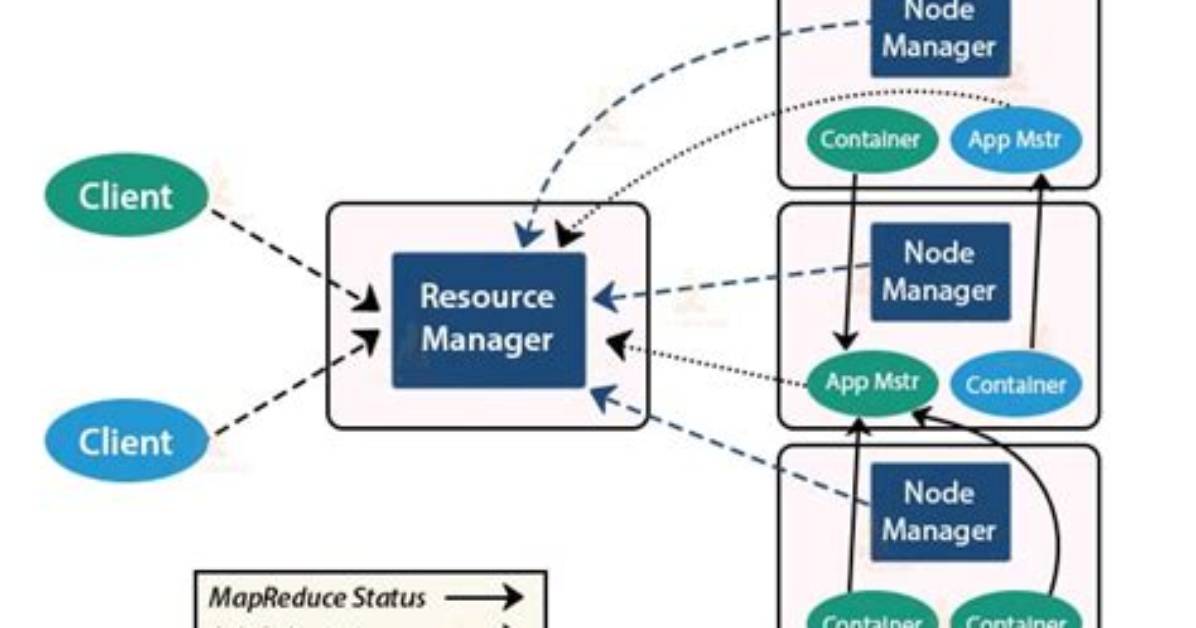
Apache Yarn 101
Here we describe Apache Yarn, which is a resource manager built into Hadoop. But it also is a stand-alone programming framework that other applications can use to run those applications across a distributed architecture.
We illustrate Yarn by setting up a Hadoop cluster as Yarn by itself is not much to see. It is not something you work with from the command line except under special circumstances. But getting it to work across a distributed cluster is an exercise meant to illustrate what it does. When you set up Hadoop on a single machine you are not using Yarn as it was meant to be used. This is because Yarn helps colocate services rather than partition them. That means it reduces the number of servers an organization needs by fully utilizing each one instead of setting aside a single server or servers to run a specific task.
Apache Yarn (Yet Another Resource Negotiator) is the result of the rewrite of Hadoop by Yahoo to separate resource management from job scheduling. Not only does this improve Hadoop, it means Yarn is a standalone component that you can use with other software, like Apache Spark, or you can write your own application using Yarn, thus making your application run across a distributed architecture.
Yarn does basically the same thing as Mesos. What it does is keep track of available resources (memory, CPU, storage) across the cluster (meaning the machines where Hadoop is running). Then each application (e.g., Hadoop) asks the resource manager what resources are available and doles those out accordingly. It runs two daemons to do this: Scheduler and ApplicationsManager.
Yarn uses Linux cgroups to control tasks and keep them within their allocation resource. Linux cgroups are similar to Docker and Mesos containers. The goal is to keep the task with its allocated memory, CPU, network, and storage usage, although with Hadoop 2.7 this is limited to limiting CPU.
Yarn is a framework, meaning an API. In terms of the graphic below, we see the Node Manager querying the Resource Manager to execute and then monitor the MapReduce tasks.
To review Hadoop, it is a distributed file system (HDFS) meaning you can use it to copy files there across a distributed architecture. But it also runs MapReduce jobs for analytics.That means it takes an input file and maps it (i.e., run an operation across every data element in the set) and then reduce, which collapses all of that into one single value or (key->value) pairs grouped by key or tuples (a,b,c). So it needs something like Yarn to coordinate all of that.
(This article is part of our Hadoop Guide. Use the right-hand menu to navigate.)
Yarn-site.xml
In Hadoop, the Yarn config file is located in
$HADOOP_HOME/etc/hadoop/yarn-site.xml.
So are the Hadoop config files.
The default Yarn configuration has only this one property which is all you need for a basic test.
  yarn.nodemanager.aux-services
mapreduce_shuffle
Whatever you put here overrides the Yarn defaults.
James Sterling reports on renewable energy developments, climate policy, ecological conservation, and green tech innovations around the globe.
