
Bluesound Node Review

Bluesound Has Opted for Less Is More in the Naming of Its Third-Generation Music Streamer, Returning to the Original ‘Node’ Moniker After Its Second-Gen Model...
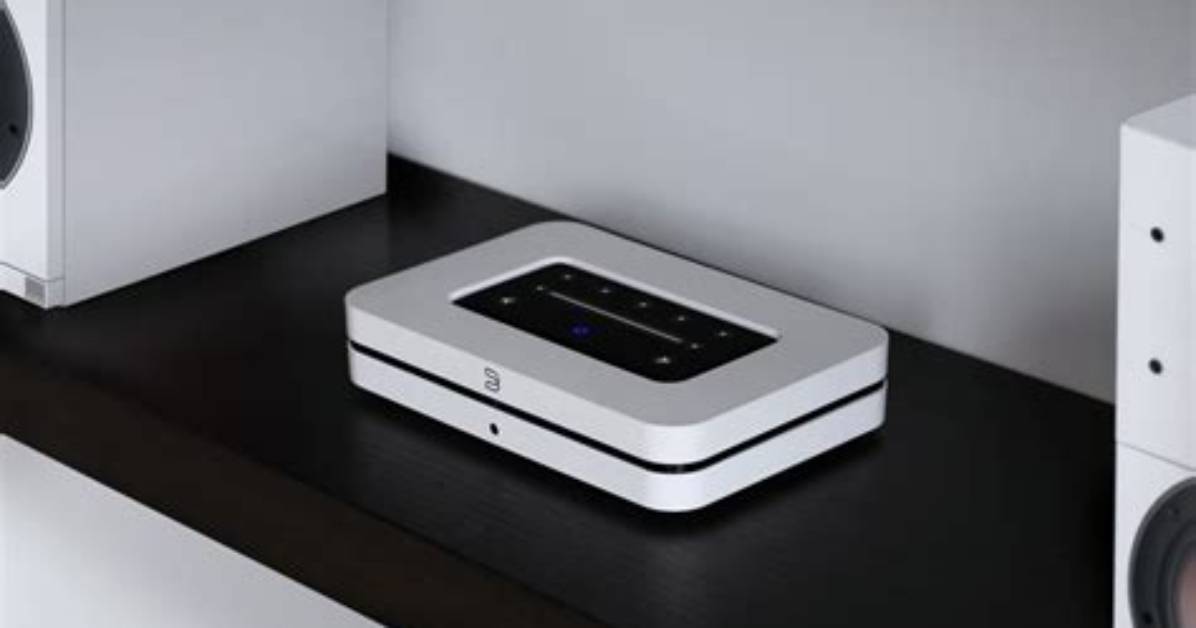
Bluesound has opted for less is more in the naming of its third-generation music streamer, returning to the original ‘Node’ moniker after its second-gen model carried the indicative ‘Node 2i’ label. But in a surprise to no one who is familiar with the multiroom audio specialist, the Canadian brand hasn’t subscribed to such austerity where feature-set and value are concerned.
Like the two Nodes before it at their time of arrival in 2014 and 2018 respectively, the new Node for 2021 enters the surprisingly sparse budget music streamer market with plenty of up-to-date, all-round appeal – and that much is evident before you even plug the thing in and hear what it can do.
Features
BluOS – that is, Bluesound’s proprietary multi-room wireless streaming platform – is a given for networked Bluesound gear and, increasingly, streaming products from its sister brand NAD and partner firms such as Dali. So we get a reassuring feeling of business as usual when we first power up the Node, hook it up to our network via an Ethernet cable, and open the BluOS app on our iPad to find the Node instantly identified as a ‘device’, ready and raring to go.
From here, local and networked libraries, streaming services and internet radio stations can be accessed for playback; multi-room partnerships with up to 63 other BluOS-compatible products can be established and controlled; and presets for easy access to your favourite sources and music can be allocated.
Those who don’t have music stored on their network and who don’t subscribe to a streaming service can still benefit from the Node’s wireless nature through its support for Apple AirPlay 2 and aptX HD Bluetooth (which is two-way, meaning it can wirelessly receive Bluetooth files for playback and also send whatever it is playing to Bluetooth headphones or speakers).
Bluesound Node (2021) tech specs
Inputs Mini TOSLINK/3.5mm Stereo combo, HDMI eARC
Outputs RCA, coaxial, optical, subwoofer, 3.5mm
Bluetooth aptX HD
AirPlay 2 Yes
Dimensions 22 x 4.6 x 14.6cm
Weight 1.1kg
Finishes 2 (Black or white)
The BluOS app also steps in for general playback controls for those who don’t want to splash out on the optional Bluesound RC1 remote control (£49, $59, AU$99), bother programming their own IR remote, or initiate voice control via the Alexa and Google Assistant BluVoice skills. Naturally, the app also lets you switch between sources – both of a wireless and physical nature. The latter comprises mini optical/3.5mm combo and HDMI eARC inputs for connecting audio sources or a TV, plus a range of outputs that includes RCA, coaxial, optical and subwoofer. A 3.5mm headphone jack can be found in the middle of the front panel, below the Bluesound logo, too.
The digital connections are fed by an all-new DAC that supports both hi-res 24-bit/192kHz and MQA files, the latter handy for subscribers of Tidal’s Hi-Fi tier who have access to MQA-powered hi-res Tidal Masters streams. Bluesound has also brought the Node into the third generation by packing in more powerful processors, an important part of the internal architecture for a multifaceted digital product like this.
Design
Considering their multi-tasking, software-reliant nature, it’s important for networked products to have a stable platform and app to operate within – and Bluesound’s offering is up there with the best. The Node does, however, offer some on-unit control that might prove handy if it’s positioned within easy reach in a room.
The Node’s compact chassis, which is comparable to the size of a wireless router or hardback book and diminutively but distinctly ‘Bluesound’ in its design, has a touch-capacitive top panel. From here you can change volume with a swiping action across a slider, skip tracks or initiate one of five pre-allocated presets by tapping small dot and arrow symbols, which thanks to a proximity sensor only light up on the otherwise-discreet touch panel when you approach it, disappearing after 10 or so seconds. They do the job for the minority who will regularly use them, although our biggest wish – whether reasonable or not for a streamer at this price point – would be a proper screen display.
Alexander Ross has covered the video game industry for a decade, writing deep dives on game design, esports tournaments, VR developments, and gaming culture.
