
Bulgarian Split Squat | Form & Technique

The Bulgarian Split Squat or ’The Rear Elevated Foot Split Squat’ Is Technically a Normal Squat, However, It's Performed Uni-Laterally with One Leg Placed on...
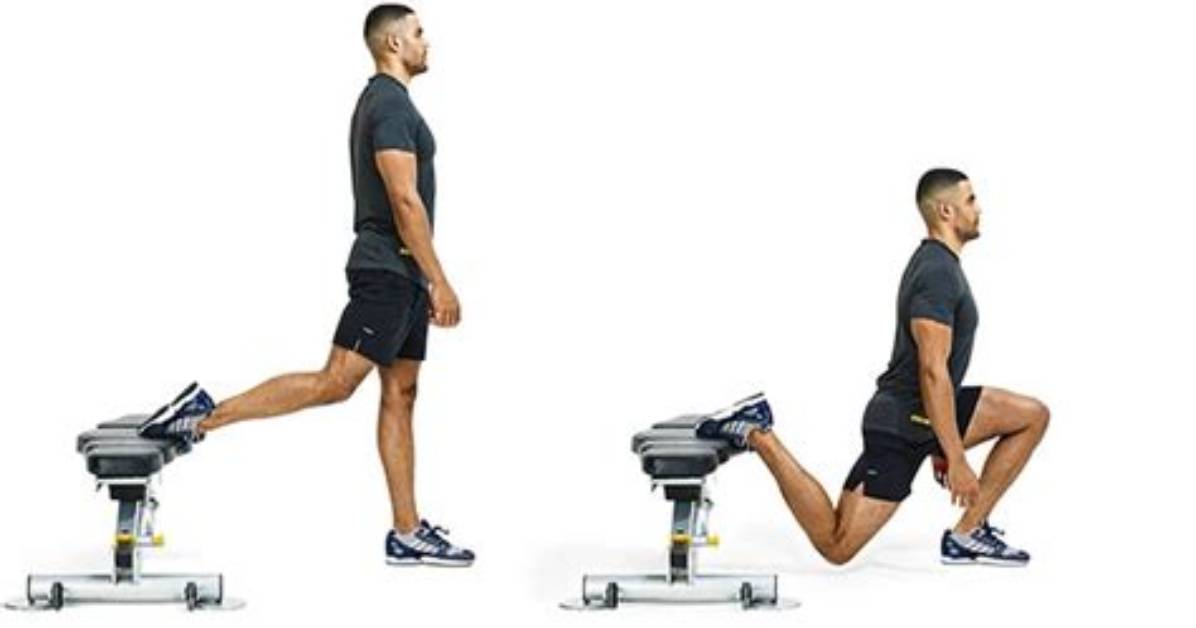
The Bulgarian Split Squat or ’The Rear Elevated Foot Split Squat’ is technically a normal squat, however, it's performed uni-laterally with one leg placed on an elevated bench and one firmly on the floor.
The split squat builds a vast amount of lower body muscles and does not donate the aggravated stress on the lower back that traditional squats do. If you are limited with weight or equipment, this exercise is a perfect substitute for a bodyweight squat to increase the resistance and progressively overload the difficult and progress.
Targeted Muscles
The primary muscles targeted throughout the Bulgarian split squat are found in the upper quadriceps and the glutes, making them a beneficial compound exercise (numerous joints and muscles worked in one simple exercise).
Throughout the exercise, the hamstrings, gastrocnemius and glutes are the stabilising assisting muscles. With comparison to the standardised barbell back squat, the Bulgarian split squat will place far greater emphasis on the hamstrings, Glutes and external obliques, however, there will not be as much stress placed on the quadriceps that the back squat would.
So, now that the anatomy of the split squat has been established, what benefits can we come to expect when performing the exercise?
Must Read
The Bulgarian Split Squat Benefits
1. Unilateral Movement
The Bulgarian split squat is what is known as a lower body unilateral movement. A unilateral movement is where the exercise is performed by only one limb such as one arm or one leg, whereas a bilateral exercise is a movement where both limbs work together simultaneously. Common examples of unilateral exercises include a single-arm cable pull down, alternating dumbbell curls and in this case, the Bulgarian split squat.
Unilateral exercises such as the split squat can bring many benefits to your training; not only aesthetic wise but also athletic performance-wise. Benefits include; balancing out any muscular imbalances or weaknesses, strengthening stabilising muscles and also lessen injury likelihood.
2. Triple Extensions
A triple extension movement is an exercise whereby there is an extension at three sets of joints in the body; the hips, knees and ankles. The exercise involves graduating from a low bent position where all the joints are prepared to move, into an extended position where the joints are locked out. Prime examples of this triple extension movement involve; deadlifts, squats, lunges and Bulgarian split squat.
These exercises mimic many different sporting movements such as driving upwards (squats), jumping (box jumps), picking something up (deadlifts). Implementing a triple extension orientated training session each week will give various benefits, however, the main benefit would be that it will successfully condition the ligaments and muscles in the body so that we can run quicker, push harder and jump more explosively. Whilst the hip extension demonstrated in the split squat is greater than the back squat, the back squat presents are greater knee extension.
3. Testosterone Release
Growth hormone and testosterone are naturally occurring muscle-building hormones released within the body. The greater amount available for production within the body, the higher the likelihood of muscle build and development. Training your legs with compound exercises such as back squats, Bulgarian split squats, lunges and deadlifts is an extremely effective way to release these hormones during exercise.
The reason why training legs will release a large amount of growth hormone and testosterone is due to the fact that the legs consist of some of the largest muscles within the body. The body needs to release more growth hormone in order to grow, in turn helping other body parts to grow also.
4. Body Symmetry
As well as unilaterally balancing your legs, training the lower body through exercises such as the Bulgarian split squat will help develop the overall symmetry of the body. This can useful when recovering from injury or trying to improve muscle or strength imbalance.
James Sterling reports on renewable energy developments, climate policy, ecological conservation, and green tech innovations around the globe.
