
Celtic Cross Spread Explained: What Does It Mean?

Brittany Has Been Reading Tarot for 17 Year's and Deep-Dived into Its History, Purpose, and Purpose. Her Interest in Tarot Started When She Was Just 13 Year's...
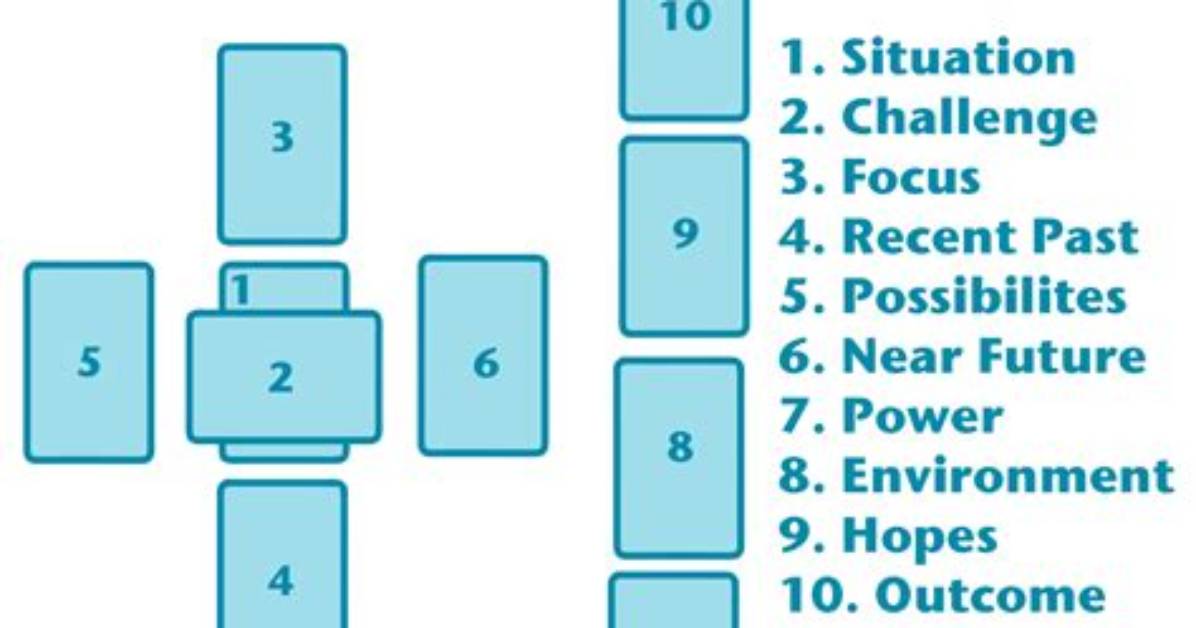
The Celtic Cross spread is said to be one of the most fundamental tarot spreads. It is taught in most introductory classes and can be found in many “How to Read Tarot” books. This spread can be used for general readings or for specific questions that the Seeker has.
There are three common formations for the Celtic Cross that are explained below. Each one offers the reader explanations for the cards. However, the placements vary.
How to Begin
If completing a reading for yourself, you simply need to shuffle the cards until you feel that you’ve done an adequate job or until you feel “done.” This feeling is different for everyone and takes some time to get used to. A good rule of thumb is to shuffle the cards, thinking of a particular problem or situation. This will allow your conscious mind to hone in on what the most important piece.
Some readers fan the cards out before them on a table (or the floor) and pick from a line. This method is beneficial if you feel your mind was scattered while you were shuffling the cards to begin with. However, it can be overwhelming as a standard deck has 78 cards. Fanning the cards also requires perhaps more space than the Reader has. For example, reading at a dining room table versus a coffee shop table.
Another method is to shuffle the cards and pick from the top of the deck. If using this method, the Reader would lay the cards out in the numbered order of the spread outline. Choosing cards from the top of the deck is faster and more efficient for space.
Placing the cards in their numbered order depends on which version of the spread the Reader chooses to use. There are three common versions of the Celtic Cross spread and each of the layouts is explained in detail below.
Must Read
Celtic Cross (Gray)
This version of the Celtic Cross was popularized by Priscilla Pardridge using the pseudonym of Eden Gray. During her lifetime, Gray wrote some of the most influential tarot divination books. This version of the spread can be found in her book Mastering the Tarot (1971). This spread is different from both the Waite and Thoth methods explained further down.
Gray’s outline is as follows:
- This is the heart of the matter; this is the Seeker’s present self. This card is the first placed in this spread. Cards 3-6 are placed around this card in a (somewhat) circle.
- Placed horizontal across Card 1, this card is the challenges and obstacles blocking the Reader’s path. The significance to it being placed horizontal is to show the physical relationship of the cards and the obstacles it represents.
- Card 3 is related to the “root of the problem” or the foundations that the Seeker currently stands on. This card is placed below Card 1.
- Similar to a 3 card spread where the left indicates the “past”, so too does Card 4 when placed in this version of the Celtic Cross. Placed to the left of Card 1, Card 4 is an indicator of past influences that have brought the Seeker to where they are.
- Card 5 is used to illustrated the aspirations of the Seeker; what they hope to achieve or gain. In a reversed position however, it can denote speculation or reservation that the Seeker has. Card 5 is placed directly above Card 1.
- This card indicates the immediate future for the Seeker, either positive or negative. Card 6 is placed to the right of Card 1.
- Card 7, placed to the right of Card 4, indicates the Seeker’s view of him or herself. It can indicate insecurities, hidden talents, or secret desires.
- This card is how the Seeker interacts in their environment or how they exist in their environment.
- Card 9 illustrates the Seeker’s hopes or fears. The use of reversed cards in a spread will illustrate fears, whereas upright cards (usually) indicate positive.
- Lastly, Card 10 indicates the Seeker’s probable outcome. This could be positive or negative. Probable outcome cards can be tricky as the future is a fickle thing; any decision made between the time of the reading, and its end, could drastically change the outcome.
The first six cards in this spread are clustered around each other, creating the “cross” shape. Card 7-10 are placed to the right of the shape and are laid out from bottom to top. At first glance, it may look like there are two separate spreads being laid out, however, by following the numbers assigned to each card, the Reader is able to follow the linkage between them.
Robert Thorne covers electric vehicle innovations, autonomous driving systems, global mobility trends, and automotive engineering developments.
