
Dataops vs Devops: What’s the Difference?

In Today’s Technology Landscape, Devops Continues to Be a Popular Methodology That Needs No Introduction. Given the Success of Devops, Emerging Methodologies...
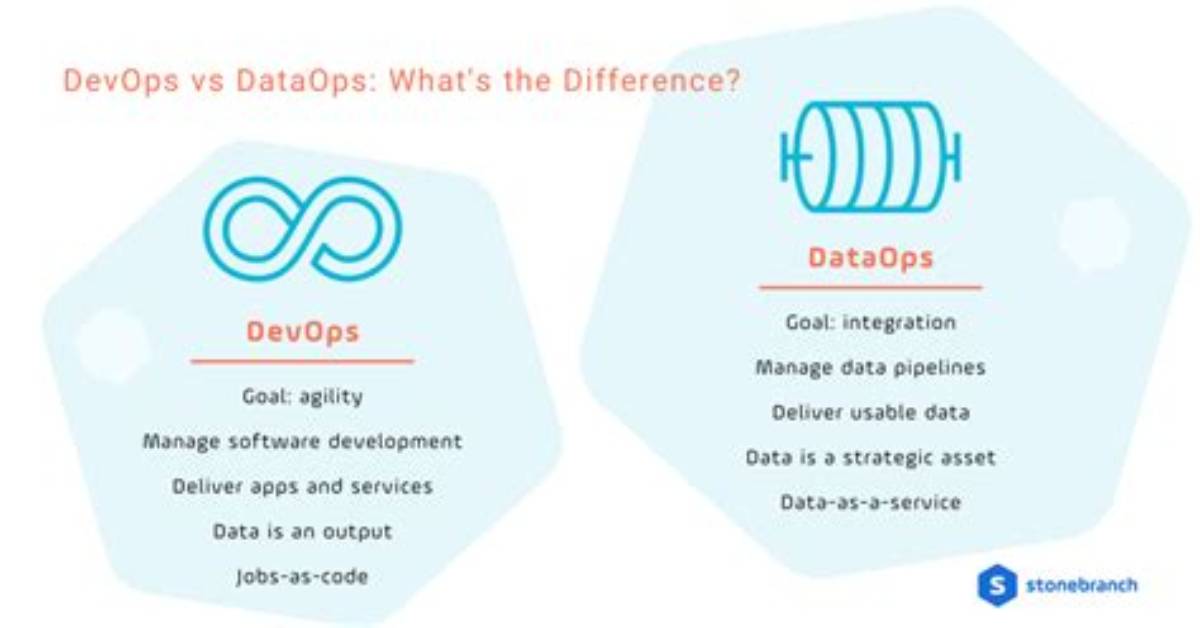
In today’s technology landscape, DevOps continues to be a popular methodology that needs no introduction. Given the success of DevOps, emerging methodologies have embraced DevOps features to extend into niche areas of software development.
DataOps is one model that was created to help data management teams harness the power of automated data orchestration to develop intelligent, data-driven systems. The DataOps discipline introduces agile principles into data analytics, streamlining how data-centric applications are designed, developed, and maintained.
This article delves into the fundamental differences between DevOps and DataOps methodologies, similarities, and use-case benefits for each.
DataOps vs DevOps
While some presume DataOps as DevOps for Data Science, the two methodologies have differences in how they implement various stages of the development lifecycle. Though both emphasize agility and collaboration, they focus on different areas of business, and as a result utilize different approaches and pipelines.
So, let’s explore each methodology to uncover their fundamental differences.
Must Read
What is DevOps?
A DevOps model implements a set of practices and tools that enable the collaboration of development and IT operations teams throughout the entire software development lifecycle (SDLC).
While doing so, DevOps extends agile methodologies by enforcing automation beyond the build phase to integrate operations as part of a seamless workflow. Automation enforced by DevOps essentially encompasses the build-test-release cycle with Continuous Integration and Development (CI/CD) pipelines, enabling quicker time-to-market without impacting code quality.
The methodology promotes randomly sequenced iteration throughout the software’s lifecycle, enabling rapid application development and delivery.
(Understand the importance of DevOps automation.)
Why people adopt DevOps
DevOps tools and processes enable quicker innovation, faster time to market, and increased bottom-line. With DevOps, organizations typically experience a number of benefits, including:
- Improved communication and collaboration. DevOps breaks operational silos between application development, release management, and operations teams, allowing for easier collaboration and sharing of resources.
- Cost savings. DevOps shortens delivery cycles, which reduces the cost of maintenance and upgrades by leveraging economies of scale through efficient CI/CD pipelines.
- Reduced disaster recovery times. DevOps implements the build-test-deploy cycles in small, managed batches that help minimize the impact of deployment failures, bottlenecks, and rollbacks.
Elements of DevOps
Initially built on a collection of ideas of how to improve application development workflows, DevOps has now grown into a full-fledged ecosystem with defined standards and tools. Some critical elements of a DevOps framework include:
- Automation. DevOps includes tools to perform repetitive and manual tasks automatically that require minimal human intervention.
- Infrastructure-as-Code (IaC). An essential aspect of implementing DevOps is to rely on better utilization of infrastructure resources. To do so, DevOps teams manage IT infrastructure using a descriptive model of code binaries that enable deploying and testing infra components in a simulated production instance.
- CI/CD. DevOps follows an iterative model that intertwines continuous development, testing, and deployment to enable automation, security, and agile development.
A typical DevOps workflow
DevOps is a cyclical process that constantly iterates between five stages:
- Business vision blueprint
- Build operations (Code development and testing)
- Integration
- Deploy (Release of the application)
- Operate (Ongoing run and maintain)
The operate phase also loops usability feedback into the workflow that helps refine the business vision for responsive and iterative application development.
Chloe Bennett explores the intersection of pop culture, streaming entertainment, digital trends, and contemporary lifestyle. Her weekly commentary reaches thousands of culture enthusiasts.
