
Difference Between Groupthink and Group Polarization

Groupthink and Group Polarization Are Two Terms That Are Often Used Interchangeably but Have Different Meanings. While Both Terms Describe the Collective...
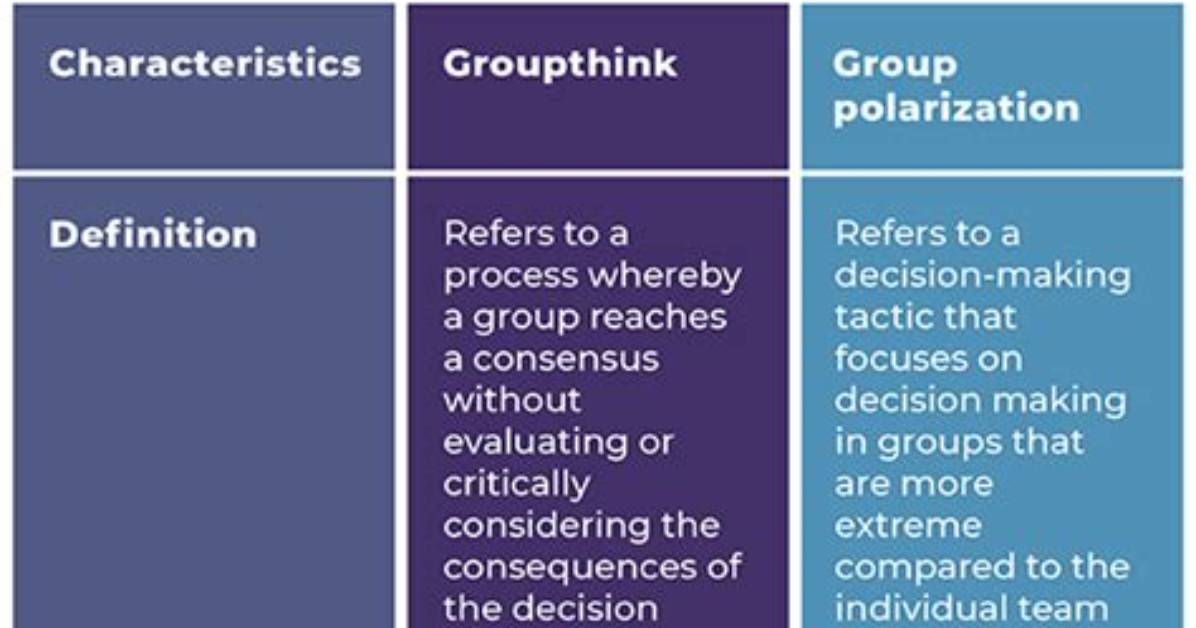
Groupthink and group polarization are two terms that are often used interchangeably but have different meanings. While both terms describe the collective behavior of a group of individuals, there are distinct differences between the two that should be understood. This article will explore the differences between groupthink and group polarization, discuss the conditions that create each phenomenon, and provide examples of each.
Definition of Groupthink
Groupthink is a phenomenon that occurs when a group of individuals makes decisions based on the desire to maintain group harmony and conformity, rather than on the merits of the decision. It is characterized by a reluctance to challenge ideas and a tendency to focus on the most conservative and popular opinion in the group. Groupthink results in a lack of creativity, critical thinking, and rational decision-making.
Must Read
Definition of Group Polarization
Group polarization is a phenomenon that occurs when a group of individuals makes decisions based on the collective opinion of the group. It is characterized by the group’s decision-making becoming more extreme in the direction of the initial opinion of the group. Group polarization tends to result in more extreme decision-making, but it may still be rational and justifiable.
Marcus Vance is a cybersecurity auditor and technology writer dedicated to educating the public about online safety, data privacy regulations, enterprise security, and emerging cyber threats.
