
Economic Impact Robust from Tractor Pull

Every August the Sounds of National Tractor Pulling Championships Fill the Air in Bowling Green. More Than 50,000 Fans Crowd into the Wood County Fairgrounds...
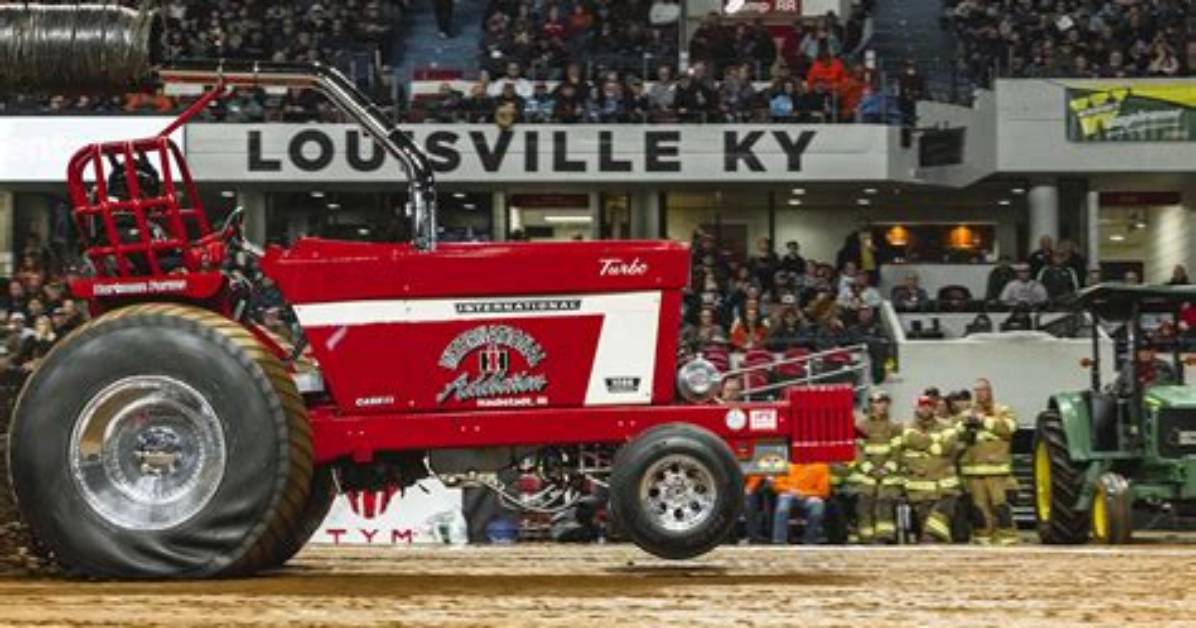
Every August the sounds of National Tractor Pulling Championships fill the air in Bowling Green.
More than 50,000 fans crowd into the Wood County Fairgrounds for three days of truck and tractor pulling
competition.
And while the sounds of the national pull may be disturbing to some, there is no denying the event has a
massive effect economically on Bowling Green and Wood County.
This year the pull is expecting approximately 350 pulling teams, up 30-50 rigs from past years. This is
because another major pulling event typically held on the same weekend in Hamburg, NY has changed its
date this year.
The 350 teams would be the most ever at Bowling Green.
A conservative estimate of the total economic impact of the pull for 2013 was $33.8 million, according to
a study done by Hedges and Company. The firm is based in Hudson, Ohio, and is an automotive industry
aftermarket research and strategic planning firm.
The study was done in 2013 at the 47th annual pull, which was named the national pull of the year by the
National Tractor Pullers Association.
“It was just an opportunity to get a handle on what impact does this really have on the community so we
can pursue local business sponsorship, and national sponsorship dollars,” Mike Ott, former president of
the board of directors for the NWOTPA, said about the decision to do the study. “It’s a concrete number
that actually means something. In the past it’s always been an estimate, a guess … It’s really put some
real credit to what the real numbers, and the real value of the event is.”
Ott said he was not surprised at the findings, but it was nice to see it coming together, and equal that
kind of dollar value.
“We are trying to generate interest on a national level of here’s what it does, and this is what it can
generate,” Ott said. “It’s an event that has a tractor pull. There is more than just a lot of noise and
racket. There are activities. There are museums, there are toy shows, trade shows, food vendors, free
concerts, and free fan appreciation days.
“We haven’t raised ticket prices in eight years; we’re trying to keep it a fan-friendly good-valued
event.”
The $33.8 million figure does not include $250,000 in operating expenses, $1.7 million in event expenses,
and the money raised by Make-A-Wish, and other volunteer organizations in the area which benefit from
the pull. The NWOTPA also put $700,000 into grandstand improvements at the fairgrounds.
“I knew the numbers were great, but I don’t think any of us had any idea that they were this great,” said
Wendy Stram, the executive director of the Bowling Green Convention and Visitors Bureau. “I don’t think
anybody thinks about the local church that’s bringing in this revenue every year, and it becomes a part
of their budget. There is a big opportunity for the community, and I think we take if for granted.”
Stram, who calls the national pull the “Indy 500” of tractor pulling, said the monetary numbers from the
study show the community the event is a big deal.
“We are bringing people from all over the world,” Stram said.
Julie Hedges worked on a survey which generated 940 responses, including on-site interviews, and phone
interviews with local businesses. A total of 96 percent of event guests rated their experience as
excellent or very good, and no one reported a poor experience.
“We have a good representative sample of the number of people who attended,” Hedges said. “We actually
went above and beyond on this one, because we did on-site surveys and interviews, and we also did phone
interviews.
“We really attacked it at a lot of different levels.”
In getting to the $33.8 million figure, the study combined the amount spent in seven areas of expenses,
including fuel, food, drinks, hotel/camping, souvenirs, shopping, and gratuities. That total was $20.9
million. The amount spent at the pull, including tickets and merchandise was $1.5 million.
The combined total of $22.4 million was then multiplied by 1.5 which resulted in the $33.8 million
figure.
The 1.5 economic multiplier was termed “conservative” by Hedges. The figure means for every $1 spent, an
additional 50 cents was generated in economic impact.
“These numbers will help establish credibility in some people’s minds,” about the NWOTPA, Hedges said.
“It will also show the value, and open more opportunities for them as an association for sponsorships,
and so on.”
Marcus Vance is a cybersecurity auditor and technology writer dedicated to educating the public about online safety, data privacy regulations, enterprise security, and emerging cyber threats.
