
Edge Ai: Edge Artificial Intelligence Explained

Edge Ai Utilizes the Compute Available on Phones, Sensors, Raspberry Pis, and Other Edge Devices to Train, Load, and Inference Machine Learning Models. Let’s...
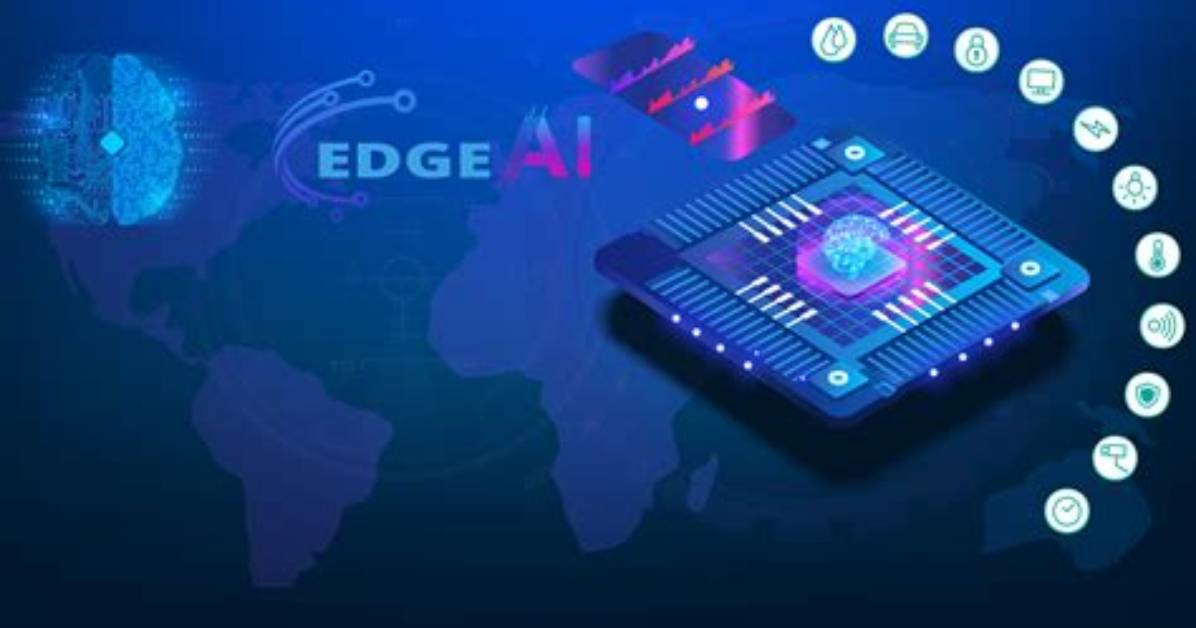
Edge AI utilizes the compute available on phones, sensors, raspberry pis, and other edge devices to train, load, and inference machine learning models.
Let’s take a look at edge AI, including how it works and the pros and cons.
Computer dependencies
Computers depend on components to operate. In particular, there are:
- Network dependencies, like relying on a network connection to ping another computer on the network and get a return.
- Resource dependencies, like GPUs, memory, and CPUs.
Computer tasks like rendering video, computing a function, or fetching data from the Twitter API can all be tagged as a <resource>-bound or <resource>-dependent.
| Network-bound | CPU-bound | GPU-bound | Memory-bound |
|---|---|---|---|
| Web scraping | Processing files | 3D Rendering | Storing data for computations like 3+4 = 7 |
| API calls | Moving data | Video editing | Storing data to be processed |
| Making computations | Video games | ||
| Machine Learning |
Must Read
A new breed of processing units
Human ability and the increase in hardware technologies have aligned to create the demand for AI to perform on edge devices.
Machine learning models benefit from training on lots of data and reconfiguring its model’s weights. It needs to run this task many, many times. CPUs are limited by their one-at-a-time processing capabilities. Even a quad-core or 16-core CPU gets 4 or 16 processes running simultaneously, but that pales to the processing power of a GPU whose design already allows for parallel processing, a multi-lane bridge crossing for processing large blocks of data.
The past decade has seen a different kind of chip emerge, specifically designed to handle tasks for A.I. Some of these new AI chips include:
- AMD’s Accelerated Processing Unit (APU)
- iPhone’s AI Chip
- Google’s Tensor Processing Unit (TPU)
- Intel’s Nervana
These chips are already available in most computers and in every smartphone. That means phones, one type of edge device, can begin to train and inference machine learning models.
Sophia analyzes international trade, startup ecosystems, retail transformation, and supply chain logistics for modern digital publications.
