
Emily Davison (1872 - 1913)

Emily Wilding Davison (11 October 1872 – 8 June 1913) Was a Militant Suffragette Who Fought for Women's Suffrage in Britain. She Was Jailed on Nine Occasions...
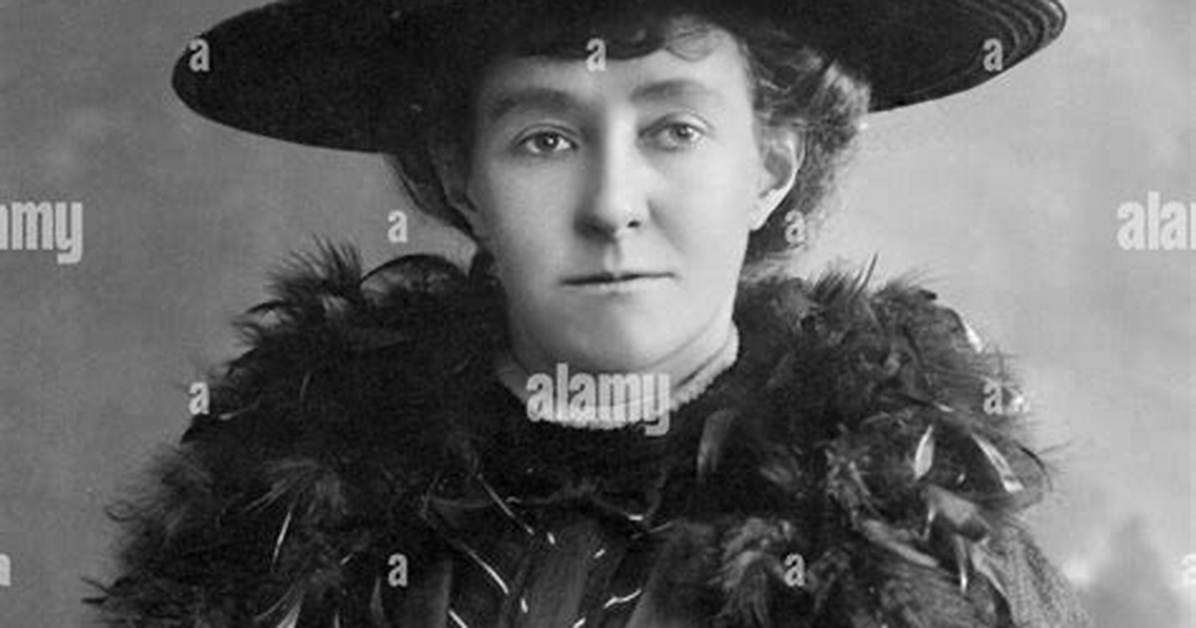
Emily Wilding Davison (11 October 1872 – 8 June 1913) was a militant suffragette who fought for women's suffrage in Britain. She was jailed on nine occasions and force-fed 101 times. She stepped in front of King George V's horse Anmer at the Epsom Derby on 4 June 1913, suffering fatal injuries. Her funeral on 14 June 1913 was organised by the Women's Social and Political Union (WSPU). Thousands of suffragettes accompanied the coffin and tens of thousands of people lined the streets of London. After a service in Bloomsbury, her coffin was taken by train to the family grave in Morpeth, Northumberland.
Modern historians agree that Davison was trying to disturb the Derby to draw attention to her cause, rather than to commit suicide, and 2013 analysis of newsreel has supported the idea that Davison was reaching up to attach a scarf to the bridle of the King's horse. Analysis of newsreel also indicated that her position before she stepped out onto the track would have given her a clear view of the oncoming race, further countering the belief that she ran out in a haphazard way to kill herself.
Early life and education
Davison was born in Blackheath, Kent, the daughter of Charles Davison (of Morpeth, Northumberland) and Margaret Davison (of Longhorsley, Northumberland). She had two sisters and a brother; also various half-siblings from her father's first marriage including a half-brother, retired naval captain Henry Jocelyn Davison, who gave evidence at her inquest.
She later attended Kensington Prep School and won a bursary to Royal Holloway College in 1891 to study literature and modern foreign languages. However, she was forced to drop out in January 1892 because her father died and her mother could not afford the fees of £30 a term. She then became a private governess before becoming a teacher in Edgbaston and Worthing, raising enough money to study Biology, Chemistry, English Language and Literature at St Hugh's College, Oxford. She obtained first-class honours in her final exams, though women were not at that time admitted to degrees at Oxford. Davison then began teaching the daughters of the Moorhouse family in Spratton, Northamptonshire.
Activism
In 1906, Davison joined the Women's Social and Political Union (WSPU). Formed in 1903 by Emmeline Pankhurst, the WSPU brought together those who felt strongly that militant, confrontational tactics were needed to achieve women's suffrage. In 1908, Davison left her teaching post to dedicate herself completely to the movement. In the same year she entered the University of London examinations as an external candidate for a degree in Modern Foreign Languages.
She gained a reputation as a militant and violent campaigner. On her own initiative and without the approval of the WSPU, her actions developed from disrupting meetings to stone throwing and arson. She was arrested and imprisoned for various offences nine times, including a violent attack on a man she mistook for the Chancellor of the Exchequer, David Lloyd George. During many of these prison terms she went on hunger strike and was force-fed.
On 2 April 1911, the night of the 1911 census, Davison hid in a cupboard in St Mary Undercroft, the chapel of the Palace of Westminster, overnight so that on the census form she could legitimately give her place of residence that night as the "House of Commons". Census documents from the year 1911 state that Emily Wilding Davison was found "hiding in the crypt" in the Houses of Parliament. In 1999 a plaque to commemorate the event was set in place by Tony Benn MP.
In June 1912, near the end of a six-month sentence in Holloway Prison for arson, when Davison and dozens of fellow suffragettes were being subjected to force-feeding, she threw herself down a 10-metre iron staircase. Her intention, as she wrote afterwards, was to stop the suffering of everyone else by carrying out this action. As a result she suffered severe head and spinal damage, causing discomfort for the remaining twelve months of her life.
Sarah Jenkins is a veteran tech journalist with over 12 years of experience covering artificial intelligence, mobile innovations, and digital ethics. Her insights have appeared in leading technology publications worldwide.
