
Enterprise Architecture Frameworks (Eaf): the Basics

Today’s Computer and Technology Systems Are Complex – Especially When They Are Responsible for So Much of the Productive Activities Within Most Organizations...
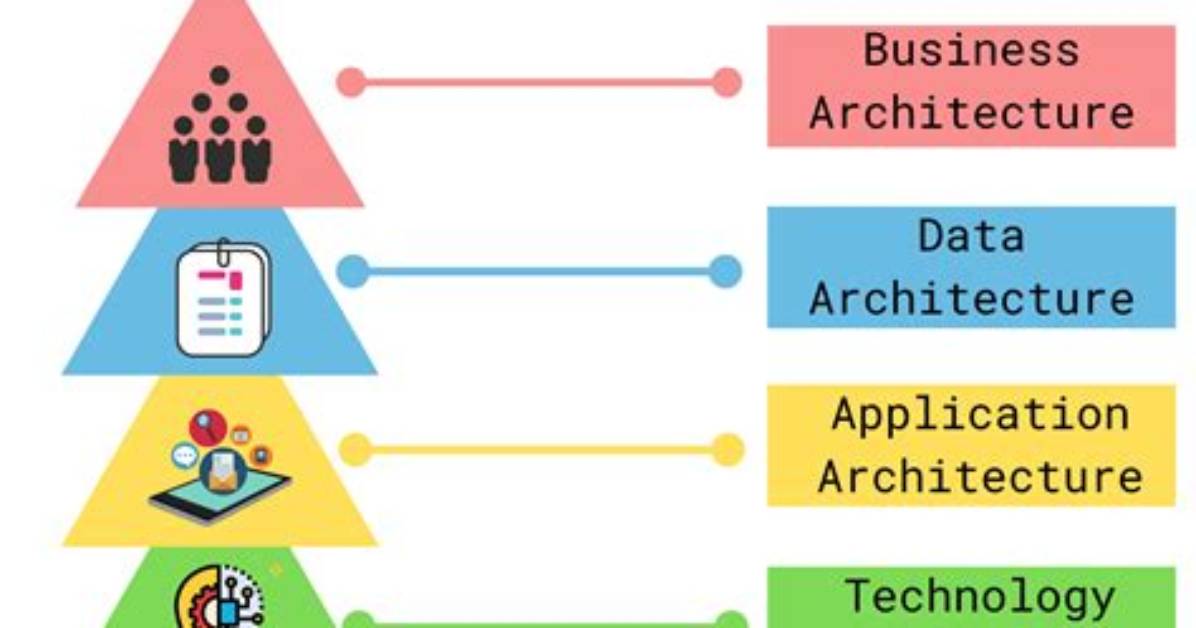
Today’s computer and technology systems are complex – especially when they are responsible for so much of the productive activities within most organizations. Physical and cloud servers, applications, and enterprise software all must communicate and share data seamlessly in order to provide the customer a successful and satisfactory user experience.
The holistic view of all these pieces is referred to as enterprise architecture. Guidance surrounding this implementation are often known as enterprise architecture frameworks (EAFs), which we are exploring from a high level in this article.
Defining the Enterprise Architecture Framework
Simply stated, enterprise architecture framework (EAF) refers to any framework, process, or methodology which informs how to create and use an enterprise architecture.
So, what is enterprise architecture?
At a high level, enterprise architecture offers a comprehensive approach and holistic view of IT throughout an enterprise. An enterprise is a business, company, firm, or group of any size that provides consumers with goods and/or services. This can also include any organized unit that has a common goal, such as an industry consortium or non-profit group. An enterprise requires collaboration to achieve its goal or strategy while providing the good or service as best as it can to ensure customer satisfaction.
While no single definition of enterprise architecture exists, it is understood as a practice or discipline of organizing logic that promotes a health IT infrastructure that makes sense for successful business practices.
Importantly, the outcome of an enterprise architecture isn’t simply organization. The process should convert intangible business strategy to practical, real solutions that can be measured and achieved. Relying on the practices of architecture, enterprises can analyze, design, plan, and implement the technology they need to execute their business strategies. The architecture should also incorporate 21st century practices of business process management and data analytics.
Across the many frameworks that serve to achieve an enterprise architecture, the goal of the comprehensive approach is always to successfully execute strategy with efficiency, efficacy, security, durability, and agility.
Must Read
History of EAF
A commonly held tenet is that enterprise architecture frameworks date to the mid-1980s, in accordance with the publication of the Zachman Framework, developed by then-IBMer John Zachman. But deeper historic inquiries indicate that enterprise architecture frameworks actually got their start two decades earlier, when IBM produced their business systems planning (BSP), an effort that Zachman helped found.
A researcher of 20th– and 21st-century technology, Svyatoslav Kotusev says that we can look at the history of EAFs in three smaller eras:
- Pre-EA: Originating with IBM, the BSP formalized a methodology that indicates a theory for information systems architecture. It included both a top-down planning approach and an architecture planning process that was divided into a series of steps for a company to follow. The plan, with diagrams and matrices to illustrate its system, can be traced through all EAFs even today. The Method/1 process by Arthur Andersen as well as other BSP-like methodologies from consulting firms and tech experts also originated in this era. Overall, these approaches focused strictly on technical infrastructure, like how to deploy hardware and servers.
- Early EA: This begins in the 1980s and runs into the 1990s, and this era codifies the term “enterprise architecture”. The initial wave of EAF theories include the PRISM, sponsored by IBM among others, released in 1986, the Zachman Framework in 1987, and the NIST EA in 1989. Later entries marked a newer approach in this era including Steven Spewak’s Enterprise Architecture Planning (EAP), which has direct roots to the original BSP, as well as the TAFIM. These later frameworks began including applications and data integration, as systems became more sophisticated.
- Modern EA: Starting in the late 1990s, this era continues to present day. Newer frameworks include the FEAF, which is based on Spewak’s EAP, as well as the TOGAF, a well-known version today, with roots in the TAFIM. Today’s frameworks aim to provide tangible solutions beyond only IT, integrating all layers of an enterprise, including overall strategy, business needs, IT infrastructure, and applications.
Despite the differences in approaches that these eras indicate, all frameworks are generally based on the original BSP methodology, often advocating similar steps or phases for planning and implementing enterprise IT.
Chloe Bennett explores the intersection of pop culture, streaming entertainment, digital trends, and contemporary lifestyle. Her weekly commentary reaches thousands of culture enthusiasts.
