
Event Stream Processing Explained

Event Stream Processing Is a Reactive Programming Technique That Filters, Analyzes, and Processes Data from a Data Streaming Source as the Data Comes Through...
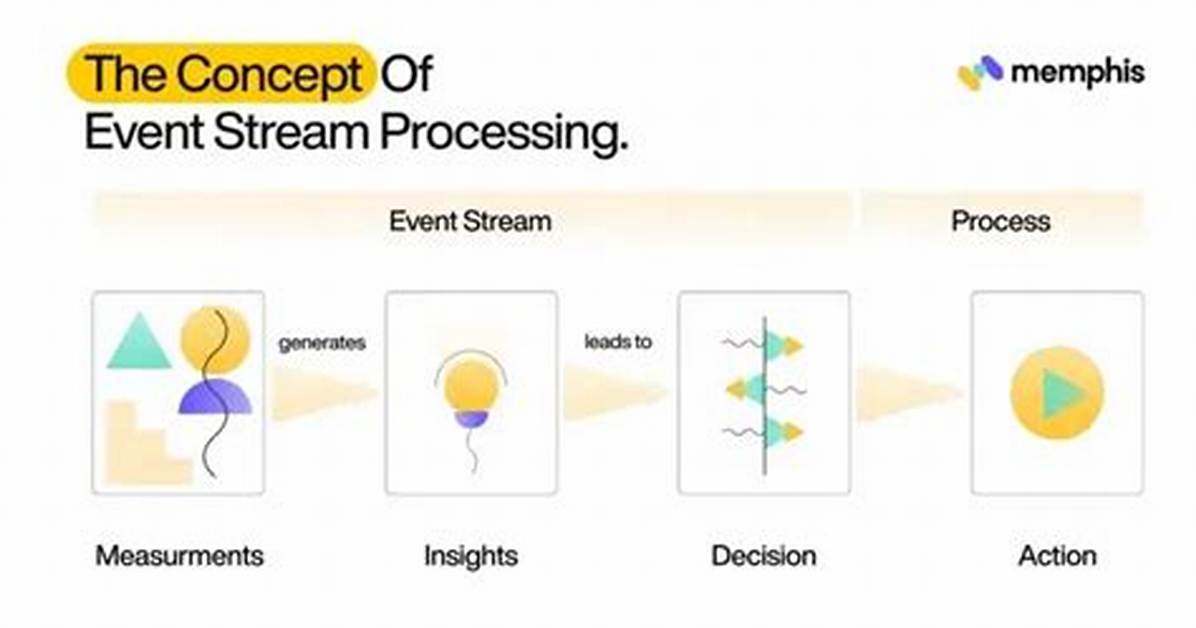
Event stream processing is a reactive programming technique that filters, analyzes, and processes data from a data streaming source as the data comes through the pipe. It is used for a number of different scenarios in real-time applications.
As we rely more and more on data generated from our phones, tablets, thermostats, and even cars, the need for it to be analyzed while still streaming only increases. The aim is two-fold:
- To process data in real-time.
- To act on those data signals in as close to real-time as possible.
One way the Internet of Things (IoT) data can be evaluated while it is in motion is with event stream processing. The IT community is adopting this technique at greater rates, and it is because of all the advantages and applications event stream processing offers to the community.
What is event stream processing?
Sometimes shortened to ESP, event stream processing is composed of three simple terms: event + stream + processing.
Event
An event is anything that happens at a clearly defined time and can be specifically recorded. The possible types of events can be vast! Events can be created from an event source. These could be systems, business processes, sensors, data streams.
On an application, there could be a login event. On a thermometer, there could be a “too hot” event. On a fire alarm, there is a smoke-detected event. On databases, there can be data uploaded events.
Stream
A stream is a constant and continuous flow of objects that navigate into and around companies from thousands of connected devices, IoT, and any other sensors. An event stream is a sequence of events ordered by time. Enterprises typically have three different kinds of event streams:
- Business transactions like customer orders, bank deposits, and invoices
- Information reports like social media updates, market data, and weather reports
- IoT data like GPS-based location information, signals from SCADA systems, and temperature from sensors
Processing
Processing is the final act of analyzing the incoming data. How the data is processed is dependent on the function of the processor. It could trigger alerts that a sensor needs attention. It could define the next path the data is supposed to travel down along the pipe. It could classify the data and tag it with metadata.
Goal of event stream processing
Event stream processing, then, is a form of reacting to a stream of event data and processing the data in a near, real-time manner.
The ultimate goal of ESP deals with identifying meaningful patterns or relationships within all of these streams in order to detect things like event correlation, causality, or timing.
ESP is a useful real-time processing technique for events that either/both:
- Occur frequently and close together in time
- Require immediate attention
Strong examples of when ESP would be necessary are in the areas of e-commerce, fraud detection, cybersecurity, financial trading, and any other type of interaction where the response should be immediate.
Must Read
How event stream processing works
Steps to event processing:
- Event Source
- Event Processing
- Event Consumer
Event stream processing requires the existence of a streaming data source. There is nothing to process if there is no data source.
Once the source is created, the source must emit events to the processor. Likewise, the processor needs a way to listen and receive the output of the event source. This can occur through an API.
And, finally, like the sound of a man screaming help in a forest, what is the point of processing data if there is no audience to hear it? An event processor needs a consumer to output its processes to. It can be a data dashboard, another database, a user analytics report.
The landscape of available tooling to process data streams is large and growing, and the best solutions, as usual, depend on the use case, your tech stack, your budget, and your team’s skill levels. Possible cloud-based solutions are:
- Amazon MSK
- Amazon Kinesis
- Apache Kafka
- Azure Stream Analytics
- Google Pub/Sub
Alexander Ross has covered the video game industry for a decade, writing deep dives on game design, esports tournaments, VR developments, and gaming culture.
