
Examples of Stereotypes Asian-American Women Battle Daily | Theresa Nguyen

I Am an Asian American Woman. I Was Born in Minnesota, the State of 10,000 Lakes, and My Parents Were Refugees from Vietnamand Yes, I Absolutely Embrace Every...
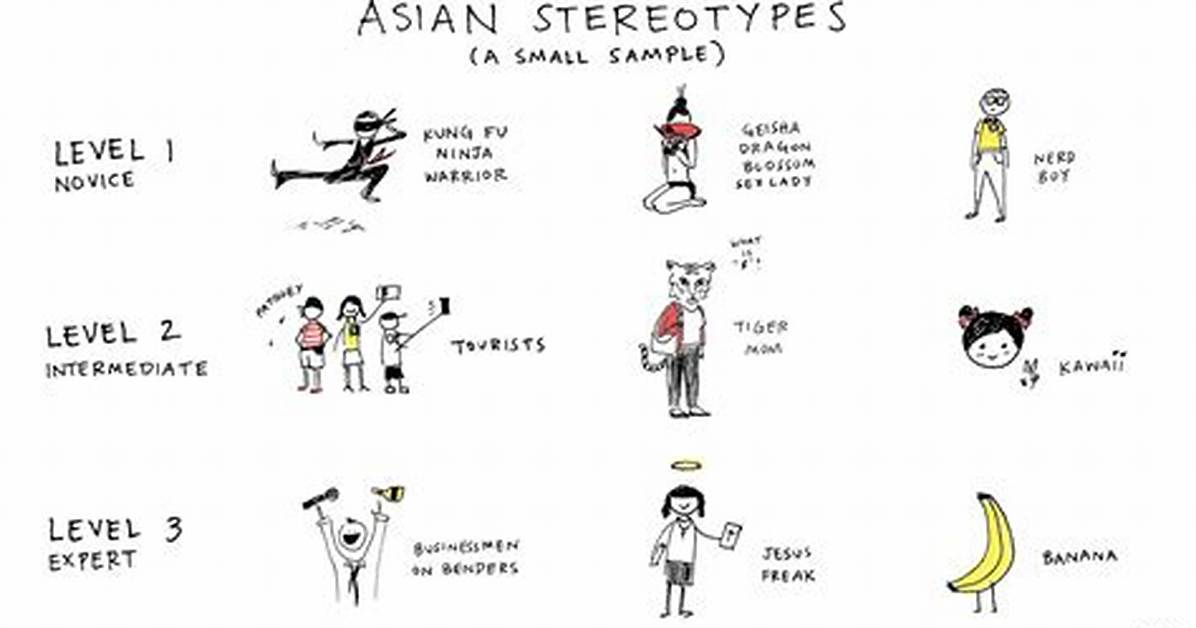
I am an Asian American woman. I was born in Minnesota, the state of 10,000 lakes, and my parents were refugees from Vietnam
And yes, I absolutely embrace every Asian bit and piece of me, from my black hair and brown eyes to my ninja-like chopstick skills.
However, I am well aware of how different I look next to other women, as well as of how differently I was raised compared to my peers, from my beliefs and values to my interactions with others.
So perhaps this might make you a bit uncomfortable, but I am showing up to confront Asian American stereotypes and how we, as a society, perpetuate these beliefs.
Many Asian American women struggle to feel like a part of the "club" because of how we were raised.
We feel different than people around us, because we have constant reminders that we are different, and not always knowing how to best express these feelings is frustrating.
As girls, we are taught to suppress our voices and not speak up. Then we grow up and we're told to accept how we're treated by others, even if we don't like it, in order to not be labeled a "troublemaker." We're expected to keep our heads down, stay quiet, ignore the ignorance and stereotypes, and let it all go.
These problems are a central part of the Asian American experience, and it's incredibly important that we share them with one another, if only to cast some light on what's so glaringly wrong with the "nice Asian girl" stereotype.
Here are 4 examples of struggles Asian American women experience every single day that you probably never realized are founded in problematic Asian stereotypes, racism and ignorance.
1. Being constantly asked where you're "from"
Many of my first conversations with someone new go a little something like this:
Person: "Where are you from?"
Me: "I was born in the US."
Person: "No, I mean, where are you really from?"
Me "I was born and raised in Fridley, Minnesota."
Person: "No, I mean where are you originally from? Are you Chinese? Japanese? Korean? Viet-min-ese (which is how some people like to pronounce it)?"
Me: "Oh, you mean Viet-nam-ese? Yes, I am Vietnamese, but I was born and raised here in the US."
Person: "Ahhh …" (nods head)
I get it. People are curious. Maybe they think this is just a really great way to start a conversation.
The thing is, when you ask it like that, it makes me feel like I'm not really an American, even though I was born and raised here.
If I were Caucasian, no one would ask me where I am originally from ... like REALLY from.
This "harmless" question is a constant reminder that no matter how long my family and ancestors have lived here, and no matter how hard we try to assimilate, we’ll forever be considered foreigners because of our “Asian-ness.”
So here's a suggestion: Instead of asking people where they are from, simply ask, “What’s your ethnicity?”
That one's easy! I can answer that question.
Then, let’s move on to something more interesting, like whether or not I know Kung Fu!
Just kidding. That was a test. That's another question we roll our eyes at when asked. So please, no Jackie Chan or Bruce Lee references.
Must Read
2. "Compliments" on your "good" English
Asian American women often hear people say, "Your English is so good! You don’t have an accent at. all."
I might respond, “Yours is good too!”
I will say that, in my personal experience, this is more of a generational thing. I tend to receive these "awesome" comments from people who are about 20 years older than I am, or people who just haven't been exposed to many Asians in their lifetime, other than those they've seen in movies. These people are used to seeing first generation Asian immigrants and refugees who don't know English very well.
But even if you personally have never said or thought this yourself, you should be aware that there are still plenty of folks who think that, because of our ethnicity, we don’t speak fluent English.
When I encounter this, I politely respond that I was born in the US, and for most people, that seems to be an acceptable answer. It’s just funny to me that there are people out there who would still be confused by that.
This kind of thinking is what's known as a biased or faulty generalization, "a conclusion about all or many instances of a phenomenon that has been reached on the basis of just one or just a few instances of that phenomenon."
It basically sends a message that we don't really belong here, or that we fit the role of someone who should have an accent.
And Hollywood's persistent stereotyping of Asian women as flakey people speaking in thick accents certainly isn't helping.
Elena Rostova holds a Master's degree in Public Health Journalism. She covers groundbreaking medical research, holistic wellness trends, mental health awareness, and nutritional science.
