
Gitops Explained: Concepts, Benefits & Getting Started

Devops Has Changed the Way We Develop and Manage Applications, Resulting in Faster, More Consistent, More Collaborative Development Cycles. It Has Evolved...
DevOps has changed the way we develop and manage applications, resulting in faster, more consistent, more collaborative development cycles. It has evolved further by incorporating microservices-based architectures and even databases in the form of database DevOps.
Now there’s a new kind of Ops.
GitOps is rapidly gaining popularity to extend the scope of DevOps further to include application infrastructure. In this article, we will have a look at GitOps and how to leverage it for delivering cloud-native applications.
What is GitOps?
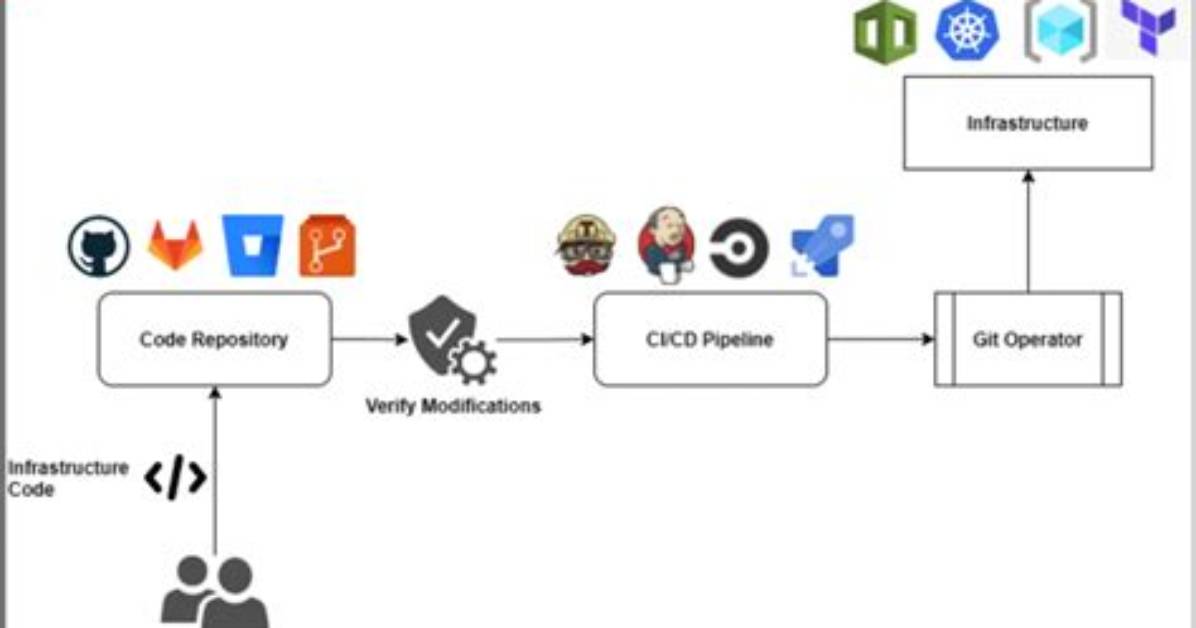
GitOps is a set of practices that are aimed at managing the underlying infrastructure of an application. It utilizes Git as the source code management tool for managing the infrastructure code. In other words, GitOps is an evaluation of infrastructure as code and DevOps practices which uses Git as the single source of truth for provisioning infrastructure declaratively.
The term GitOps was confined by Weaveworks in 2017 and was primarily aimed at managing Kubernetes deployments. However, now it has evolved into supporting other infrastructure management solutions such as Terraform.
The goal of GitOps is to simplify and streamline the development process. This leads to building reproducible infrastructure with proper state management, which both:
- Increases the overall visibility
- Reduces the management overhead of the application infrastructure
GitOps allows developers or the Ops team to declare their infrastructure as code and version control them via Git. Whenever a new change is required, a pull request with the new change is created, executing the CI/CD pipeline to provision or modify the infrastructure.
Additionally, GitOps offers users the flexibility to select any tool, technology, or platform and use the same DevOps practices when creating infrastructure.
Must Read
Principles of GitOps
There are a few core principles that apply when implementing and dealing with GitOps. Let’s take a look.
Declarative system
In the GitOps model, the complete system is configured declaratively. This declarative approach is focused on the result (desired state) rather than the steps needed to achieve the required result.
This declarative approach allows users to specify the end goal without worrying about each explicit step needed as in an imperative approach. As a state-aware declarative approach, users can easily store these states in Git, facilitating convenient deployments and rollbacks.
The system state is versioned in Git
All the declarative states are stored in the version-controlled system, which acts as the single source of truth. With this version-controlled approach, all the system infrastructure changes are available chronologically, enabling users to identify infrastructure changes over time easily. It is also helpful in:
- Troubleshooting
- Auditing
- Rollbacks
Changes are automatically applied when approved
When a pull or merge request is made, it will be verified and then approved since all the changes are stored in Git.
Furthermore, it should be automated to apply changes to the system automatically when they are approved. GitOps prefers immediate automated deployments to achieve the desired state quickly.
David Miller brings 15 years of experience in global economics, personal finance strategy, and market dynamics. He specializes in turning complex economic trends into actionable insights for everyday readers.
