
Gnu Linker: Elf Has a Load Segment with Rwx Permissions. Embedded Arm Project

I Have Updated My Arm-None-Eabi Gcc and the Associated Tools and Rebuilt an Embedded Project I Develop. $ Arm-None-Eabi-Ld --Version Gnu Ld (Gnu Binutils) 2.39...
I have updated my arm-none-eabi GCC and the associated tools and rebuilt an embedded project I develop.
$ arm-none-eabi-ld --version
GNU ld (GNU Binutils) 2.39
Suddenly, I'm getting the warning
/usr/lib/gcc/arm-none-eabi/12.1.0/../../../../arm-none-eabi/bin/ld: warning: my_elf_file.elf has a LOAD segment with RWX permissions.
This warning seems to be newly introduced. I haven't changed the source / linkerscript lately. (EDIT: I checked an old ELF file created with a previous version. It didn't print the warning during linking but has the same issue). I develop for an STM32F407 microcontroller. The memory configuration in my linker script is the following:
MEMORY
{
    FLASH (xr)  : ORIGIN = 0x08000000, LENGTH = 512K
    RAM (xrw)   : ORIGIN = 0x20000000, LENGTH = 128K
    CCM (rw)    : ORIGIN = 0x10000000, LENGTH = 64K
}
Looking into the linked ELF I see:
$ readelf -l my_elf_file.elf

Elf file type is EXEC (Executable file)
Entry point 0x800b1f1
There are 5 program headers, starting at offset 52

Program Headers:
  Type           Offset   VirtAddr   PhysAddr   FileSiz MemSiz  Flg Align
  LOAD           0x010000 0x08000000 0x08000000 0x2220c 0x2220c RWE 0x10000
  LOAD           0x040000 0x10000000 0x0802220c 0x003e8 0x00d30 RW  0x10000
  LOAD           0x050000 0x20000000 0x080225f4 0x00c1c 0x00c1c RW  0x10000
  LOAD           0x000c20 0x20000c20 0x08023210 0x00000 0x01e70 RW  0x10000
  LOAD           0x002a90 0x20002a90 0x08023210 0x00000 0x08580 RW  0x10000

 Section to Segment mapping:
  Segment Sections...
   00     .vectors .text .ARM .flashcrc
   01     .ccmdata .ccmbss
   02     .data
   03     .bss
   04     .heap_stack
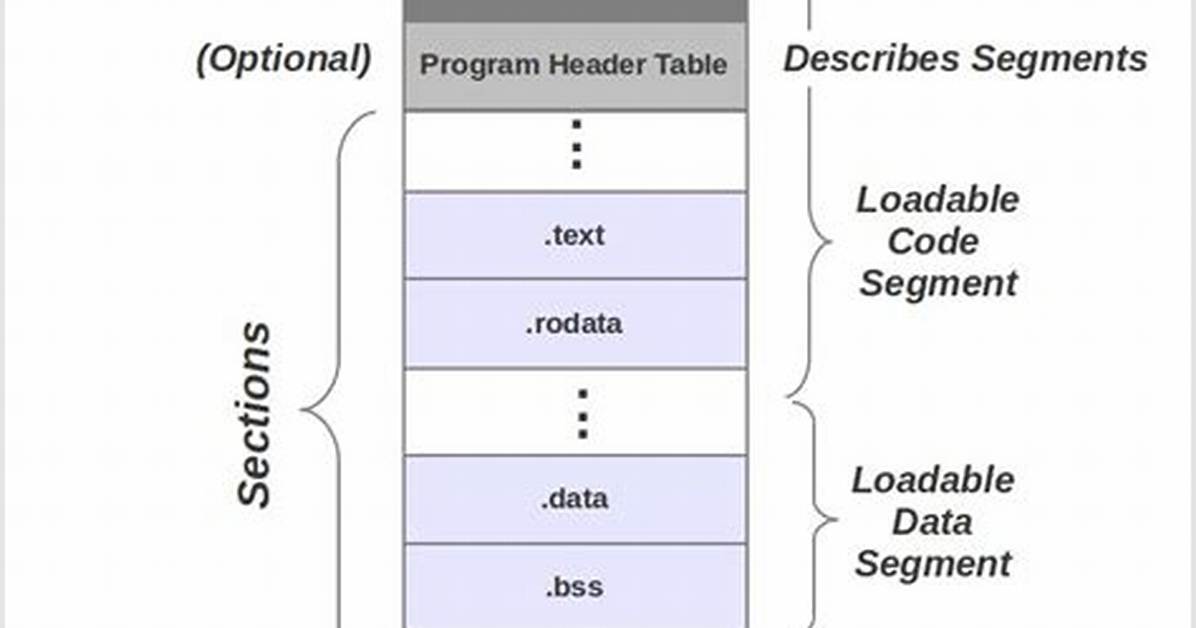
Indeed, the first segment is flagged as RWE. It contains the sections .vectors, .text, .ARM and .flashcrc.
The .vectors section and the .text section contain the Vector table and the program code. I added another section in my linkerscript called .flashcrc
    .flashcrc : ALIGN(4)
    {
        KEEP(*(.flashcrc))
        KEEP(*(.flashcrc.*))
        . = ALIGN(4);
    } >FLASH =0xFF
I use this section in the source code to position a const struct in there, that contains CRC checksums. These checksums are calculated and patched into the ELF later by a spearate python script. The struct is easier to find in the ELF, if it resides in its own section.
Removing this section or simply relocating it to RAM like this:
    .flashcrc : ALIGN(4)
    {
        KEEP(*(.flashcrc))
        KEEP(*(.flashcrc.*))
        . = ALIGN(4);
    } >RAM AT >FLASH =0xFF
removed the "W" flag from the segment and the warning is gone.
I don't understand why the ELF file contains an "writable" flag for a section that is located in FLASH which is marked in the linkerscript as non writable. I tried using (xr!w) in the MEMORY definition, but it didn't change anything.
How do I convince the linker that the segment is not writable to silence this warning? Why don't the flags given in the MEMORY part of the linker script have any impact?
Weirdly enough this doesn't happen with the .vectors section which contains a const array of function pointers. So this section is basically identical to the .flashcrc section.
EDIT2:
Today I found a little more time to play around. The struct in the .flashcrc section is defined in code (globally) like this:
volatile const struct flash_crcs __attribute__((section(".flashcrc"))) crcs_in_flash = {
    .start_magic = 0xA8BE53F9UL,
    .crc_section_ccm_data = 0UL,
    .crc_section_text = 0UL,
    .crc_section_data = 0UL,
    .crc_section_vectors = 0UL,
    .end_magic = 0xFFA582FFUL,
};
The crc values are patched into the ELF after linking. I had to make the struct volatile. If it isn't volatile, the compiler optimizes away the access to the struct because the elements are all 0 from its perspective as it doesn't know that these are patched after linking.
It turns out, that the warning disappears, if the volatile keyword is removed. For some reason the volatile keyword tricks the compiler/linker into thinking that this should be writable.
Is there another way to prevent the compiler optimizing away the access to this struct but not using volatile?
Sarah Jenkins is a veteran tech journalist with over 12 years of experience covering artificial intelligence, mobile innovations, and digital ethics. Her insights have appeared in leading technology publications worldwide.
