
Hmb & Leucine | for Muscle Growth & Anti-Catabolism

In the Past Half Century the World Has Become Fascinated with Weight Lifting and Bettering Ourselves Through Supplementation. We’ve Learned Quite a Lot in...
In the past half century the world has become fascinated with weight lifting and bettering ourselves through supplementation. We’ve learned quite a lot in these past few decades, and while training styles and techniques haven’t changed, our supplementation habits are always changing as we learn more and more about what we can consume to help us reach our goals.
What is Leucine?
In the wake of learning to supplement smarter, you might notice a lot of gym bros carrying around gallon jugs drinking a colorful beverage. More than likely what you’re seeing is three to six scoops of BCAAs (branch chain amino acids). Comprised of leucine, isoleucine and valine, these amino acids are essential, meaning our body cannot produce them on our own. The most important amino acid gym goers are interested in is leucine, the muscle protein synthesis powerhouse. This is the case because leucine is the main activator of mTOR, a protein directly related to MPS. Isoleucine and valine also stimulate mTOR, but to a much weaker degree, making straight leucine supplementation more than likely better for stimulating MPS than BCAAs on a gram for gram basis.
When looking at these compounds from the bigger picture, they all just seem to be a smaller broken down version of a different supplement or food. For example, you could eat chicken, which contains most essential amino acids and most importantly leucine. Or you could drink a whey isolate protein shake, which has all the same amino acids, but is broken down much quicker in your stomach to be used by your body. We can break it down even further by drinking a BCAA shake, that doesn’t even need to be broken down because they are already the raw amino acids and can be utilized almost immediately by the body to fuel muscle protein synthesis. Most lifters stop here, assuming that amino acids are the best and more efficient way to stimulate and preserve muscle mass.
You should try L-Leucine
What is HMB?
That all changed when a supplement called Beta-hydroxy-beta-methylbutyrate hit the market 20 years ago. HMB is a metabolite of leucine and is the most we can break down leucine (that we know of). Just about 5% of leucine is broken down into HMB in our body, and is the main compound that stops the breakdown of muscle (also known as catabolism). Once HMB was discovered, we quickly found a way to isolate it and sell it as a whole other supplement. But of course there was controversy surrounding HMB as it was touted as being “the next big thing” when it comes to muscle building.
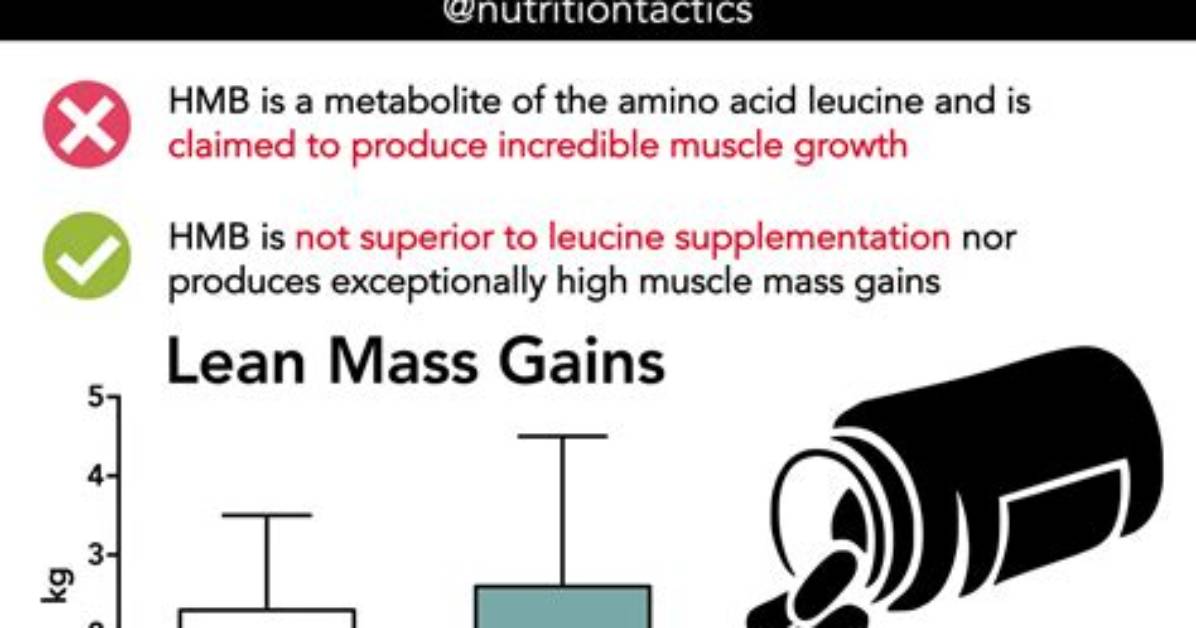
When the first studies came out on HMB in animals, results were very good, with rats gaining much more lean mass than placebo groups. It wasn’t until the 21st century when more efficacious studies were conducted on human subjects and showed not so promising results. When compared to leucine, HMB was no better, and sometimes even worse at stimulating muscle protein synthesis. This came as a surprise to all the companies selling HMB as a “legal and safe” supplement yielding similar results to anabolic steroids. It didn’t help that HMB was being sold at a price almost twice as expensive as pure leucine, and once the studies came out showing how it was no improvement for MPS, companies began to drop the product from their shelves very quickly.
James Sterling reports on renewable energy developments, climate policy, ecological conservation, and green tech innovations around the globe.
