
How Fast Is the Flash? Chasing the Scarlet Speedster’s Top Speed in Comics and Tv

The Question of Who’s the Fastest Hero Has Been, Ahem, a Long-Running Joke in Dc Comics. It Hasn’t Taken Much to Pit the Flash and Superman Against Each Other...
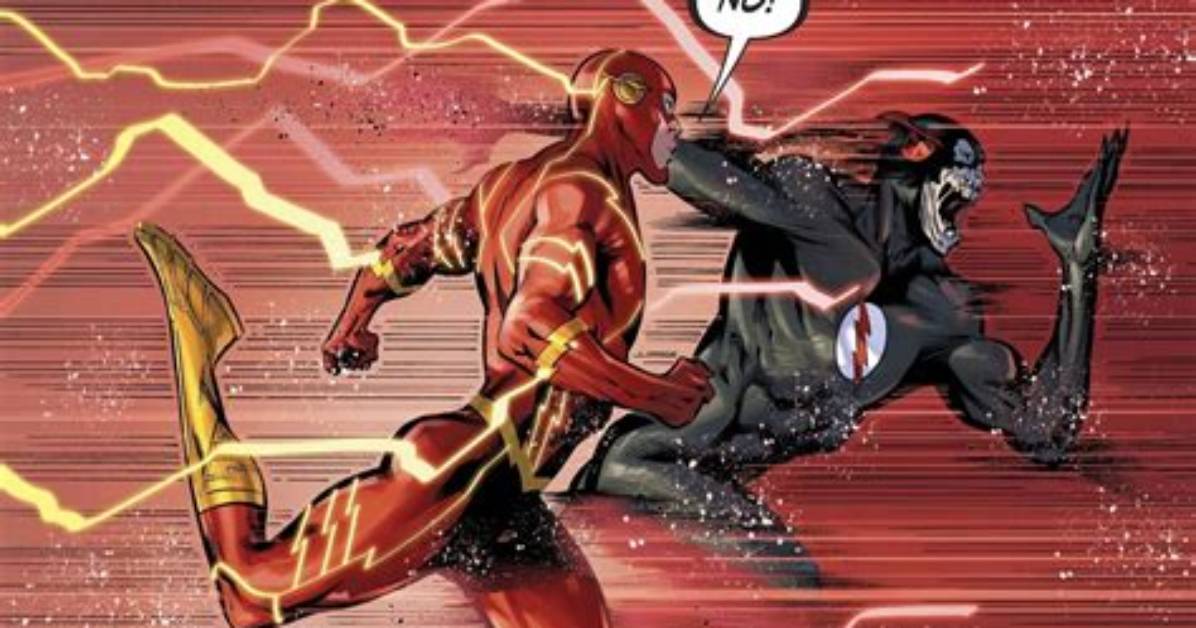
The question of who’s the fastest hero has been, ahem, a long-running joke in DC Comics. It hasn’t taken much to pit The Flash and Superman against each other since their friendly rivalry began in 1967’s Superman’s Race with the Flash.
Aside from The Son of Krypton, other super-quick beings exist, but they derive their speed from other places. For instance, the yellow sun provides Superman’s powers while Wonder Woman, Shazam, and Black Adam draw their abilities from the pantheons of gods.
Although the speedster definitively beat Superman three years later in World’s Finest Vol 1 #199, those contests developed a reputation for being inconclusive. Sometimes they were interrupted, other times they ended in a draw or even stalled in slow-mo like the post-credit sequence of 2017’s Justice League (the Joss Whedon version).
Flash: Rebirth #3 confirmed newly returned Silver Age Flash Barry Allen as the quicker of the pair. It’s good of Big Blue to hand the Scarlet Speedster something, but getting one over Superman isn’t the only time the Flash had to push out the boat at superspeed.
As faster-than-Kryptonian isn’t yet recognized as a speed metric, how fast is the Flash?
Speeding through the comics
No matter who’s carrying the mantle, the Flash derives his power from the Speed Force. That’s an extradimensional and cosmic energy source that propels space and time, providing an energy uniquely drawn by DC’s Flash family. The Speed Force doesn’t just boost Flash’s step count — it can also speed up his speech, thought, metabolism, and healing. The speedster has been shown to learn at a high pace, but like calories, those abilities burn off quickly.
Speed has been central to the Flash’s adventures since the character first appeared in the Golden Age form of Jay Garrick, in 1939. In 1985’s Crisis on Infinite Earths, Silver Age Flash Barry Allen stopped the Anti-Monitor’s destruction of Earth by drawing his antimatter power into a speed vortex, apparently draining his life in the process. Kid Flash Wally West took on the mantle, ready to set new records in the Modern Age.
JLA Vol 1 #89 began with West outrunning a nuclear explosion to save more than half a million people, carrying them beyond its reach no more than two at a time. The comic calls that “near light,” but it would require a speed significantly faster. Light speed is approximately 186,000 miles per second or 670,616,629 mph.
In The Flash #138, writer Grant Morrison subjected West’s Flash to an impossible race for the sake of Earth. Facing defeat, he picked up a hint from his rival that he could harness kinetic energy from the populace of his home world. Mobilizing humanity to run en masse, West reached trans-time velocity, winning the race by, staggeringly, traveling faster than instantaneous teleportation.
Achieving broadcast velocity
On TV, The CW’s The Flash has been the most successful adaptation of the Scarlet Speedster’s life in Central City. The series concentrates on the most famous incarnation, Barry Allen, who, having been lost to the comics during 1985’s Crisis on Infinite Earths, had emerged from the Speed Force after 2008’s Final Crisis reset.
The show’s Flash family is built around Allen, the Scarlet Speedster who has steadily built up the speed and range of his abilities since 2014.
Over The Flash’s nine seasons, Allen’s abilities have grown, with the mysterious Speed Force providing an excellent excuse for any inconsistencies. The best way to think of the TV Flash is as a meta-powered speedster who draws on the Speed Force for turbo boosts.
Robert Thorne covers electric vehicle innovations, autonomous driving systems, global mobility trends, and automotive engineering developments.
