
How Often Should You Wash Your Hair?

If There's One Truth About Hair-Care That Everyone Can Live by — Whatever Your Hair Texture, Color, or Routine — It's That There's No One Answer for How Often...
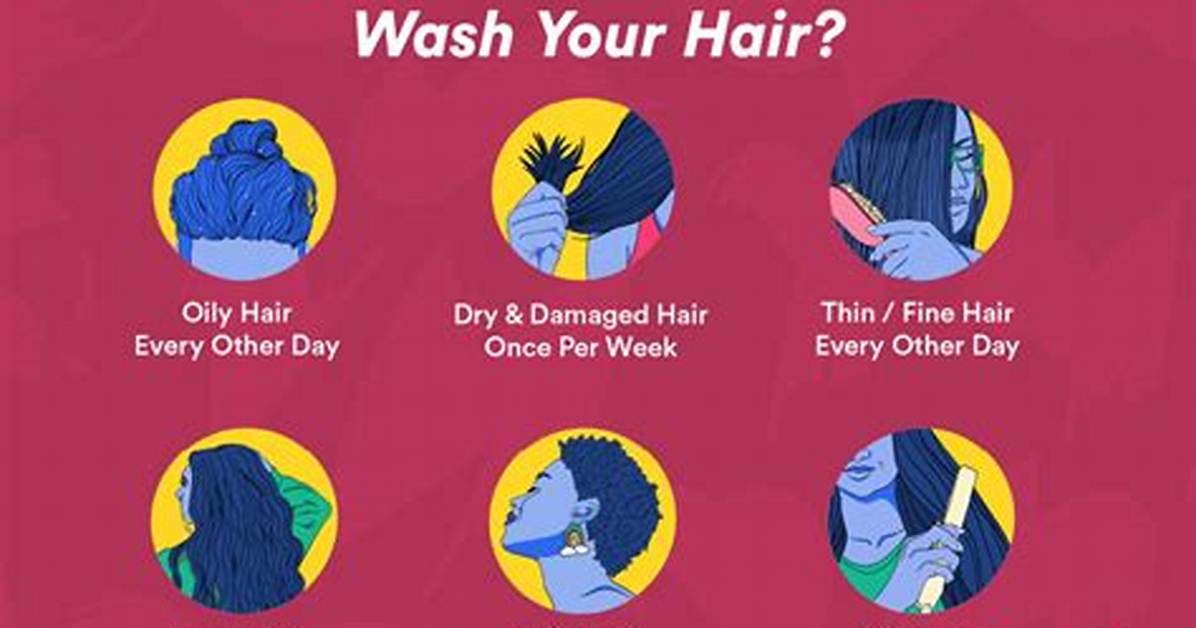
If there's one truth about hair-care that everyone can live by — whatever your hair texture, color, or routine — it's that there's no one answer for how often you should wash your hair. Whether you shampoo and condition your hair daily (old habits die hard) or stick with a weekly wash day, your frequency can depend on a number of individual factors.
For instance, your hair type, texture, and length may be the primary determinant of how often you wash — but so are your scalp condition and lifestyle, such as when you exercise and the pollution level in your area. All to say: There are many variables to consider, and finding what works for you can often be a matter of trial and error.
That said, your hair type is a good place to start. So with that in mind, consider these guidelines for how often you should lather, rinse, and repeat — or not.
Before you can determine your optimal washing schedule (and splurge on a cocktail of products), you need to properly assess your hair — even if you think you already know what it is. Many factors, like porosity and varying textures, aren't necessarily obvious to the naked eye.
"Leaving hair free of products and allowing it to air dry after you wash it is the easiest way to determine your hair texture," says Frédéric Fekkai, celebrity hairstylist and founder of Fekkai Brands.
Once you do this, the trick to evaluate thickness and texture is to take a single strand of hair and rub it between your fingers. "If you can barely feel it, then that's fine hair," explains celebrity hairstylist Laura Polko. "If you can feel it and there are bumps, then you have coarse hair."
If you land somewhere in between, that's medium hair. However, if you often fall victim to split ends, or your hair has an overall blah appearance, low porosity could be to blame. "With low porosity, you will immediately see lack of luster and hair elasticity," says Fekkai, who notes that this will eventually lead the hair to split.
To test your hair's porosity, take another strand of hair and place it in a cup of water. If the strand floats to the top, then you have low porosity hair. Also, you should pay attention to whether your hair takes a long time to air dry or become fully drenched with water when washing, those can also be other telltale signs of low porosity.
Now, let's get to washing.
If You Have Fine or Flat Hair
Fine hair tends to be flat, says Fekkai, which means that strands get oily much more quickly than other hair types. Most people with fine hair need to shampoo every day, but more importantly, you need to know how to wash your fine hair.
Start with a quality, cleanser like Fekkai Full Blown Volume Shampoo and use only a dime-size amount (really). Fine hair doesn't need a lot of shampoo and you'll be washing money down the drain otherwise. Literally.
"Do not apply the shampoo directly onto your scalp," Fekkai cautions. Instead, first work the shampoo into a lather in your hands, and then massage into your scalp only before rinsing with a flash of cold water.
"The rinse is extremely important when washing fine hair and cold water helps to close the shaft, making the hair more smooth and shiny," he says.
To shop: $20; ulta.com
Must Read
If You Have Greasy Hair
No surprise here: excessively oily hair should be washed daily, and it's more about the technique than the product you use. The most effective way to wash greasy hair is to part it into sections, says Fekkai. And rather than creating friction while lathering, you want to "rotate your fingers to move the scalp so that you activate the follicle and the roots of the hair to bring oxygen to the roots," he adds.
Afterwards, rinse your hair very thoroughly — any remaining product will cause buildup and accelerate the greasy look — and apply conditioner to the ends only.
Chloe Bennett explores the intersection of pop culture, streaming entertainment, digital trends, and contemporary lifestyle. Her weekly commentary reaches thousands of culture enthusiasts.
