
How to Check the Version of Python Modules

I Just Installed the Python Modules: Construct and Statlib with Setuptools Like This: # Install Setuptools to Be Able to Download the Following Sudo Apt-Get...
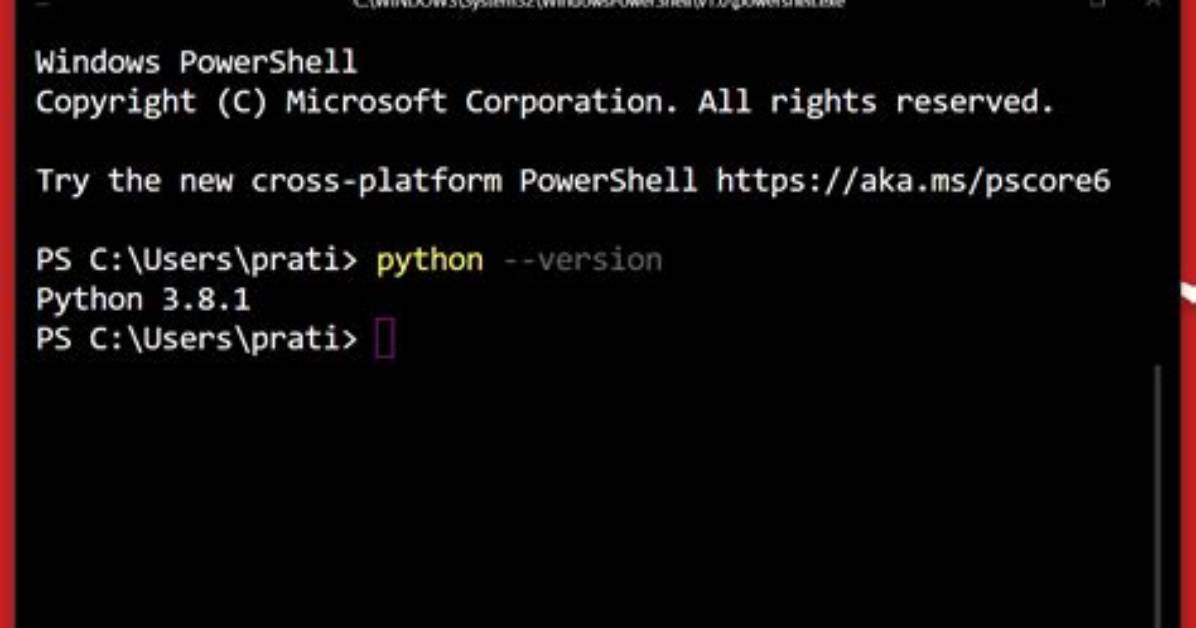
I just installed the Python modules: construct and statlib with setuptools like this:
# Install setuptools to be able to download the following
sudo apt-get install python-setuptools

# Install statlib for lightweight statistical tools
sudo easy_install statlib

# Install construct for packing/unpacking binary data
sudo easy_install construct
I want to be able to (programmatically) check their versions. Is there an equivalent to python --version I can run from the command line?
My Python version is 2.7.3.
31 Answers
I suggest using pip in place of easy_install. With pip, you can list all installed packages and their versions with
pip freeze
In most Linux systems, you can pipe this to grep (or findstr on Windows) to find the row for the particular package you're interested in:
Linux:
pip freeze | grep lxml
lxml==2.3
Windows:
pip freeze | findstr lxml
lxml==2.3
For an individual module, you can try the __version__ attribute. However, there are modules without it:
python -c "import requests; print(requests.__version__)"
2.14.2

python -c "import lxml; print(lxml.__version__)"
Traceback (most recent call last):
File "<string>", line 1, in <module>
AttributeError: 'module' object has no attribute 'version'
Lastly, as the commands in your question are prefixed with sudo, it appears you're installing to the global python environment. I strongly advise to take look into Python virtual environment managers, for example virtualenvwrapper.
You can try
>>> import statlib
>>> print statlib.__version__

>>> import construct
>>> print contruct.__version__
This is the approach recommended by PEP 396. But that PEP was never accepted and has been deferred. In fact, there appears to be increasing support amongst Python core developers to recommend not including a __version__ attribute, e.g. in Remove importlib_metadata.version..
Python >= 3.8:
If you're on Python >= 3.8, you can use a module from the built-in library for that. To check a package's version (in this example construct) run:
>>> from importlib.metadata import version
>>> version('construct')
'4.3.1'
Python < 3.8:
Use pkg_resources module distributed with setuptools library. Note that the string that you pass to get_distribution method should correspond to the PyPI entry.
>>> import pkg_resources
>>> pkg_resources.get_distribution('construct').version
'2.5.2'
Side notes:
Note that the string that you pass to the
get_distributionmethod should be the package name as registered in PyPI, not the module name that you are trying to import. Unfortunately, these aren't always the same (e.g. you dopip install memcached, butimport memcache).If you want to apply this solution from the command line you can do something like:
python -c \
  "import pkg_resources; print(pkg_resources.get_distribution('construct').version)"
Use pip show to find the version!
# In order to get the package version, execute the below command
pip show YOUR_PACKAGE_NAME | grep Version
You can use pip show YOUR_PACKAGE_NAME - which gives you all details of package. This also works in Windows.
grep Version is used in Linux to filter out the version and show it.
The better way to do that is:
For the details of a specific package
pip show <package_name>
It details out the package_name, version, author, location, etc.
$ pip show numpy

Name: numpy
Version: 1.13.3
Summary: NumPy: array processing for numbers, strings, records, and objects.
Home-page:
Author: NumPy Developers
Author-email:
License: BSD
Location: c:\users\prowinjvm\appdata\local\programs\python\python36\lib\site-packages
Requires:
For more details: >>> pip help
pip should be updated to do this.
pip install --upgrade pip
On Windows the recommended command is:
python -m pip install --upgrade pip
In Python 3 with brackets around print:
>>> import celery
>>> print(celery.__version__)
3.1.14
module.__version__ is a good first thing to try, but it doesn't always work.
If you don't want to shell out, and you're using pip 8 or 9, you can still use pip.get_installed_distributions() to get versions from within Python:
The solution here works in pip 8 and 9, but in pip 10 the function has been moved from pip.get_installed_distributions to pip._internal.utils.misc.get_installed_distributions to explicitly indicate that it's not for external use. It's not a good idea to rely on it if you're using pip 10+.
import pip

pip.get_installed_distributions()  # -> [distribute 0.6.16 (...), ...]

[
    pkg.key + ': ' + pkg.version
    for pkg in pip.get_installed_distributions()
    if pkg.key in ['setuptools', 'statlib', 'construct']
] # -> nicely filtered list of ['setuptools: 3.3', ...]
The previous answers did not solve my problem, but this code did:
import sys
for name, module in sorted(sys.modules.items()):
  if hasattr(module, '__version__'):
    print name, module.__version__
Use dir() to find out if the module has a __version__ attribute at all.
>>> import selenium
>>> dir(selenium)
['__builtins__', '__doc__', '__file__', '__name__',
 '__package__', '__path__', '__version__']
>>> selenium.__version__
'3.141.0'
>>> selenium.__path__
['/venv/local/lib/python2.7/site-packages/selenium']
In the Python 3.8 version there is a new metadata module in the importlib package, which can do that as well.
Here is an example from documentation:
>>> from importlib.metadata import version
>>> version('requests')
'2.22.0'
If the methods in previous answers do not work, it is worth trying the following in Python:
import modulename

modulename.version
modulename.version_info
See Get the Python Tornado version
Note, the .version worked for me on a few others, besides Tornado as well.
Some modules don't have __version__ attribute, so the easiest way is check in the terminal: pip list
First add executables python and pip to your environment variables. So that you can execute your commands from command prompt. Then simply give Python command.
Then import the package:
import scrapy
Then print the version name
print(scrapy.__version__)
This will definitely work.
Assuming we are using Jupyter Notebook (if using Terminal, drop the exclamation marks):
if the package (e.g., xgboost) was installed with pip:
!pip show xgboost
!pip freeze | grep xgboost
!pip list | grep xgboost
if the package (e.g. caffe) was installed with Conda:
!conda list caffe
I suggest opening a Python shell in the terminal (in the Python version you are interested), importing the library, and getting its __version__ attribute.
>>> import statlib
>>> statlib.__version__

>>> import construct
>>> contruct.__version__
Note 1: We must regard the Python version. If we have installed different versions of Python, we have to open the terminal in the Python version we are interested in. For example, opening the terminal with Python 3.8 can (surely will) give a different version of a library than opening with Python 3.5 or Python 2.7.
Note 2: We avoid using the print function, because its behavior depends on Python 2 or Python 3. We do not need it, and the terminal will show the value of the expression.
This answer is for Windows users. As suggested in all other answers, you can use the statements as:
import [type the module name]
print(module.__version__) # module + '.' + double underscore + version + double underscore
But, there are some modules which don't print their version even after using the method above. So, you can simply do:
- Open the command prompt.
- Navigate to the file address/directory by using cd (file address) where you've kept your Python and all supporting modules installed. If you have only one Python interpreter on your system, the PyPI packages are normally visible in the directory/folder: Python → Lib → site-packages.
- use the command "pip install [module name]" and hit Enter.
- This will show you a message as "Requirement already satisfied: file address\folder name (with version)".
- See the screenshot below for example: I had to know the version of a pre-installed module named "Selenium-Screenshot". It correctly showed as 1.5.0:
In summary:
conda list
(It will provide all the libraries along with version details.)
And:
pip show tensorflow
(It gives complete library details.)
(See also How do I get the version of an installed module in Python programmatically?)
I found it quite unreliable to use the various tools available (including the best one pkg_resources mentioned by Jakub Kukul' answer), as most of them do not cover all cases. For example
- built-in modules
- modules not installed but just added to the python path (by your IDE for example)
- two versions of the same module available (one in python path superseding the one installed)
Since we needed a reliable way to get the version of any package, module or submodule, I ended up writing getversion. It is quite simple to use:
from getversion import get_module_version
import foo
version, details = get_module_version(foo)
See the documentation for details.
This works in Jupyter Notebook on Windows, too! As long as Jupyter is launched from a Bash-compliant command line such as Git Bash (Mingw-w64), the solutions given in many of the answers can be used in Jupyter Notebook on Windows systems with one tiny tweak.
I'm running Windows 10 Pro with Python installed via Anaconda, and the following code works when I launch Jupyter via Git Bash (but does not when I launch from the Anaconda prompt).
The tweak: Add an exclamation mark (!) in front of pip to make it !pip.
>>>!pip show lxml | grep Version
Version: 4.1.0

>>>!pip freeze | grep lxml
lxml==4.1.0

>>>!pip list | grep lxml
lxml                               4.1.0

>>>!pip show lxml
Name: lxml
Version: 4.1.0
Summary: Powerful and Pythonic XML processing library combining libxml2/libxslt with the ElementTree API.
Home-page:
Author: lxml dev team
Author-email:
License: BSD
Location: c:\users\karls\anaconda2\lib\site-packages
Requires:
Required-by: jupyter-contrib-nbextensions
A Python program to list all packages (you can copy it to file requirements.txt):
from pip._internal.utils.misc import get_installed_distributions
print_log = ''
for module in sorted(get_installed_distributions(), key=lambda x: x.key):
    print_log +=  module.key + '~=' + module.version  + '\n'
print(print_log)
The output would look like:
asn1crypto~=0.24.0
attrs~=18.2.0
automat~=0.7.0
beautifulsoup4~=4.7.1
botocore~=1.12.98
After scouring the Internet, trying to figure out how to ensure the version of a module I’m running (apparently python_is_horrible.__version__ isn’t a thing in Python 2?) across operating systems and Python versions... literally none of these answers worked for my scenario...
Then I thought about it a minute and realized the basics... after ~30 minutes of fails...
assumes the module is already installed and can be imported
Python 3.7
>>> import sys,sqlite3
>>> sys.modules.get("sqlite3").version
'2.6.0'
>>> ".".join(str(x) for x in sys.version_info[:3])
'3.7.2'
Alexander Ross has covered the video game industry for a decade, writing deep dives on game design, esports tournaments, VR developments, and gaming culture.
