
How to Disable or Remove Browser Extensions?

Browser Extensions">1 Were Created for 100% Benevolent Purposes. It Is Like a Modifier for Your Web Browser, That Allows You to Personalize Your Browser and...
Browser extensions">1 were created for 100% benevolent purposes. It is like a modifier for your web browser, that allows you to personalize your browser and add a lot of useful things. However, unscrupulous users who want to earn money in any way found the way to get money from you with such a peaceful thing as browser extensions.
How can browser extensions be malicious?
Just as any computer program, browser extensions execute their code in the environment they are created for. The only difference between them and “full-size” programs is that extensions are executed only in the web browser and cannot get away from this “sandbox” and act in the exact operating system. Thus, if the regular programs can contain malicious code (and therefore be called “malware”), so can the browser extensions.
Crooks who spread the malicious browser extensions usually inject adware or browser hijacker code in it. Regardless of the fact that it is executed in the web browser sandbox, it is able to harm your experience – since the mentioned malware types are aimed exactly at the browsers. Of course, the proper adware also changes the networking setups and Task Scheduler, but you will still see tons of advertisements that often have malicious contents.
Easy come – easy go
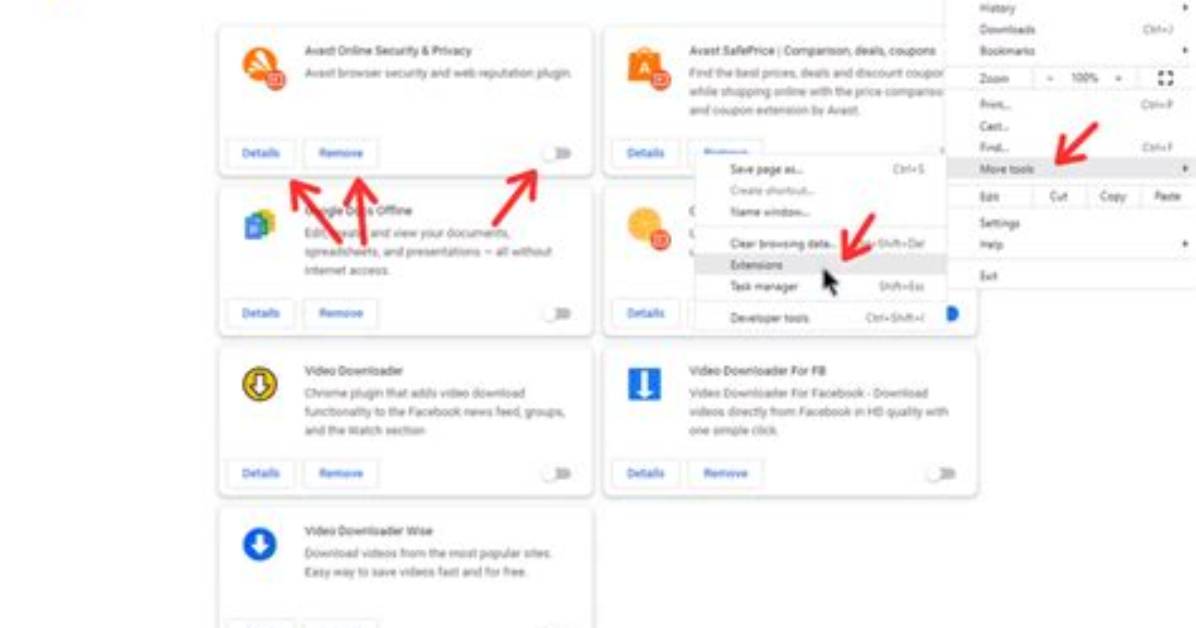
Malicious browser extensions are extremely easy to get, and the same easy to remove. Some of them can try to avoid the removal – by blocking the settings window, for example, but will not be able to resist the anti-malware software. I will show you how to get rid of unwanted and malicious browser extensions both manually and with the help of anti-malware software. To forget completely about the unwanted plugin presence, you need not only to remove it, but also to reset your browser settings.
First, let’s see the shorter way to deal with the problem. As I have mentioned, the best way to do it fast and effectively is to use anti-malware software. But which one? Microsoft Defender">2, which looks like a good solution (always at hand, with perfect detection databases) is able to remove the virus, but lacks the browser reset function. In fact, it can reset only Edge – which is not nearly as popular as Chrome, Opera or Firefox. Another problem of the Defender is high resource consumption – it can “eat” up to 2-2.5GB RAM and 60-70% of CPU power while running in the background. Weak PC users disable it quite often, because having only 50% of your PC capacity because of the antivirus running in the background is undesirable.
That’s why I recommend GridinSoft Anti-Malware – the most effective tool for this purpose. Its databases are updated hourly, and it consumes almost nothing while running in the silent mode. Moreover, it has the facilities to reset all browsers you have on your PC in just several clicks.
Robert Thorne covers electric vehicle innovations, autonomous driving systems, global mobility trends, and automotive engineering developments.
