
How to Use Meta Quest 2 as an Ar Headset: Passthrough, Multitasking, Hand Tracking and More

The Meta Quest 2 Is Arguably the Most Popular Vr Headset Right Now, Thanks to Its Price, Simplicity and Availability. and While It Started as a Standalone Vr...
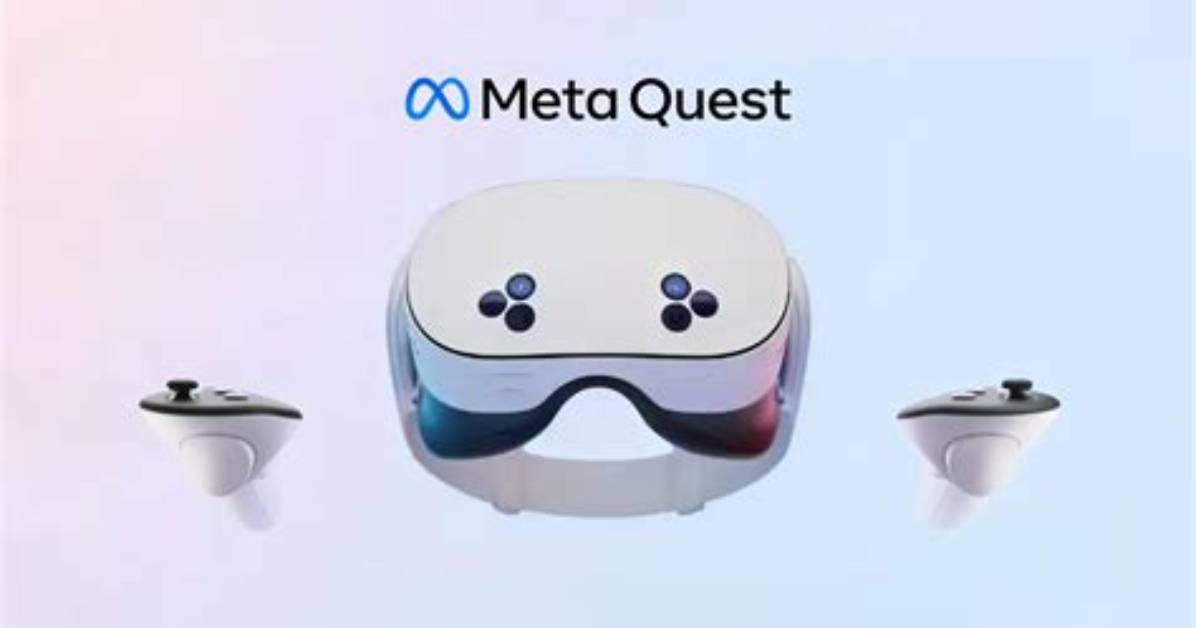
Meta kept adding exciting new features to it, which basically turned it into an AR headset too (augmented reality), not just mere VR (virtual reality)!
With its successor – the Quest 3 – now on the horizon, we can see that Meta's focus on AR is clearly stronger than ever, as the Quest 3 offers even better (color!) passthrough, and packs a depth sensor, among other features.So what if you want to take full advantage of your wonderfully exciting Quest headset, and take a stab at its AR capabilities? Well, we're here to help get you started!
How to enable passthrough and get an AR experience; see the real world behind the virtual interface
The Passthrough option is right under Wi-Fi (near the bottom left). Note that the black background you see here is a result of the Quest 2's screen capturing blocking its cameras, for privacy reasons. Rest assured you will be seeing the real world, and not a black void.
A crowning feature of any good AR headset is its ability to track your head, and show you digital objects over the real world. By default, the Quest 2 blocks the real world from your view, fully immersing you into a VR experience, but we can change that.All we need to do is enable passthrough. This is easier than ever in the latest Quest 2 software:
- Step 1 – In your Quest 2's home, click on the clock (bottom right corner of the taskbar)
- Step 2 – Click "Passthrough" to start seeing your real-world environment
With passthrough enabled, your Quest 2 will show you your real-world environment, as opposed to a digital home environment. It utilizes its front cameras for this, which as you may expect, don't deliver the most crisp (or even a color) experience, but it's cool nonetheless.
And again, the Quest 3 will have color passthrough, and likely better and sharper cameras for it, so stay tuned, we'll check it out when it's available!
Must Read
Enable multi-window apps, and start multitasking in AR like a (futuristic) boss
Multi-window multitasking, in AR, on the Quest 2 (simulated image, as actual camera capture is disabled on the Quest 2, for privacy reasons)
Did you know your Quest 2 was actually a multi-tasking powerhouse? Well, it's not exactly an iPad on your face, like Apple's Vision Pro might just be, meaning your apps for productivity are limited, but still – you can run up to three of them at the same time, in AR!Whether those are three web browser windows, or one web browser, one file manager, and say, one photo viewer (this is pretty limited to Meta's non-fullscreen built-in apps, unfortunately), you can do a lot simultaneously. Heck, play three YouTube videos from the web browser, or a podcast, while reading PhoneArena on another floating window – the web browser alone offers a lot of productivity and multitasking opportunities.
So, as with color passthrough, getting multi-window apps working is simpler than ever on the latest Quest 2 software:
- Step 1 – In your Quest 2's home, click on the clock (bottom right corner of the taskbar)
- Step 2 – Click "Multi-window" to enable it
The perspective of the user interface will change a bit, seemingly moving further away and expanding. Now if you open the web browser, you'll notice you can not only resize it, but grab it and move it in one of three dedicated spots for app windows.Not just that, but you can open up to three instances of the web browser, one in each of those spots! Simply drag and drop the web browser icon from the dock on the bottom of your view, into one of those three window spots.
You can then resize those to your liking, close them, or replace them with other non-fullscreen apps that support multi-window (pretty much just the built-in ones from Meta).
In any case, you are now experiencing what could very much be the future! Web browsing and multitasking in augmented reality! And on that affordable headset you thought was for VR gaming only!
Once again, a reminder that this experience will be way better and more impressive on the Quest 3, but hey, even on the Quest 2 – it's pretty exciting.
Robert Thorne covers electric vehicle innovations, autonomous driving systems, global mobility trends, and automotive engineering developments.
