
Introduction to Knowledge Management

In Today’s Knowledge-Based Economy, the Ability to Manage Knowledge Becomes More Crucial by the Minute. Around 1950, Nearly Half of All Workers in...
In today’s knowledge-based economy, the ability to manage knowledge becomes more crucial by the minute. Around 1950, nearly half of all workers in industrialized countries were making or helping to make things. By the 2000s, only a small percentage of all workers were dedicated to industrial work. As the demand for knowledge work increases, so does the complexity of the management of this knowledge. Knowledge is increasingly being viewed as a commodity or an intellectual asset, but there are some paradoxical characteristics of knowledge that are radically different from other valuable commodities. These knowledge characteristics include the following:
- Using knowledge does not consume it.
- Transferring knowledge does not result in losing it.
- Knowledge is abundant, but the ability to use it is scarce.
- Much of an organization’s valuable knowledge walks out the door at the end of the day.
We have unlimited knowledge available to us with the advent of the Internet, but we need a way to determine what is useful and what is not. A great organization is one that learns, remembers, and acts according to the best available information, knowledge, and processes. Two key factors in competitiveness are the ability to create and diffuse knowledge. It is the ownership of knowledge along with the ability to use that knowledge to create or improve goods or services that defines a successful company.
What is knowledge management?
Put simply, knowledge management is the process of capturing, distributing, and effectively using knowledge. This definition was coined by Tom Davenport in 1994. Another way to define Knowledge Management is the process or processes used to handle and oversee all of the knowledge that exists within a company. The concept of Knowledge Management sprouted from the consulting industry around the popularity of the internet. It was quickly realized how powerful having an intranet, an in-house subset of the internet, can be. This offers the ability to make information available, so the right people can get the right information at the right time.
Knowledge comes in three forms.
- Explicit: Information in tangible form such as books, newspapers, or articles.
- Implicit: Information that does not originate in a tangible form, but can be transferred into tangible form. An example of this would be a dictation of a speech or an experience.
- Tacit: Information that is difficult to capture in a tangible form like someone’s perception of an experience or a feeling after a big event.
The field of knowledge management mostly relies on explicit knowledge, also called formal or codified knowledge, tacit knowledge, or intuitive knowledge. Implicit knowledge is the practical application of explicit knowledge. It is the best practices and skills that are transferable from job to job, and the best ways to perform a task with results. Implicit knowledge eventually becomes explicit or tacit or both. We want every employee to create good habits, so it is important to have a well-maintained knowledge management system.
Must Read
Theory of knowledge management
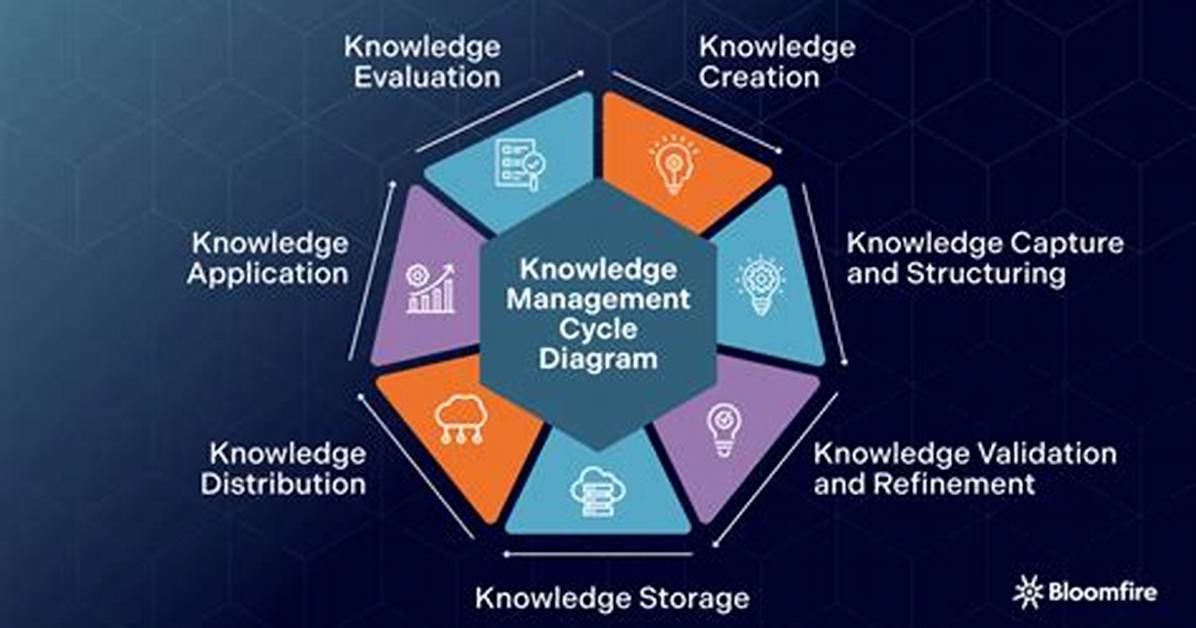
Knowledge Management is a continuous cycle of three processes.
- Knowledge creation and improvement
- Knowledge distribution and circulation
- Knowledge addition and application
The success of an organization depends on how it continually reinvents itself. Employees should know how to access and store knowledge within the organization. It is as important to learn from the past as it is to enhance performance in the future. A feedback system is important, so that you know if the right people are getting the right information. This allows the knowledge base to be improved upon continuously while ultimately allowing an organization to continue being successful.
David Miller brings 15 years of experience in global economics, personal finance strategy, and market dynamics. He specializes in turning complex economic trends into actionable insights for everyday readers.
