
Itam vs Sam: What’s the Difference?

In the Last Several Year's, It Asset Management (Itam) Has Become an Increasingly Vital Topic—a Way for Companies to Know, Assess, and Manage All the Assets...
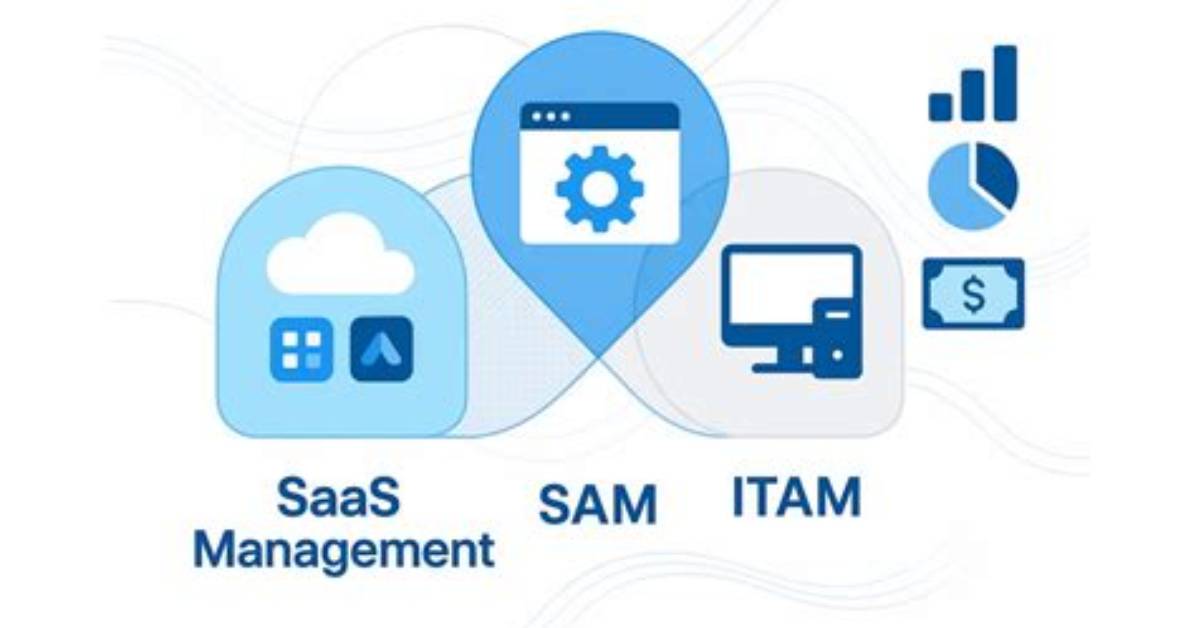
In the last several years, IT asset management (ITAM) has become an increasingly vital topic—a way for companies to know, assess, and manage all the assets they own and use. Asset management can be a complicated topic: it is one of both depth and breadth, so subsets have emerged, including hardware asset management and software asset management (SAM). In this article, we will explore how SAM differentiates from ITAM and why it is a distinct discipline.
Defining ITAM and SAM
Let’s begin with defining the terms ITAM and SAM. Since IT service management (ITSM) frameworks are adopted in various organizational and technology context, several definitions exist across businesses and governing institutions. Consider the widely-accepted definitions by ITIL® and Gartner:
- IT asset management “provides an accurate account of technology asset lifecycle costs and risks to maximize the business value of technology strategy, architecture, funding, contractual and sourcing decisions.”
- Software asset management includes “all of the infrastructure and processes necessary for the effective management, control, and protection of the software assets within an organization throughout all stages of the lifecycle.”
This graphic shows ITAM as an overarching discipline, with some subsets including SAM, hardware asset management (HAM), and the platforms that manage these processes.
Understanding ITAM
Asset management helps organizations manage the cost, risks, and opportunities of complex technology systems—by first establishing a ‘single source of truth’ amidst significant IT complexities such as on-prem and cloud software, rapid growth of IoT and BYOD, and seemingly never-ending audits, both internal and external. All this to say: IT assets have never been so complex, varied, or numerous. Any lack of visibility or control into your infrastructure is a sure-fire way to stop your digital transformation before it starts.
Even companies who excel at ITIL implementation are often lagging in their ITAM efforts. Many frameworks didn’t recognize the importance until recently: asset management wasn’t included until ITILv3, and COBIT 5, released in 2012, also focuses significantly on asset management. This ITAM lag may also be explained by increasingly complex configurations, which leave companies at odds on how to manage these multiplying assets.
No matter why you’re behind on your ITAM, you’ll want to prioritize this effort. Benefits of ITAM include:
- Routinely and easily assess strengths and weaknesses across a variety of benchmarked use cases, such as information security. These weaknesses offer a roadmap for business (thus IT) priorities.
- Improve your cost management holistically, now that you know which assets are using the most resources.
- Showcase the strides you’ve made within ITAM. You’ll get wider company buy-in once you’ve succeeded with smaller asset management projects.
- Understand your competition. Aligning with a widely-accepted ITAM strategy, like ITIL or COBIT, means you can compare your processes with others in the industry.
James Sterling reports on renewable energy developments, climate policy, ecological conservation, and green tech innovations around the globe.
