
Logarithm in Verilog

I've a Statement in Verilog Looking Like Integer Level = Log(N) (Where N Is a Parameter and Level Is to Be Determined) but I Understand I Cannot Do Complex...
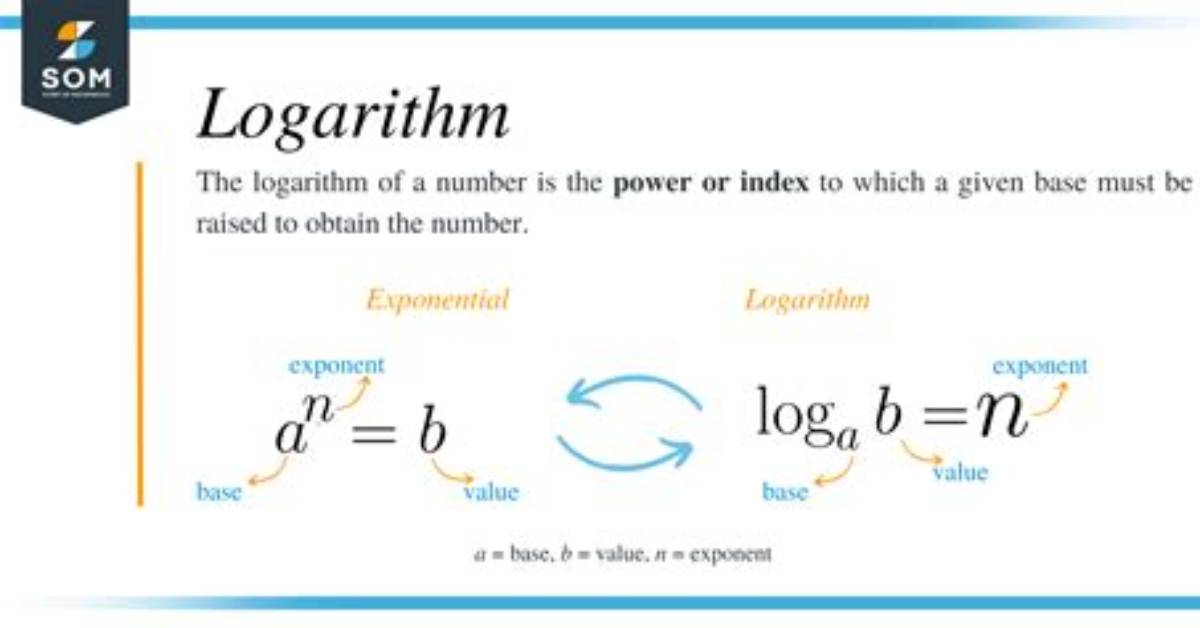
I've a statement in verilog looking like integer level = log(N) (Where N is a parameter and level is to be determined) But I understand I cannot do complex math statements in verilog, so I'm wondering if there is an alternative solution to the above problem?
Any feedback appreciated!
5 Answers
If it is a logarithm base 2 you are trying to do, you can use the built-in function $clog2().
The answer to ADDRESS WIDTH from RAM DEPTH describes a couple ways to evaluate constant logarithms in this situation.
Verilog has functions for natural logarithm ($ln()), decadic logarithm ($log10()) and ceiling of binary logarithm ($clog2()). In constant expressions they should be synthesizable, but actual support by tools varies.
The following is synthesizable Verilog code:
module test(output [31:0] a, b, c);
  assign a = 1000 * $ln(123);
  assign b = 1000 * $log10(123);
  assign c = 1000 * $clog2(123);
endmodule
E.g. after RTL synthesis with Yosys (e.g. yosys -p 'prep; write_verilog -noattr' test.v):
module test(a, b, c);
  output [31:0] a;
  output [31:0] b;
  output [31:0] c;
  assign a = 32'd4812;
  assign b = 32'd2090;
  assign c = 32'd7000;
endmodule
But I understand I cannot do complex math statements in Verilog
Verilog is first and foremost a hardware description language. What hardware log(N) statement is describing? Modern FPGAs consist of LUTs, flops, small embedded memories, simple DSPs that implement MAC (multiply-accumulate) primitives. log(N) and other complex math statements cannot be mapped directly into those primitives. The same goes with ASICs.
By analogy, log(N) doesn't get executed by a processor. It calls a bunch of lower-level assembly instructions to do so. Those assembly instructions are part of the log(N) library (C, C++, etc.)
To be able to synthesize log(N) for ASIC/FPGA it requires an instance of a log(N) IP core.
I like to think of (logarithm base n of value) as answering the question "How many base n digits do I need to represent 'value' independent numbers?" (Keeping in mind that 0 counts as a number)
Thinking of it that way, you can implement your own log base 2 in SystemVerilog:
function bit [31:0] log_base_2 (bit [31:0] log_input);
  bit [31:0] input_copy;
  bit [31:0] log_out = 0;
  input_copy = log_input;

  while(input_copy > 0)begin
    input_copy = input_copy >> 1;
    log_out = log_out + 1;
  end
  log_out = log_out - 1;

  if(log_input != (1 << log_out))
    log_out = log_out + 1;

  return log_out;
endfunction
Marcus Vance is a cybersecurity auditor and technology writer dedicated to educating the public about online safety, data privacy regulations, enterprise security, and emerging cyber threats.
