
Morpeth | Co-Curate

Morpeth Is a Town in the North-East of England, Lying on the River Wansbeck. Nearby Villages Include Mitford and Pegswood. in the 2011 Census, the Population...
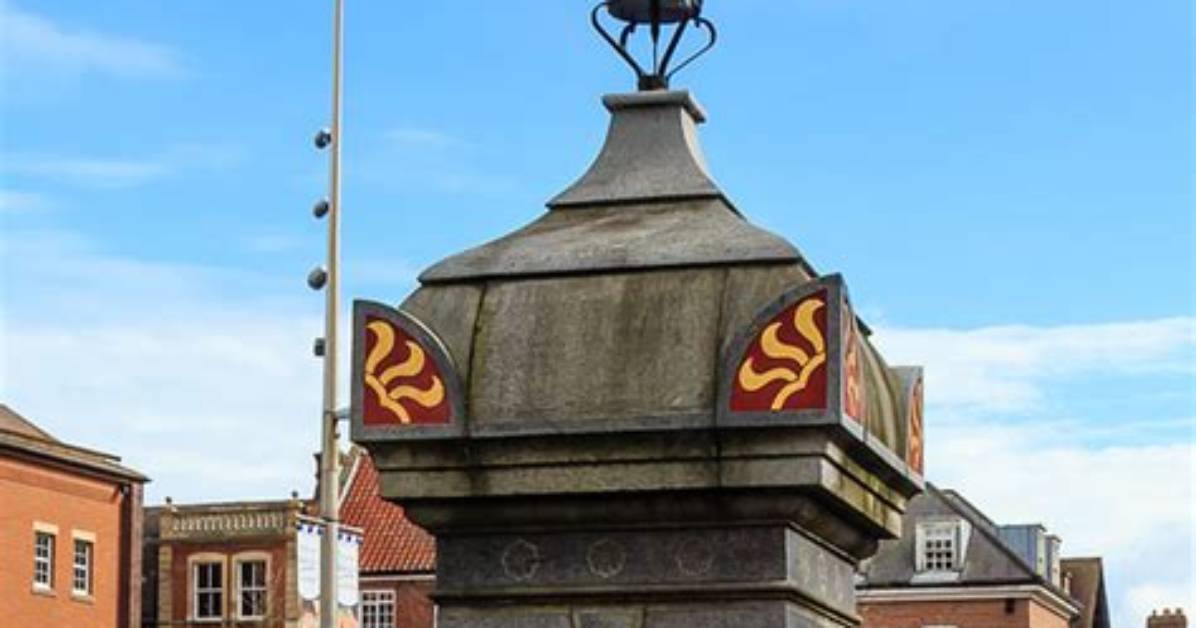
Morpeth is a town in the north-east of England, lying on the River Wansbeck. Nearby villages include Mitford and Pegswood. In the 2011 census, the population of Morpeth was given as 14,017, up from 13,833 in the 2001 census.
The name literally means 'murder path', though the incident that gave rise to this grisly appellation is no longer known.
History
Morpeth grew up at an important crossing point of the River Wansbeck. Remains from prehistory are scarce, but the earliest evidence of occupation found is a stone axe thought to be from the Neolithic period. There is a lack of evidence of activity during the Roman occupation of Britain, although there were probably settlements in the area at that time. After the Norman conquest the town came into the possession of the de Merlay family, and by 1095 a motte-and-bailey castle had been built. Newminster Abbey was founded in 1138 by Ranulf de Merlay, lord of Morpeth, and his wife, Juliana, daughter of Gospatric II, Earl of Lothian, as one of the first daughter houses of Fountains Abbey. The town became a borough by prescription. King John granted a market charter for the town to Roger de Merlay in 1199. The market is still held on Wednesdays. The town was badly damaged by fire in 1215 during the First Barons' War. In the 13th century a stone bridge was built over the Wansbeck, replacing the ford previously in use. Morpeth Castle was built in the 14th century by Ranulph de Merlay on the site of an earlier fortress; only the gatehouse (which was restored by the Landmark Trust in 1990 and now operates as a holiday rental} and parts of the ruined castle walls remain.
For some months in 1515–16 Margaret Tudor (Henry VIII's sister and Queen Consort of Scotland (James IV's widow) lay ill at Morpeth Castle, having been brought there from Harbottle Castle.
In 1540 Morpeth was described by the royal antiquary John Leland, as "long and metely well-builded, with low houses", and as "a far fairer town than Alnwick". During the 1543–50 war of the Rough Wooing, life in Morpeth was disturbed by a garrison of Italian mercenaries, who "pestered such a little street standing in the highway" by killing deer and withholding payment for food.
In 1552, William Hervey, Norroy King of Arms, granted the borough of Morpeth a coat of arms. The arms were the same as those of Roger de Merlay, but with the addition of a gold tower. In the letters patent, Hervey noted that he had included the arms of the "noble and valyaunt knyght ... for a p'petuall memory of his good will and benevolence towardes the said towne".
Morpeth received its first charter of incorporation from Charles II. The corporation it created was controlled by seven companies or trade guilds : the Merchant Tailors, the Tanners, the Fullers and Dyers, the Smiths, the Cordwainers, the Weavers and the Butchers. This remained the governing charter until the borough was reformed by the Municipal Corporations Act 1835.
Until the 19th century Morpeth had one of the main markets in Northern England for live cattle. The opening of the railways made transport to Newcastle easier, and the market accordingly declined.
During the Second World War, RAF Morpeth opened at nearby Tranwell and was a notable air-gunnery training school.
The town and the county's history and culture are celebrated at the annual Northumbrian Gathering.
Notable residents
Chloe Bennett explores the intersection of pop culture, streaming entertainment, digital trends, and contemporary lifestyle. Her weekly commentary reaches thousands of culture enthusiasts.
