
Nokia N-Gage: a Gaming Phone So Radical That It Had to Fail

You Know How Kids Typically Ask for Gaming Consoles for Christmas? Well, I Did So Too. Only Mine Would Double as a Mobile Phone as Well! of Course, I Am...
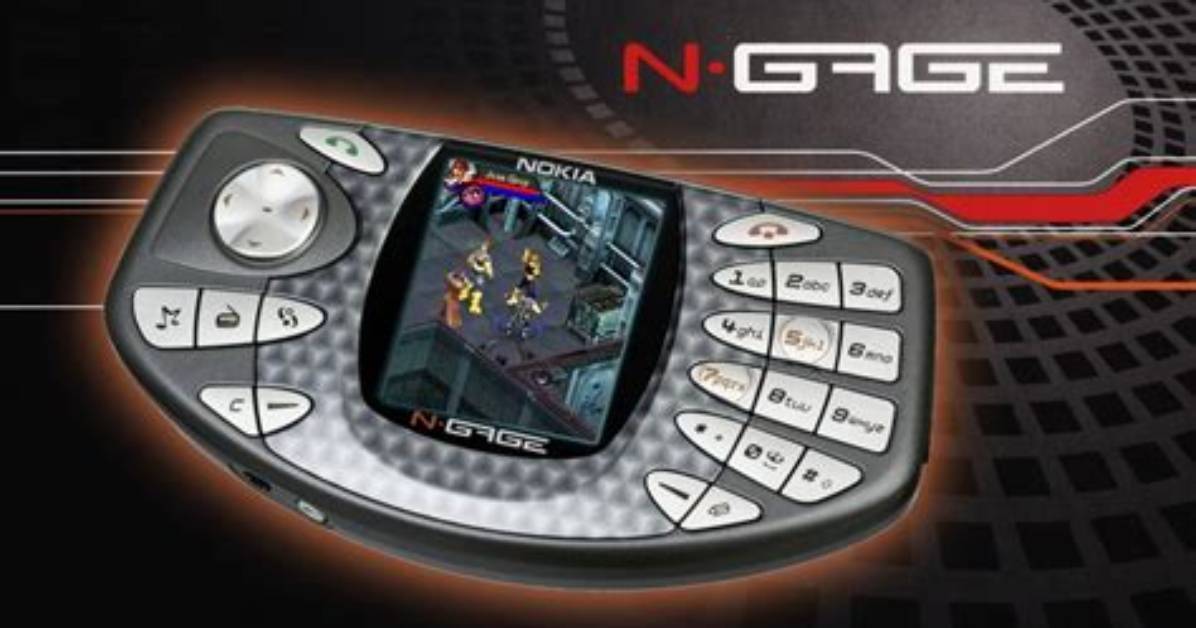
However, I didn’t have any expectations of actually getting the N-Gage for real. I didn’t know anything about money back then and I still have no idea what type of financial acrobatics my family had to pull off in order to get me one, but they did. And oh, boy, was I disappointed to see that it only came with one pre-packed game that was about snowboarding!
I am barely competent at this game on PSX, so I can only imagine how hard it was on an N-Gage.
The Nokia N-Gage was more than a gimmick phone
But let’s rewind a bit and reconstruct that memory so I can gauge things from the perspective of today-me. The N-Gage is a phone to be held in a horizontal manner, which allows it to double as a console. The vertical screen was awkward at first, but ultimately didn’t get in the way of enjoying proper games… even if devs had to go through hell to optimize them for the N-Gage. The act itself, however, is testament to the power of the Nokia brand of that time. It shows that companies really had a high adoption rate for the console-phone, which in turn inspired users to go for it. And wow, was this phone built well! This should come as no surprise, given that it was made by Nokia — the King of mobile phones of yesteryear. The device was comfy to hold, possibly because it was so heavily inspired by the Game Boy Advance (GBA), save for the shoulder buttons. I never put any sort of case on this thing and it didn't need it. Even today it looks awesome for its age, albeit with some battle scars. But those are the result of hundreds of drops with no major wounds. That's respectable for sure!
The overall form and feel of the N-Gage really brought in that futuristic gamer aesthetic of the early 2000s. Sure, it could use a bit more translucent plastic, but at least it had interchangeable panels. Even if you could never find them for purchase, due to them costing insane amounts of money. But the phone offered both external and internal customization, as the UI (user interface) allowed users to change its accent colors and even rearrange the menu contents. It felt like a desktop experience in the eyes of a ten-year-old, which is a type of success all on its own.
Ah, yes, the infamous N-Gage meme.
Oh, and while talking about form-factor: those memes about the phone having to be held sideways in order to talk through it? Total myth. I had always used it as it came natural: with the screen towards my face, speaker side up, and no one ever complained about sound quality. The speaker on the N-Gage was loud enough to be heard from the slightly off-center position that it held. But you know what was an actual pitfall of the N-Gage’s design? Where the game slot was located. Typically, on a portable console the game slot is in an obvious place, which can be easily accessed after removing some sort of protective flap. Well, in the case of the N-Gage, if you wanted to swap your games out, you’d have to basically power off and disassemble the phone. Somehow, Nokia didn’t have the insight to predict that having to take out the battery in order to access the card slot was a bad move. This forced users to wait an unwanted amount of time in order to get their game on, which is the polar opposite of what you’d want out of a pseudo gaming console. Regardless of the functionality of the N-Gage’s speaker, the Taco Phone meme was so impactful on people’s opinion that the design decision was changed with the N-Gage QD. This was the 2nd gen and final version of the Nokia gaming phone, which also brought in a proper hardware fix: the game slot was relocated to the phone’s exterior this time around! Even at that, though, the QD was a mixed bag. Its smaller form factor made for a narrower grip, which made playing more uncomfortable. The buttons were downgraded too and they were way mushier than any gamer would ever like, as that severely impacts reaction times and precision.
The best part of Flo Boarding was unlocking new snowboard designs.
Must Read
N-Gage-ing gaming!
So, fast forward to where we last left off on the topic of games: "Flo Boarding". I was bummed out, even if the game looked and sounded great. It was very difficult to get into, but after weeks of practice, I became a king at "Flo Boarding". I could get record times and even pull off tons of tricks. The game totally inspired me to want to try snowboarding in real life, which as it turns out — is quite easier than playing "Flo Boarding" on the N-Gage.
A cool little side-feature of "Flo Boarding", however, was a basic AI of a girl that you could chat with. That not only allowed me to get accustomed to typing on the N-Gage, which was odd — even for back when numbers represented strings of letters — but also made me feel like I am already in the future. The AI was quite limited, but I have fond memories of me and my friends trying to find some sort of hidden secret within it. Didn’t really work out, but it was fun.
Nokia got the screen wrong and added too many buttons, but other than that they nailed the concept.
The N-Gage did also come with a CD that not only offered a desktop companion app that would — in theory — provide updates, but also a dedicated game store with some free offerings too. It took a company of four — with one of us being an experienced IT that went on to work for Microsoft — to actually try and figure out what Nokia wanted us to do with the CD, though. And ultimately we failed. I never got to browse that store, get the promised free game or even update my phone. The contents of the CD were possibly too modern for our understanding, or maybe were not as user friendly as the N-Gage’s interface itself.
And while that was going on, I had a realization that the N-Gage was running Symbian 6. As such, all of the Java games that you could buy off different catalogs were mine for the taking… As long as I could put up with saving money from my allowance, which I totally did. A bright example that comes to mind is “God of War: Betrayal”. Yep, an official God of War mobile game for old phones! It was a blast to play. So was “Buffy: The Vampire Slayer” and a little beat-em-up called “Demon Hunter” that was heavily inspired by "WarCraft III", which I was obsessed with at the time.
No joke, I had forgotten about the little carrying case that games came with!
But what about real N-Gage games? Well, those did exist and were incredibly overpriced. But the bigger issue was that I most often encountered the games that I had little to no interest in, such as "Splinter Cell" or "FIFA". It took a collaborative effort between family members abroad for me to actually get my hands on some quality games. Said games came in these nifty little boxes that didn’t offer much shelf presence. But they were effectively SD cards, and the best thing about them was that users had access to any extra space beyond what the official game was taking up. Neat!
I’m a gaming classicist — I took interest in gaming with the NES and Sega Genesis — so you probably won’t be shocked to find out that my favorite game on the N-Gage was "Sonic N". Not only do I know this game by heart to this very day, but it is also a prime example of the N-Gage’s inspirations, for "Sonic N" is literally a port of "Sonic Advance" from the GBA. Even with the odd aspect ratio, the "Sonic N" was extraordinarily fun and comfortable to master. Full disclosure though: it took me five years to actually collect the Chaos Emeralds. But it kept me coming back for more!“Rap theme” was a much stronger genre of music back in 2005.
Alexander Ross has covered the video game industry for a decade, writing deep dives on game design, esports tournaments, VR developments, and gaming culture.
