
Pc Cpu Guide: Best Cpu for Pc Gaming

Cpu, After Graphics Card (Gpu) Is the Second Most Important Element of Gaming Pc Affecting the Smoothness of Gameplay and the Number of Fps (Frames per Second)...
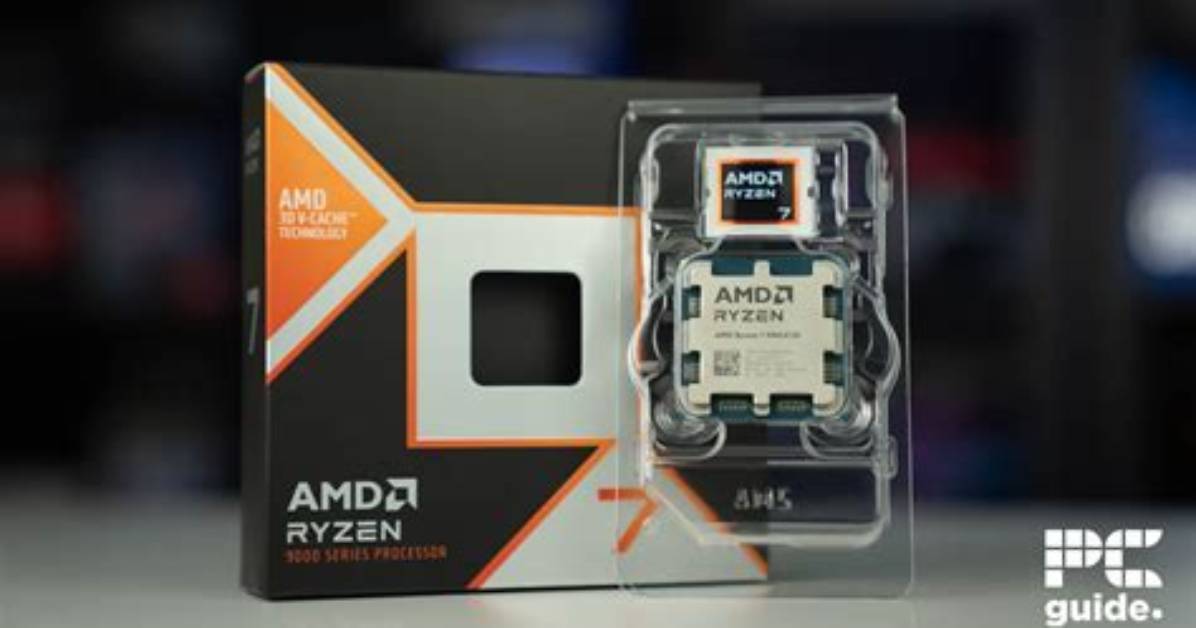
CPU, after graphics card (GPU) is the second most important element of Gaming PC affecting the smoothness of gameplay and the number of FPS (frames per second) in games.
minor
Basics of CPUs for Gaming PC
What is a CPU?
CPU is an abbreviation for Central Processing Unit. Many people compare the CPU to the "brain" of a desktop PC, but I prefer a comparison to the "heart". The CPU determines the rhythm of work of all other elements in the computer.
CPU in one cycle fetch program instructions or data from RAM (system memory), decode those instructions or data, execute them. In next cycle entire process repeats over and over again until the program is over.
important
AMD Ryzen CPUs Naming Scheme
AMD Ryzen CPUs Naming Scheme
Brand - Ryzen is Mainstream to Prosumer Brand
|
Market Segment 3 - Low-end performance 5 - Mid-range performance 7 - High Performance 9 - Enthusiast / Prosumer |
Generation 1 - 1st Generation (old) 2 - Second Generation 3 - 3rd Generation (latest) |
Performance Level 1,2,3 - Low 4,5 - Mid 6,7 - High 8,9 - Highest |
Power Segment for Desktop CPUs (none) - Standard Desktop CPU G - with Integrated Graphics GPU S - Low-power with Integrated Graphics Processor X - High Performance with XFR WX - High Core Count Workstation E, T - Low-power Desktop For Mobile CPUs U - Standard Mobile H - High-performance Mobile M - Low-power Mobile |
important
Intel Core CPU Naming Scheme
Intel Core CPU Naming Scheme
|
Brand Modifier i3 - Entry - level i5 - Mid - level i7 - High - level i9 - Enthusiast / Prosumer |
Generation / Family From 1 (oldest) to 9 (newest). 10th Generation will have |
Processor Line Suffix K - Unlocked and can be overclocked F - Integrated graphics are not available T - Power-optimized lifestyle S - Special Edition H - High performance graphics HK - High performance graphics, unlocked G - Includes discrete graphics on package U - Ultra-low power |
important
Do I need the fastest CPU for games?
No. The main load for generating graphics in games lies with the video card (GPU), the CPU plays a supporting role.
Continuing the analogy to the CPU as a "heart", the GPU is "muscle". Strong muscles and a weak heart are not enough to run a marathon, a similarly strong heart combined with weak muscles will also not give you success. CPU power should be adequate to GPU performance.
Since the problem with low performance in games is in most cases on the side of the weak GPU (which works at maximum), the CPU in most cases is not heavily loaded.
The Mid Range CPUs described below are completely sufficient when using even a powerful GPU for comfortable playing.
Top Mainstream CPUs, also described below, are needed when you have the best GPUs, play at high resolutions or for a small number of games with high CPU requirements.
important
Does the CPU affect the amount of FPS in games?
Yes, but in a limited way.
The main impact on the number of FPS in games has a graphics card (GPU), the CPU has a secondary role.
However, if you want to achieve high FPS, a slow processor is not enough even with a fast GPU. In addition to a fast graphics card, you must have at least a Mid Range CPU.
The higher the screen resolution, the greater the role of the graphics card and the share of CPU in overall performance decreases.
insignificant
Who makes a better CPUs, Intel or AMD?
Two companies, Intel and AMD, have been on the Gaming PC CPU market for many years. For a long time, Intel CPUs, although more expensive, were definitely more efficient, just simply better.
The situation has changed recently. The latest CPU models from AMD in both the Mid Range and Entry Level segment match performance of CPUs from Intel, often outperforming them, while maintaining a lower price.
In the Top Mainstream CPUs range the fight is more even, with little AMD indication.
So now in Mid Range and Entry Level CPUs, AMD is the winner, in Top Mainstream CPUs there is a draw.
important
Can I use any CPU with any motherboard?
No. The CPU and motherboard must match. The motherboard specification lists the types of supported CPUs.
The purchase of the CPU must be combined with choosing the right motherboard.
minor
Can I use any graphics card with any CPU?
Yes, but under certain conditions.
Simply put, you can use any CPU for slow graphics cards, but to use fast graphics cards you must use a CPU from at least Mid Range.
An additional aspect is the fact that motherboard on which graphics cards is instaled will differ between AMD and Intel CPUs.
Although the vast majority of modern graphics cards and motherboards work in the same PCIe 3.0 standard, and theoretically every GPU fits into any motherboard, logic indicates that if you decide on an AMD CPU, you have an AMD CPU compatible motherboard, the first choice should be graphics card from AMD.
With an Intel CPU, the first choice should be a graphics card from nVidia.
However I will confirm it again, basically every graphics card suits every CPU.
insignificant
My CPU has a built-in graphics card, is that good?
It does not matter.
Unused built-in graphics card does not slow down the CPU, it behaves just as if it was not there at all.
If you would like to use this built-in graphics card, it is not suitable for any serious gaming applications and is only a solution for very cheap Gaming PC.
insignificant
Can I Overclock my CPU?
Yes you can. By Overclock we mean changing the processor's operational parameters in order to accelerate its operation.
You will definitely need better cooling for this, i.e. a more efficient heat sink with a fan.
You will also need the right CPU. In the case of Intel, the case is simpler, CPUs with the possibility of overclock are described as "unlocked", in the case of AMD the case is a little more complicated, but here too, overclock is possible.
BIOS settings in modern motherboards make overclock very easy, they have ready settings for different speeds.
It is worth reading a bit about it before we cause the computer to stop booting.
insignificant
Does CPU overclocking make sense?
In my private opinion, it makes no sense to overclocking the CPU, especially when it comes to games.
Overclocked CPUs look great on tests, you can impress your friends with your super CPPu, you can buy a great cooler with LEDs, etc.
You can also spend 50 USD more and have a stable, quiet and reliable system with same speed without overclocking the CPU.
The whole concept of overclocking the CPU is a remnant of the times when fast CPUs were ridiculously expensive and everyone was trying to get all the power out of their cheap CPUs.
Currently, even Mid Range CPUs are very fast and sufficient to play games.
Parameters describing CPUs
important
Clock Speed
Clock speed is one of the most important factors for determining performance in games, speed at which a CPU can execute instructions. When buying a CPU, we try to have the highest Clock Speed.
The Clock Speed measurement unit is gigahertz (GHz), billion cycles per second, it is also conventionally the speed of the entire CPU.
We write the speed of modern CPUs as a double number, the first of which is Processor Base Frequency and the other Max Turbo Frequency. For example, AMD Ryzen 9 3900X 3.8GHz (Base Frequency) / 4.6GHz (Max Turbo Frequency).
Processor Base Frequency is the rate at which the processor's transistors open and close.
Max Turbo Frequency is the maximum single core frequency at which the processor is capable of operating using.
Intel Turbo Boost dynamically increases the processor's frequency as needed by taking advantage of thermal and power headroom to give you a burst of speed when you need it, and increased energy efficiency when you don't.
AMD Turbo Core AMD Turbo Core technology dynamically adjusts to give you a performance boost just when the operating system requests the highest processor performance.
important
Socket Type
The socket is the component that provides the mechanical and electrical connections between the processor and motherboard.
There are many different Socket Types, but in modern CPUs that we are interested in in the context of Gaming PC, we are basically interested in only two.
Intel Socket 1151 it is socket type for Intel Coffee Lake Family CPUs, in which the pins are native to the socket, LGA (Land Grid Array).
AMD Socket AM4 - AMD's solution, PGA, the pins are on the processor itself and fit into slots on the socket, PGA (Pin Grid Array).
AMD Socket AM4 and Intel Socket 1151
Each of these two Socket Types requires a corresponding, different connector on the motherboard.
important
CPU Cores and Threads
Cores is a hardware term that describes the number of independent processing units in a single computing component. Simply put, for example, the Dual-Core CPU has two separate hardware processor units integrated onto a single chip.
The more Cores CPU has, the more sets of instructions the processor can receive and process at the same time, which makes this CPU faster.
The CPUs we discuss for Gaming PC applications should have (and have) no less than 4 Cores. Anything more than that makes the CPU faster but not necessarily for PC gaming applications.
Expensive 12 Cores CPU that performs great on speed tests, in many games (in real conditions) will be only slightly faster than the cheaper CPU with 4 Cores. On the other hand, if the game (application) can use the power of all Cores, the difference in speed can be significant.
8 Cores seems enough, for most PC games these days.
It is worth remembering that the Cores number is only an additional parameter affecting the speed of the CPU, and Clock Speed is still the most important parameter.
Each single CPU Core can have up to two threads. Threads are what allow your CPU to perform multiple things at once, they determine how many tasks your computer can perform at any given time (Hyper-Threading).
For example Intel Core i9-9900K CPU has 8 Cores and 16 Threads.
minor
CPU TDP
TDP Thermal Design Power represents the average power and amount of heat, the processor dissipates when operating at Base Frequency with all cores active. This is an average not a maximum value.
CPUs with higher TDP require more efficient cooling.
minor
CPU Caching
CPU Cache is an area of fast memory located inside of CPU, dedicated to storing frequently used data. There are three levels of CPU Cache: L1 (fastest), L2 (middle), L3 (slowest and largest).
minor
CPU Lithography
Lithography (in nanometers) refers to the semiconductor technology used to manufacture an integrated circuit.
The lower the Lithography, the better, because CPUs with lower Lithography can work more efficiently with less energy, which means that they can be faster. The latest genereation CPUs are produced in the technology of: Intel 14 nm, AMD 7nm.
minor
Max Memory Size
Max memory size refers to the maximum memory capacity supported by the processor. All CPU for Gaming PC described here can support at least 64 GB of RAM, so we have nothing to worry about.
But to use more than 4GB of RAM, even with the latest CPU you will need 64-bit operating system version, for example Windows 10.
minor
PCI Express Revision
All modern CPUs support PCIe (Peripheral Component Interconnect Express) in the 3.0 standard, which is good and most popular.
The PCIe connectors on the motherboard are needed to connect, among others, Graphics Cards and M.2 Drives. Most devices currently work in the PCIe 3.0 standard.
The latest CPUs from AMD have PCIe 4.0 (newer version) to use it you will need for a suitable motherboard and devices supporting PCIe 4.0.
Chloe Bennett explores the intersection of pop culture, streaming entertainment, digital trends, and contemporary lifestyle. Her weekly commentary reaches thousands of culture enthusiasts.
