
Playstation 3 12Gb Super Slim Review

The Playstation 3 Super Slim May Not Have Hugely Impressed Us When We Took a Look at It in Its 500Gb Incarnation a Couple of Months Back, but We Were Excited...
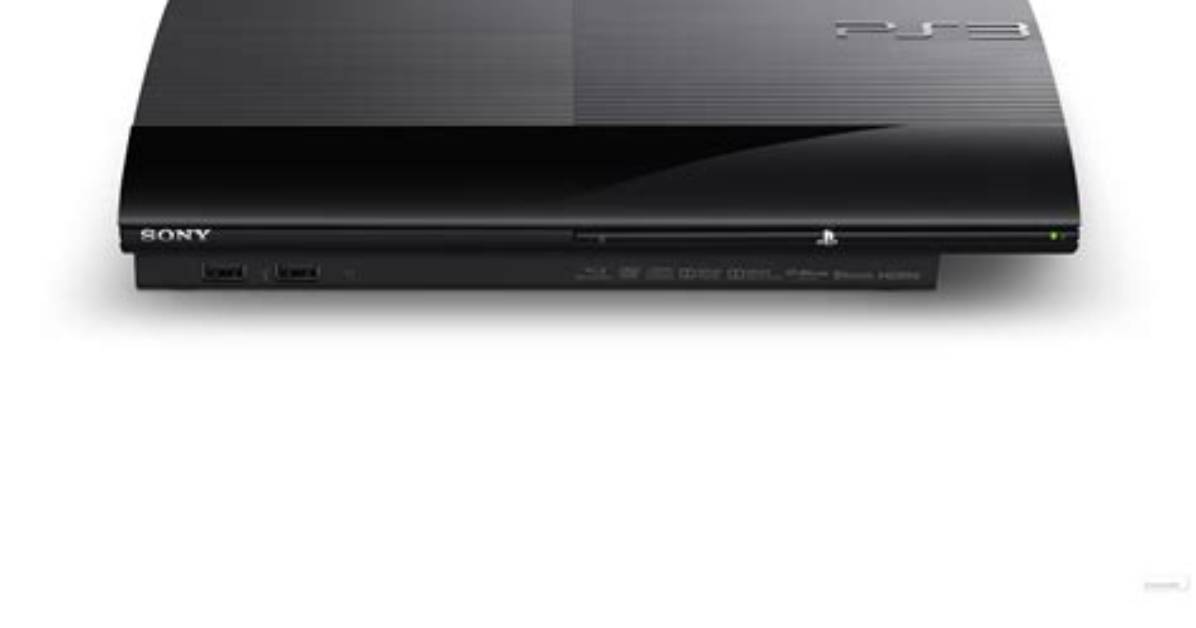
The PlayStation 3 Super Slim may not have hugely impressed us when we took a look at it in its 500GB incarnation a couple of months back, but we were excited by its future potential - specifically, the ability to offer a full PS3 experience at a very low retail price. At upwards of £200 at launch, the new model was simply too expensive when the older Slim offered better build quality at much the same price, but in the post-Christmas sales the 12GB entry-level machine was available to buy for less than £120. Now that's superb value you simply can't argue with.
Historically, it's the presence of the mandatory hard drive that has been a major factor in the PS3's relatively high price up against its drive-less Xbox 360 competitor. Typically, HDDs don't tend to fall in price dramatically - capacity simply increases. On top of that, Sony's plans for cost-reductions were thwarted by a flooding disaster in Thailand which crippled drive production and doubled prices worldwide within weeks - to this day, hard drives are still significantly more expensive than they were prior to the crisis. The 12GB model addresses all of these issues: it replaces pricey mechanical drives with flash memory that, conversely, has seen prices plummet in the last couple of years.
Initially, it was believed that Sony had simply gained access to an inventory of small capacity SSDs and would ship them in the PS3's traditional hard drive bay, where it could be replaced with any other 2.5-inch hard drive, so perhaps the biggest surprise upon receiving our 12GB unit was the complete absence of anything in the expansion slot. On the one hand, this was good news - upgrading to a hard drive would be fast and painless. On the other, no SSD-type arrangement means Sony had integrated a simple flash module onto the motherboard - and, as anyone with experience of USB flash drives will know, read and write speeds vary massively from one chip to the next.
The question is, to what extent is the 12GB model a compromised version of the full-fat HDD-equipped models? Is the flash storage fast enough to keep pace with a hard drive? And, looking at things more positively, does the removal of any mechanical moving parts actually speed things up? It's an interesting thought, because the potential is there for the bargain-basement PS3 to actually outperform its more expensive siblings.
"With no storage device in the hard drive bay, we took apart the 12GB PS3 to unearth its secrets - like the fact it actually has a 16GB flash chip."
Intrigued, we decided to find out more, and that meant facing off the 12GB model against the full range of its competitors: first up, the official 250GB hard drive upgrade, which we strongly suspect to be the exact same drive found in the entry-level US PlayStation 3. There's nothing really remarkable about this product in itself. It's a 7mm-high 2.5-inch Hitachi Z5K500-250 drive ready-installed into a mounting bracket, which slots right into the new PS3. The upgrade is undeniably rather expensive at £65 but there's nothing stopping you simply buying your own drive and purchasing the £10 mounting bracket separately. Or you can just stick the drive into the slot on its own with a dab of Blu-Tack and hope for the best, if you like to live life on the edge.
Our next test subject is the existing 500GB Super Slim, giving us a direct head-to-head comparison opportunity between the two major European SKUs. This model features the Hitachi Z5K500-500 drive, the more voluminous sibling of the upgrade unit. Rounding off our analysis, we go nuclear by utilising a 128GB SSD. The nature of the PS3's interface (not so much the older SATA-2 standard but more its lack of unbuffered read/writes) precludes utilising the full power of an SSD's read/write speeds, but you do get the benefit of instant access to every file on the silicon, offering a valuable advantage. In short, with our line-up we cover the length and breadth of Sony's official offerings, facing them off against the theoretical max in read/write performance that the PS3's hardware set-up is capable of.
Benchmarking the 12GB PlayStation 3
First up, kudos to Sony for not upselling the 12GB PlayStation 3. The chip found inside the new model - Samsung NAND identical to that used in the Kindle Fire HD - actually has 16GB of storage, but only 12GB is available to the end-user (Microsoft take note). The balance is hived off by the PS3's GameOS, used extensively by devs for caching data while you play. You won't find any such hidden partition on your 4GB Xbox 360S and performance will be hit as a consequence if you don't install a hard drive.
The available 12GB of space is undeniably tight, but you should be able to install any retail disc game onto the system. After the question of available space, performance is the next real issue here. We ran tests on several games: Gran Turismo 5's install is the stuff of legend, the kind of unoptimised dumping of data that is entirely at odds with the level of technological achievement found elsewhere in the game. A multitude of tiny files are transferred across en masse, making it perhaps the sternest install-based workout available. Next up, id Software's Rage - a lengthy install in its own right, but also the strongest in-game stress test we could muster for our storage test subjects.
Our final two games occupy two extremes. Avalanche's Just Cause 2 offers a small, light, intelligent approach to HDD access while Tom Clancy's Endwar is the precise opposite - hailing from an era where many Ubisoft devs simply copied the entirety of the Blu-ray disc onto the hard drive to avoid the more challenging scenario of streaming from the disc.
After installing everything, we then deleted it and measured the time that took too, for reasons that'll become evident a bit later on. Let's see how that went.
"The Samsung flash chip in the 12GB PS3 is primarly designed for use in mobile devices, and is also found in the Amazon Kindle Fire HD."
When we discovered that Sony had opted for an embedded chip rather than an SSD drive, we feared the worst, but generally speaking the 12GB unit performs well, outstripping expectations. In terms of write speeds, it is significantly slower than the hard drives, but it has the benefit of zero seek time - the mechanical hard drives need to move the writing head about on the surface, whereas the flash chip moves onto the next write immediately. In the case of the BD and HDD-rending GT5 install, which writes thousands of tiny files to the HDD, the flash actually outperforms the mechanical hard drives significantly, shaving off around 10 minutes from the mammoth transfer. However, elsewhere, with more prolonged writes, the flash chip came off a little worse, albeit not disastrously so.
To get an idea of relative sequential read/write speeds across our test subjects, we attached a USB hard drive to each of our systems and copied a 454MB video file to and from the host console. The hard drives and SSD came back with similar results - 12MB/s write, 13.5MB/s read. In contrast, the flash module fared somewhat worse in terms of write speed with a paltry 6.1MB/s result. However, its read speeds were competitive, clocking in at 12.5MB/s.
Of course, the elephant in the room if you've watched the video through to it conclusion is the dog-slow deletion speeds. Freeing up space on the flash chip takes an absolute age, to the point where deleting the Rage install took over nine minutes, with the SSD clocking in at just 16 seconds and the hard drives completing the same task in under 60 seconds.
If you've not got the will or the interest level to watch our time-lapse video above, here's all the data in one big table. It demonstrates pretty conclusively the strengths and weaknesses of the entry-level unit.
"Delete speeds in the 12GB PlayStation 3 are its Achilles' Heel - they can be shockingly slow."
| 12GB PS3 | 250GB Upgrade | 500GB PS3 | 128GB SSD Upgrade | |
|---|---|---|---|---|
| GT5 Install | 35:40 | 43:28 | 46:29 | 27:37 |
| Rage Install | 20:44 | 17:18 | 17:19 | 17:22 |
| Endwar Install | 13:49 | 11:43 | 12:18 | 12:12 |
| Just Cause 2 Install | 02:33 | 02:13 | 02:14 | 02:14 |
| GT5 Delete | 10:45 | 04:46 | 05:18 | 02:24 |
| Rage Delete | 09:15 | 00:51 | 00:18 | 00:16 |
| Endwar Delete | 06:19 | 00:40 | 00:52 | 00:38 |
| Just Cause 2 Delete | 01:25 | 00:07 | 00:03 | 00:03 |
Must Read
In-game performance
The creditable read speed of the flash chip means that in almost all cases, there's no real difference playing games on a 12GB unit than there is on any other. Indeed, in some cases performance may actually be improved. We loaded up a race in Gran Turismo 5 - a game known to witness significant speed improvements on SSD - and found that while the hard drives took around 40 seconds to load in the requisite data, the 12GB PS3 cut that by 25 per cent, taking just 30 seconds.
However, the real test is Rage. id's Megatexture technology thrives on fast seek times - the faster the better. Hard drives struggle to cope with it, resulting in obvious low-res textures that struggle to resolve into the higher-resolution versions without some often extraordinary lag. Here, upgrading to SSD absolutely transforms the experience, minimising the texture pop-in effect and significantly improving the look of the game.
In this case, initially we find that the 12GB model acts almost like a halfway house between standard hard-drive performance and SSD. Textures are faster to resolve and the jarring effect of watching pixellated artwork coalesce into their higher-resolution versions is less of an issue. The almost instant performance of the SSD is still missing, but the improvement overall is noticeable, as this video hopefully demonstrates. Unfortunately that only appears to be half of the story.
"id Software's Rage is the most demanding in-game performance test we can muster and the results are mixed to say the least."
Curiously we see significant frame-rate penalties running Rage on a 12GB flash unit, compared to 500GB Super Slim. Perhaps the extremely slow deletion rate on the NAND causes a bottleneck for the id game, which we suspect makes extensive use of the onboard cache. Certainly the more detail - and textures - going through the pipeline seems to incur larger performance hits and more screen-tear. Sure enough, slotting in the 250GB upgrade addresses the problem, restoring the 60 frames per second update.
Other games that aggressively stream data through the cache may see similar unforeseen issues emerge. However, we didn't see anything like the same effects in any of the other games we tested.
Maya is a hardware enthusiast who tests and reviews smart home devices, smartphones, wearables, and audio gear. She focuses on practical consumer value and build quality.
