
Practice vs Process: What’s the Difference?

We Sometimes Confuse the Terms Practice and Process, but They Are Different. Often, Practices and Processes Are Closely Related. in Enterprise It, the Focus of...
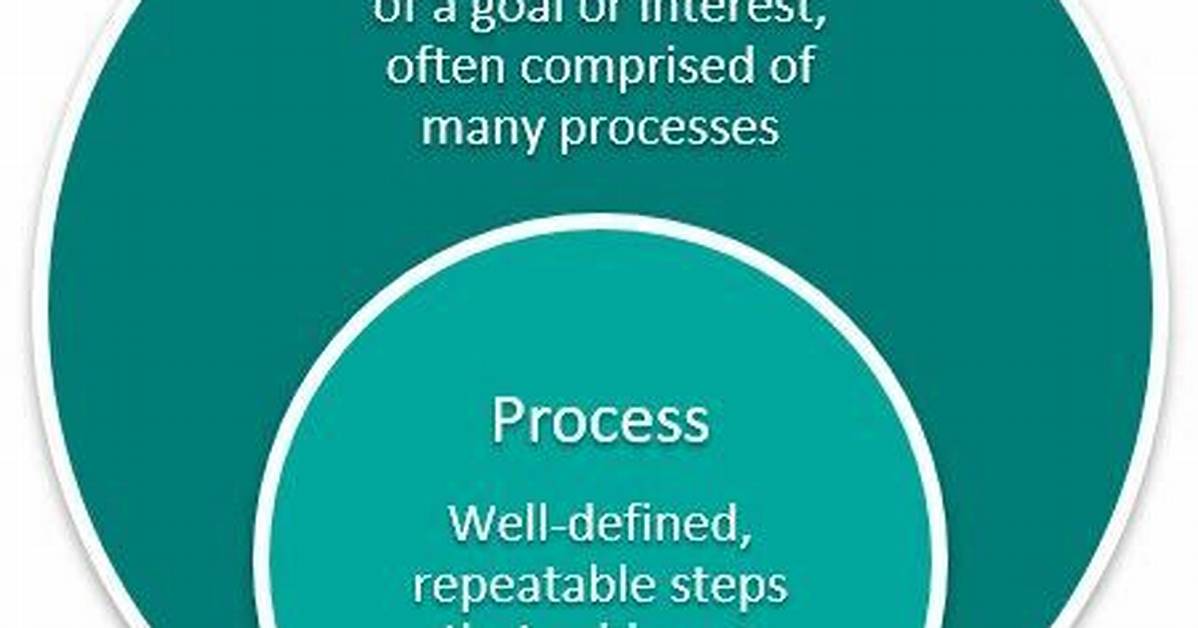
We sometimes confuse the terms practice and process, but they are different. Often, practices and processes are closely related. In enterprise IT, the focus of this article, many practices build upon individual processes.
Let’s take a look.
What is a process?
The enterprise IT industry generally believes that process is the foundation, so let’s start there. Processes refer to the way you get things done: the steps to get from Point A to Point B. The process might be a straightforward few steps to achieve a certain outcome. Or, a process might have a sequence or layers of operations that encompass people, technology, strategies, and governance.
In any process, the steps are more rigid for a reason: so you can walk yourself through the steps. The intelligence of the process—how it’s getting something accomplished—is embedded not in a person but directly in the process.
In enterprise IT, you’ll often follow a process to get something done. For example, let’s take service creation and delivery. You’ll have to design the service, then build it, then deliver it. Each step, however, might not require an explicit process:
- Inventing a service. You might not need a process to invent or create a service, or the idea for a service. Your approach could be more creative—an idea struck you in the middle of the night—or Agile based, where you see the gaps in your current products. A certain number of steps don’t lead up to or guarantee innovation. (If it were that easy, we’d all do it!)
- Building a service. Once you’ve designed the service, you’ll need to build or manufacture it. This piece might depend on a process—steps that have to be performed in a certain order. Or, depending on your environment, it might not need much of a process.
- Delivering a service. It is likely that the way you deliver a service follows one or a few processes that must be done in order for the end users to receive and begin using that process. Here, processes are crucial for efficient service delivery and for increasing scale.
The end of a process
A distinguishing feature of any process is that it has an end. A process is generally considered complete when you’ve achieved the goal of the process.
Must Read
What is a practice?
A practice is more holistic and overarching than any single process. A practice is the ongoing pursuit of some goal or interest—and it’s usually something that you’re looking to continuously improve or optimize. After all, we use the term best practice, not best process. A best practice is something that an industry generally agrees as the most effective way to achieve something.
In enterprise IT, practices are those activities that you’re always looking to make more effective, more efficient. These areas are further comprised of many practices—some that are required, many that are optional. Depending on your organizational strategy and structure, these areas tend to be considered practices—much bigger than processes—and they’re often directly divided into additional sub-practices:
- Service management
- IT operations
- Software/product development and deployment
- Information security
- Data analytics
- Governance
- Leadership
In any practice, the intelligence tends to sit with a person or a team: the person/team who owns the practice or has some expertise in the practice. That person can use any number of processes in their expert toolkit to ensure the practice is doing what it’s meant to do. Just the same, that person can decide which processes no longer support the overarching practice.
The phrase “practice makes perfect” sums it up completely—we’re practicing something regularly in order to get better at it. Contrast that with processes, where a process is perfect if it accomplishes the one task it meant to do.
The end of a practice
The end of practice is harder to measure. Where processes have clear beginnings and ends, practices are ongoing and overarching, comprised of any variety of processes. That’s why practices rely on metrics—to measure how our practice performs regarding:
- Quality
- Agility
- Compliance
- Agility
- Other needs
Basically, you have to measure a practice in some quantifiable way in order to know your practice is working—that you’re improving in that area.
Examples of practices
Examples of enterprise IT practices include:
David Miller brings 15 years of experience in global economics, personal finance strategy, and market dynamics. He specializes in turning complex economic trends into actionable insights for everyday readers.
