
Samsung Galaxy S21 Plus vs Galaxy S20 Plus

Naturally, People Are Wondering What's New About Them and Is It Worth Buying Them. Well, to Help with That, We've Created a Series of 1-vs-1 Comparisons That...
You might also like:
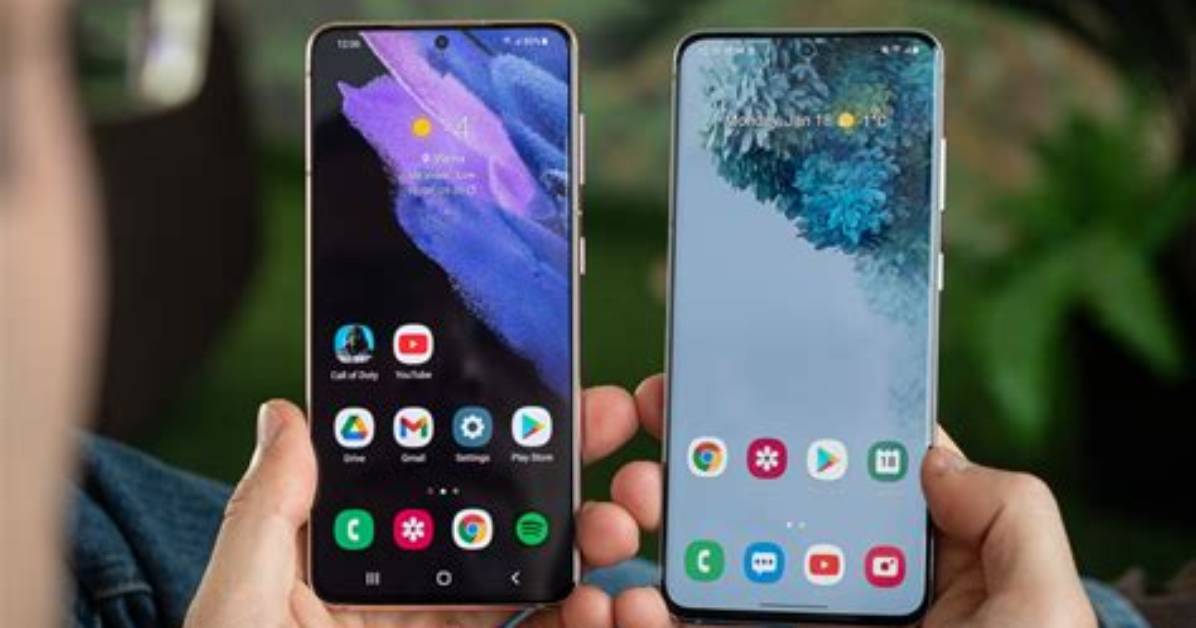
Galaxy S21+ vs Galaxy S20+ design comparison
As always, we're starting with the looks. Size-wise, the two phones are practically identical, with a millimeter or two difference that you'll hardly notice. The Galaxy S21+ weighs 14g less than its predecessor, however, which we consider a plus.
Although the phones appear to be almost identical at first glance, there are some key differences between them. Let's take a closer look:
Galaxy S21+ left, Galaxy S20+ right
The biggest change is undoubtedly the redesigned camera bump. Samsung calls the new style Contour Cut, with the camera module flowing seamlessly over the side of the phone. Now, design can be subjective, but in our books, the Galaxy S21+ is a massive improvement over the Galaxy S20+. The old design is not only boring but it was also pretty much identical to what you got with cheaper Samsung phones and the S20+ was $1,200 at launch. The Galaxy S21+ looks refined and luxurious, especially in combination with Samsung's new colors, which go a long way in highlighting this new design element. We hope Samsung keeps the Countour Cut design only on the Galaxy S series for that extra bit of exclusivity.
Onto the second big difference, the display. As you can see from the images above, the Galaxy S21+ appears to have slightly thicker side bezels. That's because it has a flat display, unlike that on the Galaxy S20+, which still had some curvature around the side edges. That's another win for the S21+ as far as we're concerned.
But there's more to be said about the displays, here's a quick rundown of their specs:
Display | Galaxy S21+ | Galaxy S20+ |
|---|---|---|
| Size | 6.7" | 6.7" |
| Resolution | 2400 x 1080 | 3200 x 1440 |
| Type | Dynamic AMOLED | Dynamic AMOLED |
| Refresh rate | 48-120Hz | 120Hz |
| Shape | Flat | Curved |
| Glass | Gorilla Glass Victus | Gorilla Glass 6 |
Let's start with the obvious one: no Quad-HD resolution on the S21+. While that's certainly a bummer for some, we should remind you that on the Galaxy S20+, the 120Hz refresh rate was only available in combination with the 1080p resolution, which many users preferred. Now, Samsung is making things easier by going for a 1080p panel.
That new panel on the Galaxy S21+ also has adaptive refresh rate, which means it will automatically lower the frequency when you don't need it, saving power in the process. The new display also has higher brightness for better HDR experience and improved experience in bright sunlight.
And lastly, the display of the Galaxy S21+ is protected by Corning's strongest glass yet. Overall, in the design and display department, we're seeing only positive changes.
Display measurements and quality
Galaxy S21+ vs Galaxy S20+ specs comparison
Time to dive deeper into the two Galaxies, where their components are hiding. Here are the main specs of the Galaxy S21+ and S20+:
Specs | Galaxy S21+ | Galaxy S20+ |
|---|---|---|
| CPU | Snapdragon 888 | Snapdragon 865 |
| RAM | 8GB LPDDR5 | 12GB LPDDR5 |
| Storage | 128GB, not expandable | 128GB, expandable |
| Battery | 4,800mAh | 4,500mAh |
| Wirelss charging | Yes | Yes |
| 5G | Yes | Yes |
| IP68 rated | Yes | Yes |
For more details check our full Galaxy S21+ vs Galaxy S20+ specs comparison.
As always, the main upgrade is the chipset. The Galaxy S21+ will come with the Snapdragon 888 in the US and Exynos 2100 in other regions. Both chips use the 5nm process and should offer comparable performance. According to Samsung, this means about 20% better CPU performance and a 35% improvement in GPU performance. The new chips are also more power-efficient, which in daily use might be the biggest differentiator.
The memory sees a reduction, however, is something we're not used to seeing. Still, 8GB is plenty already, so it's not a huge drawback, especially considering the lower price of the Galaxy S21+.
A pleasant surprise is the increased battery capacity. Despite having essentially the same body, Samsung has managed to put a bigger battery inside the S21+, likely thanks to the size reduction of the other components. Combined with the other changes we've mentioned already, the new Galaxy should have a significantly better battery life compared to the Galaxy S20+, but we'll have to test it ourselves before the verdict is out.
It's also worth noting that the Galaxy S21+ has a second generation ultrasonic fingerprint reader. It's bigger and significantly faster than the one on the Galaxy S20+, hopefully bringing user frustration to a minimum.
Marcus Vance is a cybersecurity auditor and technology writer dedicated to educating the public about online safety, data privacy regulations, enterprise security, and emerging cyber threats.
