
Story of the Rebellious Robert Mitchum – the Hollywood Anti-Hero

Hollywood’s First Bad Boy, Robert Mitchum – Could Anybody Ever Forget Him? in My Opinion, Mitchum Was Cool, Before It Was Cool to Be Cool … Robert Mitchum Was...
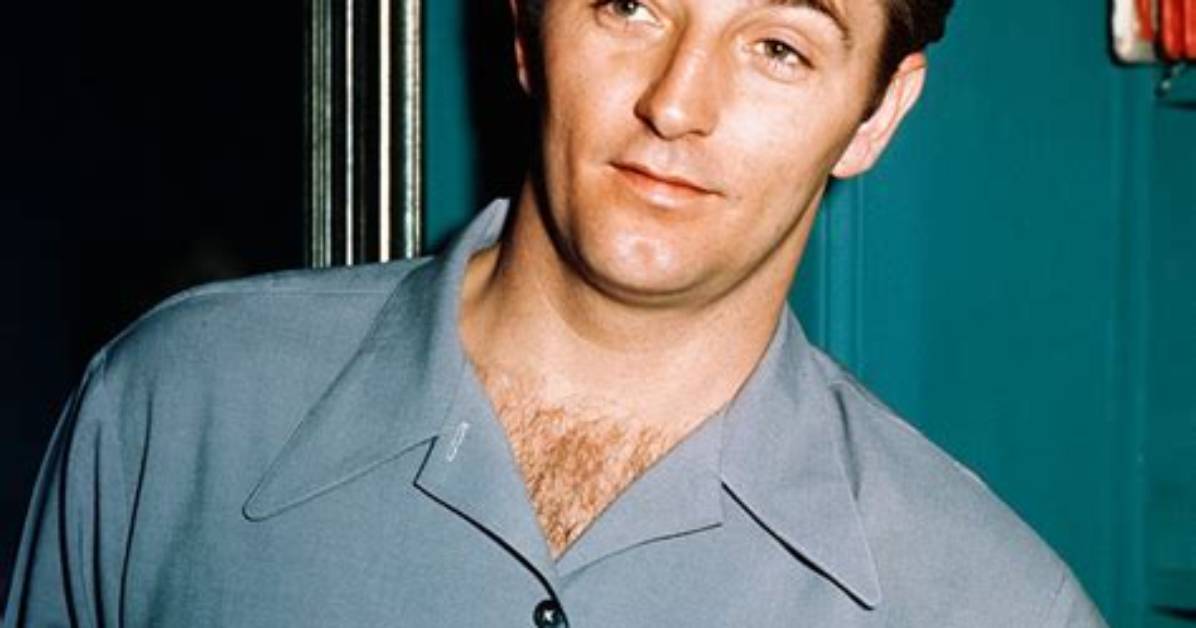
Hollywood’s first bad boy, Robert Mitchum – could anybody ever forget him? In my opinion, Mitchum was cool, before it was cool to be cool …
Robert Mitchum was a great actor: scary when he played the villain; inspiring when he played the hero; first rate all the time!
To me, he’s definitely one of the greatest movie stars of all time, along with such legends as Kirk Douglas, Charlton Heston, John Wayne and Burt Lancaster.
I remember that Mitchum had the most piercing eyes – it was as if they could see right through you. But Mitchum wasn’t only a very talented actor – he also released some good records as well.
The movie “Thunder Road”, 1958, is proof of Mitchum’s many skills – in the classic drama/crime film he acted, directed, co-wrote, wrote the title song and sang it as well!
But there’s also another side of Mitchum that not everyone knows about. Beneath his good looks and charming exterior was a tormented and troubled mind that experienced many scandals and tragedies.
Robert Mitchum was born in 1917 in Bridgeport, Connecticut – straight into a traditional, American working-class family.
His father, James Thomas Mitchum, was of Irish descent and worked on the shipyard and on the railroad – he was one of those people who literally built our country. Robert’s mother was an immigrant from Norway, bearing the Scandinavian-sounding name Ann Gunderson.
Unfortunately, Robert’s childhood would be shaken by a terrible tragedy. When Robert was just 18 months old, his father died in a freak accident. The elder Mitchum was tragically squashed to death by two boxcars while working at a railyard in Charleston, South Carolina.
Over many years after her husband’s passing, Ann had to raise Robert and his siblings single-handedly. But then his mother married Major Hugh Cunningham Morris, a former Royal Naval Reserve. The British officer became Robert’s stepfather.
But neither his stepfather, nor his mother could control Mitchum.
He was a wild child, and as a result at the age of 12, he was shipped to live with his grandparents in Felton, Delaware. Mitchum was also expelled from several high schools – he often had disputes with the authorities at the school. Once, he even got into a fistfight with his school principal.
After being moved around to several different places, he moved in with his older sister in New York’s infamous Hell’s Kitchen district.
But the problems continued. When Mitchum was 14 years of age, an officer saw him in Savannah, Georgia, and detained the young man for vagrancy. Robert was subsequently forced to work in a chain gang. But, according to himself, he managed to escape and hitch-hike his way back to his grandparents in Delaware.
Robert Mitchum’s wife
Back in Delaware, Robert met the love of his life – Dorothy.
She lived next door to his grandparents and the couple married in 1940 – Robert and Dorothy Mitchum would stay married all of their lives.
After the wedding, Robert and Dorothy moved to California, where Robert had gained a foothold in the entertainment industry. Before that, he had made a living as a coal miner and a semi-professional boxer.
When the couple’s first son, James, was born, Mitchum realized he needed steady employment. During WWII, he worked as a machine operator for Lockheed Aircraft Corporation, but unfortunately he damaged his hearing at work due to the constant, loud sound from the machines.
Robert also suffered a nervous breakdown due to job stress, causing him temporary blindness. Maybe it was then that he realized he wasn’t made for a regular 9-5 job?
In any case, Robert began to look for a way back into the film industry. He worked as an extra and supported actors in several productions. His major breakthrough, however, came as a soldier in American war film “The Story of G.I. Joe” (1945).
During the ’50s and ’60s, Robert Mitchum became hugely popular after several starring roles in classic film noirs. He was sometimes referred to as ‘the soul of film noir’.
The audience loved him as the smooth, drawling, nonchalant antihero hero with sleepy eyes – he was awesome no matter what type of character he played. And, by the way, his sleepy eyes wasn’t a gimmick. It was due to chronic insomnia and an injury he got during a boxing match that caused astigmatism in both eyes.
Simply put, Robert understood that you didn’t have to roar like a lion to gain respect.
In 1955, Mitchum gave one of his most memorable and best performances when he played an evil, charlatan preacher in the thriller “The Night of the Hunter”. Today, the movie is considered one of the greatest films in Hollywood history.
“I wanted to take it all the way,” he said. “I wanted to scare people to death. The book did that. It was ten times as frightening as the picture. But Charles had such good taste. He kept saying, ‘I make my living reading the Bible. I can’t do this sort of thing.’ As it was, it was pretty good… I guess.”
Must Read
Villain in real life
As it happened, Robert’s on-screen bad boy wasn’t too far away from his rough personal life.
“The only difference between me and my fellow actors is that I’ve spent more time in jail”, as he once put it.
In 1948, Mitchum saw his first Hollywood scandal, when he was arrested for possession of marijuana – a big deal at that time, even though he was a known marijuana user.
Mich was imprisoned for a week in county jail, which he described “like Palm Springs, but without the riff-raff”). After that, he was forced to spend 43 days at a prison farm in California.
Mitchum’s career would survive the scandal – and in retrospect, perhaps it was worth the time and all the headlines. After the bust, Mitchum became an even bigger box-office draw.
”The only effect that I ever noticed from smoking marijuana was a sort of mild sedative, a release of tension when I was overworking. It never made me boisterous of quarrelsome. If anything, it calmed me and reduced my activity,” Mitchum later explained.
David Miller brings 15 years of experience in global economics, personal finance strategy, and market dynamics. He specializes in turning complex economic trends into actionable insights for everyday readers.
