
System Verilog Bind Used Together with Interface

I Defined an Interface in System Verilog and Use Bind Statement to Bind to Internal Rtl Signals. I Want to Be Able to Force Internal Rtl Signals Through the...
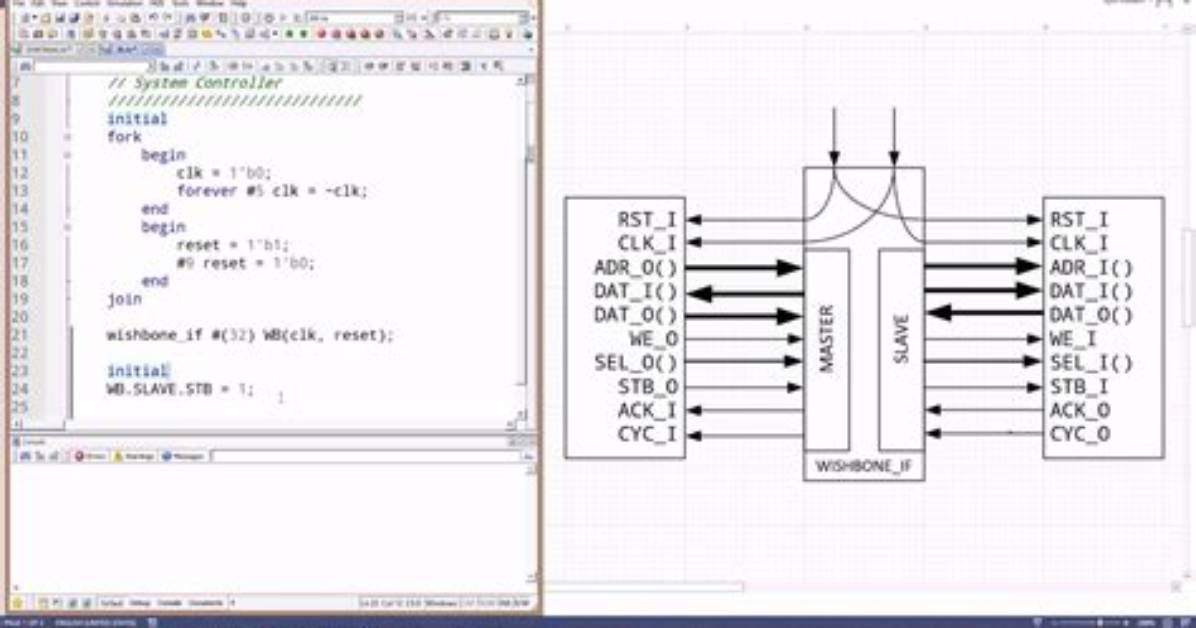
I defined an interface in system verilog and use bind statement to bind to internal RTL signals. I want to be able to force internal RTL signals through the interface. However, this is causing the RTL signal to go to 'x' if I don't force these signals explicitly, it seems bind to interface is having driving capability. I don't want RTL signal to change to 'x' when nothing is forcing it in this case, not sure what I am doing wrong here?
my code looks like this with DUT being the design:
interface myInf(
   inout RTL_a,
   inout RTL_b
);

bind DUT myInf myInf_inst(
   .RTL_a(DUT.a),
   .RTL_b(DUT.b)
);

bind DUT myDrv(myInf_inst);
where myDrv is a module which drives the ports on myInf.
In this case, DUT.a and DUT.b are internal RTL signals, they have their driver from design, but I want to be able to force them if needed. however, these signals becoming 'x' when I am just binding them to myInf without actually driving them.
1 Answer
The inout signals might be a non-net type. It is better to be explicit in the the declaration and define them as inout wire. Inside the interface, assign the nets to a logic and initialize the logics to z. A non-z value will apply a driver while a z will allow signals to drive. Example:
interface myInf(
   inout wire RTL_a,
   inout wire RTL_b
);
  logic drv_a, drv_b;
  initial {drv_a,drv_b} = 'z; // z means not driving
  assign RTL_a = drv_a;
  assign RTL_b = drv_b;
endinterface
There might be conflicting drivers, such as the normal drivers from the design. In this case you will need to override the driver. Assuming the signal being overrode is a net type, this is done by changing the assign statements to assign (supply1,suppl0) RTL_a = drv_a;. This is utilizing the Verilog concept of drive strength. Assigning to z will still all other drivers. Most nets are driven with a strength of strong1,strong0 which is weaker then supply1,supply0. Drive strength will not work for non-net types (e.g. logic & reg). These register/variable-types use a last-assignment-wins approach. Fore more on drive strength read IEEE Std 1800-2012 sections 28.11 through 28.15
Your sample code has some bugs. The pin connections for myInf_inst should use hierarchical references relative to its target scope. Unless there is an instance called DUT inside module DUT, then the DUT. should be omitted (See IEEE Std 1800-2012 § 23.11 Binding auxiliary code to scopes or instances). The bind statement for myDrv is missing an instance name. The code should be:
bind DUT myInf myInf_inst(
   .RTL_a(a), // no DUT.
   .RTL_b(b) // no DUT.
);

bind DUT myDrv myDrv_inst(myInf_inst);
sample code:
James Sterling reports on renewable energy developments, climate policy, ecological conservation, and green tech innovations around the globe.
