
The Difference Between Bodybuilding & Powerlifting

When It Comes to Resistance Weight Training, There Are Countless Methods and Styles That Have Been Developed over the Year's. None Seem to Compare to the Sheer...
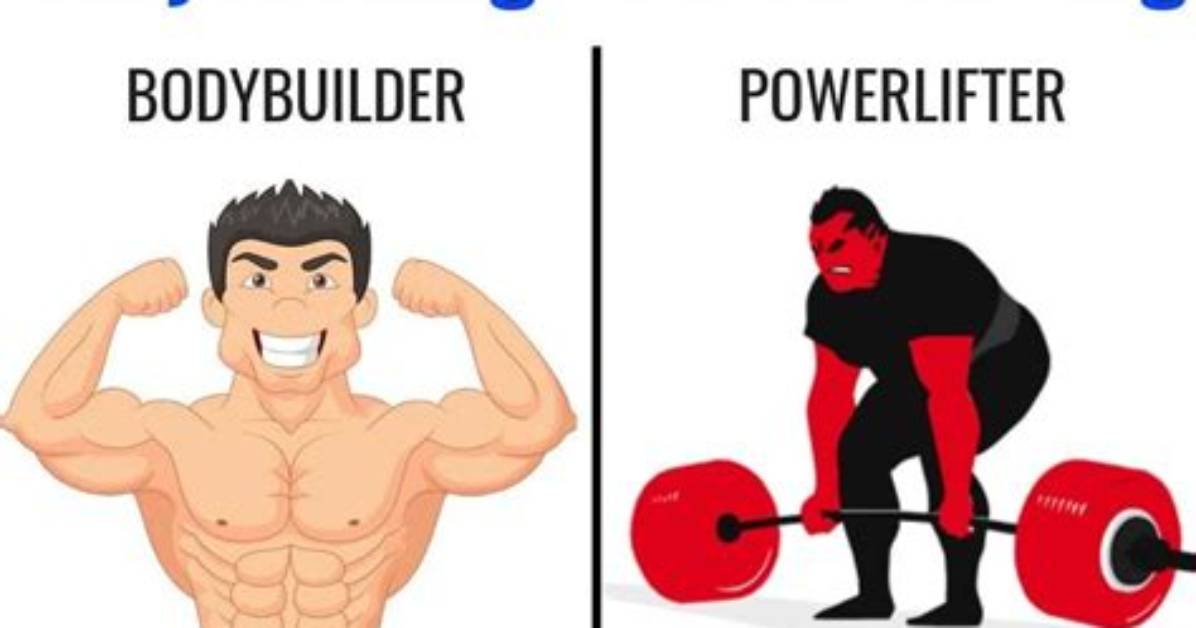
When it comes to resistance weight training, there are countless methods and styles that have been developed over the years. None seem to compare to the sheer popularity of bodybuilding and powerlifting, two styles of weightlifting that are more similar than they are different; yet, most who follow one or the other seem to believe they are nothing alike, which forms a sort of resentment for the other group of lifters.
Bodybuilding has a major focus on aesthetics, perfecting the body and placing emphasis on symmetry, size, and definition using a combination of lightweights and heavyweights in the gym to reach their desired goals.
Powerlifting measures an individual's strength and form, prioritizing mainly very heavy weight in the gym, with body image and symmetry usually as an afterthought.
With both forms of weightlifting having their advantages and disadvantages, an individual's goals in aesthetics or strength, overall mindset, and thoughts on longevity will dictate which style he or she will gravitate to.
Determining Goals in Strength/Aesthetics
Without a doubt, the biggest deciding factor for an individual who wants to choose between bodybuilding and powerlifting is their goals, whether it be to get as strong as possible or look as good as possible.
While some overlap does exist and it is possible to be strong and have a good physique, more than likely a beginner will choose one style over another. Bodybuilding training involves a large amount of volume and less frequency, which means less sets and more reps (anywhere between 8-20 reps for 3-4 sets for any given exercise), as well as only working out one muscle group a week (i.e. Chest day, arm day, etc). It also involves a large variety of exercises, usually starting with medium weight and compound exercises (that require more muscle recruitment) and moves into many lighter weight isolation exercises.While this form of training has been proven to increase muscle size (Merritt and Greg, 2016), it will not do very much to increase strength.
For bodybuilders though, this isn't a big deal as their main focus is to grow their muscles as big/symmetrical as possible to eventually diet down to show more definition and step onto a competition stage to match physiques with other bodybuilders in the same weight class. A powerlifter’s training style is quite different from a bodybuilder’s, focusing on getting as strong as possible through less volume and more frequency in the form of very low reps and many sets (anywhere between 1-5 reps for 8-10 sets) and working out a movement two to three times a week.
Unlike bodybuilding, powerlifting doesn't focus on working out one muscle group at a time, but instead focuses on only a few exercises (mainly the barbell bench press, back squat, and deadlift). By lifting this way, the powerlifter can increase his/her strength very quickly and efficiently without needing to gain very much bulk. Like a bodybuilder, a powerlifter’s end goal is to step onto a competition stage and test their strength to see how much weight they can lift between their bench, squat and deadlift. While neither style is superior to the other, both have their draw, depending on an individual's goal.
Must Read
Determining The Everyday Mindset
Goals are always important to have when starting a weightlifting routine to help determine which type of training style to adopt, but getting there and staying there is just as important. A lifter’s mindset on a day to day basis and how they live their life will help determine which style of lifting is best for them.
Bodybuilding Program
Bodybuilders generally have a stricter lifestyle, mainly revolving around diet. For a natural bodybuilder, 12 months is usually split into two phases: a bulk phase where the goal is to eat a small calorie surplus to gain lean muscle as well as limiting fat gain, and a cut phase where the goal is to burn off fat that accumulated during the bulk while preserving the muscle (leading to a better and overall more muscular physique than the year before).
For a competitor who competes on stage to have the best physique in his/her weight class, the cut portion of the diet is extremely important and difficult to do correctly. Known as a “prep”, a bodybuilder will need to begin to count calories (if they haven't already) as precisely as possible. This means using a food scale for every plate of food, making a week's worth of food in a day to simplify the process, and limiting dining out as food not prepared by them could have more calories than they want.
Powerlifting Program
A powerlifter’s mindset is quite different (and a lot less strict) compared with a bodybuilder’s on a day to day basis. With their main priority being to gain as much strength as possible, they have no need to diet. As long as they are eating as much food as possible and getting stronger, nothing needs to change. More recently powerlifters have begun to eat healthier while still consuming a large surplus in calories, whereas in the past it was a common practice to eat an unhealthy amount of junk food because fat gain isn't as much of an issue for powerlifters.
Powerlifters also have the advantage of not needing to go to the gym as often as bodybuilders. Since powerlifters mainly train the bench press, squat and deadlift all in the same day their body and central nervous system will be taxed for the next 48 to 72 hours, meaning they might only go to the gym 3-4 times a week compared to bodybuilders who go 6-7 times a week. With such a different day-to-day approach to training it's interesting to think both have a very similar end goal to compete against others and be judged in front of an audience.
James Sterling reports on renewable energy developments, climate policy, ecological conservation, and green tech innovations around the globe.
