
The Product Manager Role Explained

The Role of Product Manager Originated with the Need to Communicate Between the Business Leaders and the Engineers. While Product Manager Methods Can Vary...
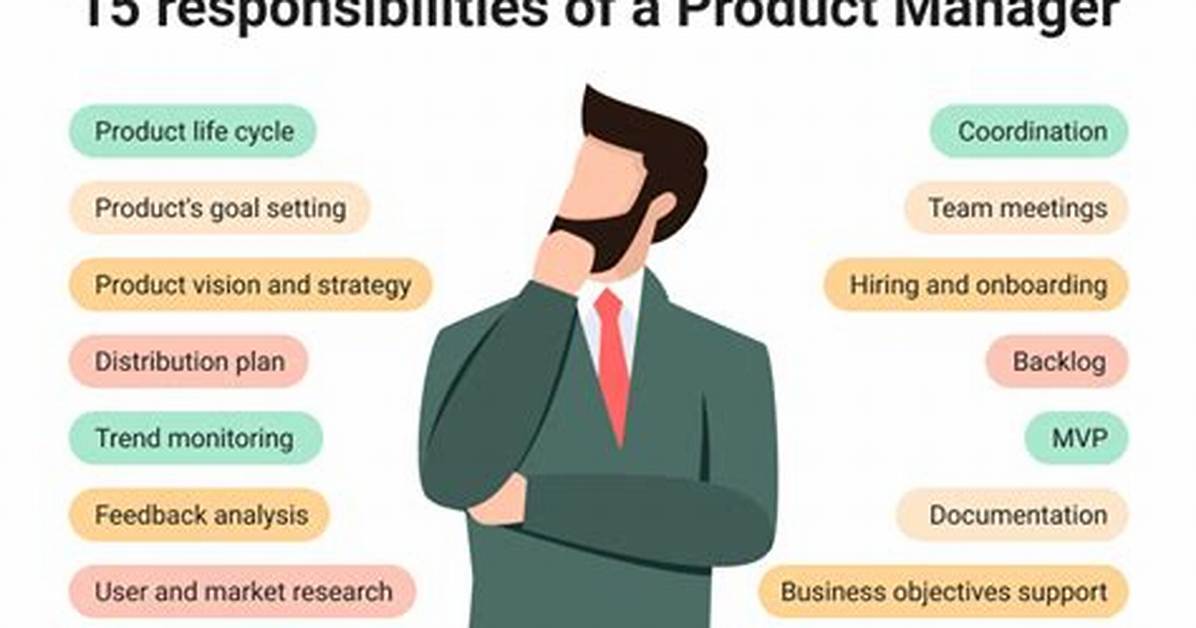
The role of Product Manager originated with the need to communicate between the business leaders and the engineers. While product manager methods can vary team-to-team, product-to-product, and manager-to-manager, product managers have one primary mission: build a successful product.
Let’s look at the role of the product manager.
What does a product manager do?
Product managers are the medium that communicates between the businessmen and the engineers.
Why is this mediator necessary? The business guys are expected to have their ears to the ground in order to determine:
- What customers want
- What the markets want
- What the accountants say they can afford
The engineers are the people who can build products to meet the demands the business guys are hearing. The tendency is to picture Product Managers situated right in the middle of this diagram:
Must Read
Responsibilities of a product manager
The responsibilities of a product manager depend on a variety of things. Keeping its purpose in mind—building the product—the responsibilities of the PM will change with respect to the size of the company, and the size of the product management team. Additional factors, like whether the team works in an Agile product development manner, can also inform how PMs function.
Here are some factors that determine how product managers will work best in your organization:
Team size matters
The smaller the team, the wider the scope the responsibilities might be. The larger the team, the more specialized the Product Manager’s role might be.
Technical or not
Depending on the team’s skills and the company’s resources, the Product Manager may be a technical role or of a non-technical nature. For instance, the PM might act as the lead engineer, which would require a different skillset from a PM who is a scheduler and motivator.
Jack of all trades vs the specialist
The greater the company grows, the more specialized the PMs job can be. At the beginning stages of a product or a product management team, a PM might take on all the roles:
- A designer imagining a solution
- An engineer building a solution
- A businessman couching the solution in market demand and company finances
- A researcher conducting customer interviews and satisfaction surveys
As the department grows, the PMs role can shift towards its most essential duty—determining what the best product is—and passing that information down the pipeline to the engineers so they can build it.
A PM with little to no specialization may support a variety of activities:
- Customer and sales calls
- Customer feedback
- Engineer meetings
- Business and investor meetings
- User experience design
- Updates and reports
As a PM’s role becomes more specialized, perhaps more technical, tasks may change to include:
- Reviewing PM approaches with other PMs
- Creating product development timelines
- Receiving and understanding market and financial updates from the business teams
- Receiving and understanding updates from engineer teams
- Conducting and reviewing market research
- Surveying customers for feedback
- Creating pitches to sell a new product roadmap
The most specialized PMs might get directly involved in engineering and business tasks, such as:
- Engineering: A/B testing UX features; testing back-end features; researching new features
- Business: Reviewing customer behavior and spending, sales targets, and spending budgets
Sophia analyzes international trade, startup ecosystems, retail transformation, and supply chain logistics for modern digital publications.
