
The Spring Framework Beginner’s Guide: Features, Architecture & Getting Started

Java Is One of the Most Popular and Widely Used Programming Languages, Powering Everything from Mobile Applications to Large-Scale Enterprise Systems. Since...
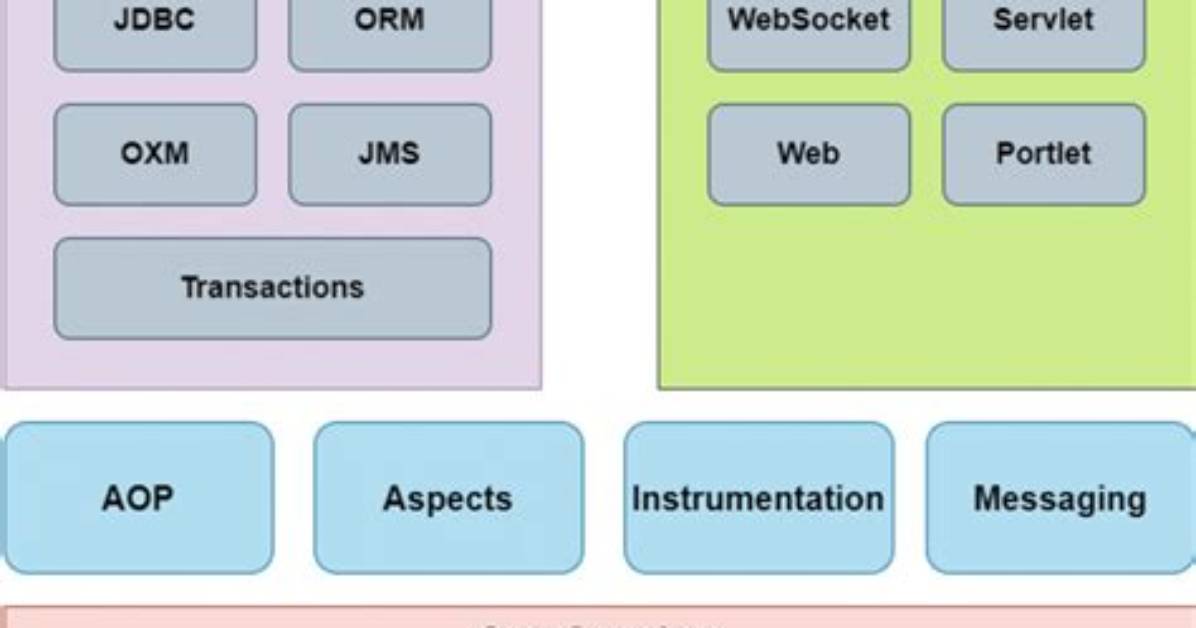
Java is one of the most popular and widely used programming languages, powering everything from mobile applications to large-scale enterprise systems. Since Java can power almost any kind of development, numerous frameworks and tools have evolved to simplify and streamline Java-based software developments.
When it comes to building Java-based web applications, Spring is one of the most popular frameworks. In this article, we will look at the Spring framework and how to build Java applications using it.
What is the Spring Framework?
The Spring Framework is an open-source framework for building enterprise Java applications. Spring aims to simplify the complex and cumbersome enterprise Java application development process by offering a framework that includes technologies such as:
- Aspect-oriented programming (AOP)
- Dependency injection (DI)
- Plain Old Java Object (POJO)
Even with all these technologies, Spring is a lightweight framework that can be used to create scalable, secure, and robust enterprise web applications.
At a macro-level, we can consider the Spring framework a collection of sub frameworks such as Spring Web Flow, Spring MVC, and Spring ORM. In addition to Java, Spring also supports Kotlin and Groovy.
The Spring framework is also the base that powers all the other Spring-based projects, such as:
- Spring Boot
- Spring Cloud
- Spring GraphQL
Core Features of Spring Framework
Let’s look at the core features of the Spring framework.
IoC (Inversion of Control) Container
IoC container is one of the core features of Spring that provides a streamlined way to configure and manage Java objects. This container is responsible for managing the lifecycle of a defined Java object, significantly increasing the configurability of a Spring-based application.
IoC uses the dependency injection or dependency lookup patterns to provide the object reference during runtime. The container consists of assembler code that is required for configuration management.
Spring provides org.springframework.beans and org.springframework.context packages that can be used to facilitate these functions.
Support for aspect-oriented programing
AOP aims to provide more modularity to the cross-cutting concerns, which are functions that span across the application, such as:
- Logging
- Caching
- Transaction management
- Authentication
- Etc.
Moreover, AOP complements object-oriented programming by providing a different way to structure the program, where OOP modularity is based on classes.
In AOP, the main unit of modularity is an aspect (cross-cutting concern). This enables users to use AOP to create custom aspects and declarative enterprise services. The IoC container does not depend on AOP, offering further freedom for developers to select their preferred programming method.
However, Aspect-Oriented Programming combined with the Spring IoC provides a robust middleware solution.
Data access framework
Database communication issues are one of the common issues developers face when developing applications. Spring simplifies the database communication process by providing direct support for popular data access frameworks in Java, such as JDBC, Hibernate, Java Persistence API (JPA), etc.
Additionally, it offers features such as resource management, exception handling, and resource wrapping for all the supported data access frameworks, further simplifying the development process.
Transaction management framework
Unlike the Java Transaction API (JTA), the Spring Transaction Management Framework is not limited to global and nested transactions. Spring offers an abstraction mechanism for Java that enables users to:
- Work with local, global, and nested transactions
- Save points
- Simplify transaction management across the application
The Spring Data Access Framework directly integrates with the Transaction Management Framework with support for messaging and caching. This enables developers to create feature-rich transactional systems that span across the applications without depending on EJB or JTA.
Spring MVC framework
The Spring MVC enables developers to create applications using the popular MVC pattern. It is a request-based framework that allows developers to easily create customized MVC implementations that exactly suit their needs.
The core component of Spring MVC is the DispatcherServlet class which handles user requests and then forwards them to the correct controller. This allows the controller to process the request, create the model and then provide the information to the end-user via a specified view.
Spring web service
This Spring Web Service component provides a streamlined way to create and manage web service endpoints in the application. It offers a layered approach that can be managed using XML and can be used to provide mapping for web requests to a specific object.
Spring test frameworks
Testing is a core part of any development. Spring simplifies testing within the framework with components like:
- Mock objects
- TestContext framework
- Spring MVC Test
- Etc.
(Read about test automation frameworks.)
James Sterling reports on renewable energy developments, climate policy, ecological conservation, and green tech innovations around the globe.
