
Tradingview Api: Everything You Need to Know

Tradingview Is a Popular Platform for Traders and Investors Who Want to Access Live Quotes, Charts, and Market Data for Various Financial Instruments...
TradingView is a popular platform for traders and investors who want to access live quotes, charts, and market data for various financial instruments. TradingView also offers a range of tools and features to help users analyze the markets, create trading strategies, and share their ideas with others.
But what if you want to access the data and indicators from TradingView programmatically? Is there a TradingView API that you can use for your own applications? In this article, we will answer these questions and explore some of the alternatives to the TradingView API.
How to Access the TradingView API
Unfortunately, as of now, TradingView does not have an API that gives access to its data or indicator values. This means that you cannot use TradingView as a data source for your own applications or services.
However, TradingView has announced that they are planning to add an API in the future that will allow users to access their data and indicators. This API will be available for both free and paid users and will support various languages and frameworks. TradingView has not given a specific timeline for when this API will be released, but you can follow their updates on their blog or social media channels.
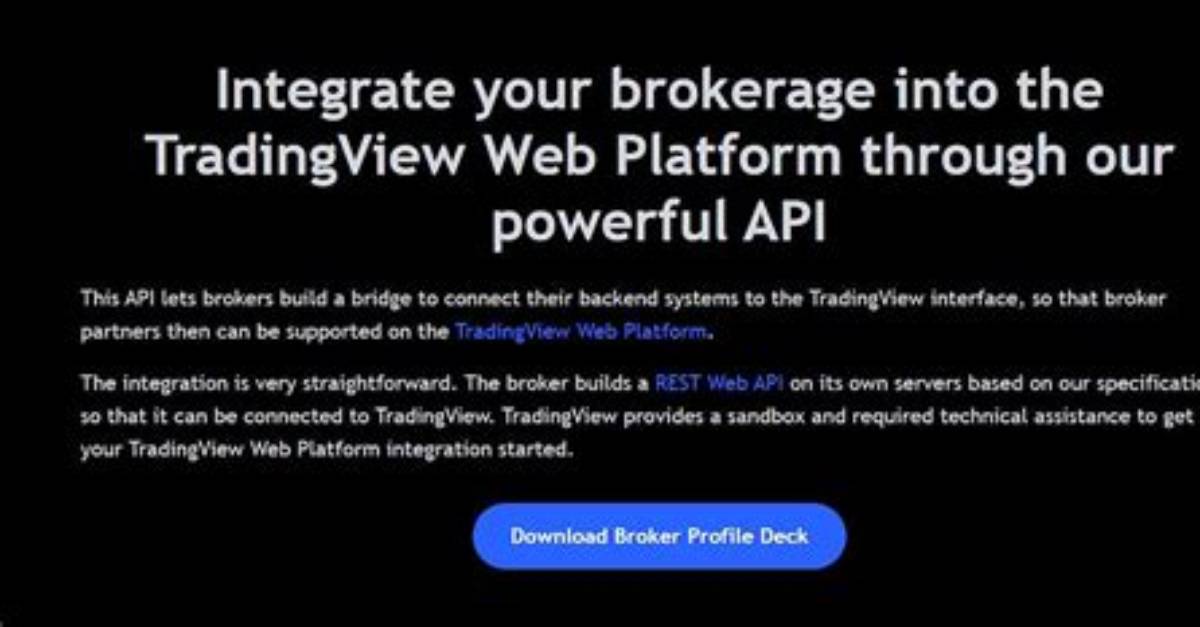
However, TradingView does have a REST API that is meant for brokers who want to be supported on their trading platform. This API allows brokers to integrate their trading services with TradingView so that users can trade directly from the TradingView interface.
This API is not intended for data access or analysis but rather for order execution and account management. If you are a broker who wants to offer your clients the option to trade on TradingView, you can contact them.
What is the TradingView REST API?
The TradingView REST API is a set of endpoints that allow brokers to communicate with TradingView and provide their trading services to TradingView users. The REST API uses HTTP requests and JSON responses and follows the standard RESTful principles. The REST API supports the following features:
- Authentication: Brokers can authenticate their users with TradingView using OAuth 2.0 or JWT tokens.
- Symbols: Brokers can provide information about the symbols they support, such as name, description, type, exchange, currency, etc.
- Quotes: Brokers can provide real-time or delayed quotes for the symbols they support, as well as historical data for charting purposes.
- Orders: Brokers can receive orders from TradingView users and execute them on their own platforms, as well as provide order status updates and notifications.
- Positions: Brokers can provide information about the positions held by their users, such as quantity, price, profit/loss, etc.
- Balances: Brokers can provide information about the balances of their users’ accounts, such as cash, margin, equity, etc.
- Settings: Brokers can provide information about the settings and preferences of their users’ accounts, such as leverage, commissions, fees, etc.
Elena Rostova holds a Master's degree in Public Health Journalism. She covers groundbreaking medical research, holistic wellness trends, mental health awareness, and nutritional science.
