
Transmission Shutdown Script for Multiple Torrents?

I Have Written a Shutdown Script for Transmission. Transmission Calls the Script After a Torrent Download Finishes. the Script Runs Perfectly on My Machine...
I have written a shutdown script for transmission. Transmission calls the script after a torrent download finishes. The script runs perfectly on my machine (Ubuntu 11.04 & 12.04).
#!/bin/bash
sleep 300s

# default display on current host
DISPLAY=:0.0

# find out if monitor is on. Default timeout can be configured from screensaver/Power configuration.

STATUS=`xset -display $DISPLAY -q | grep 'Monitor'`
echo $STATUS

if [ "$STATUS" == "  Monitor is On" ]

###  Then check if  its still downloading a torrent. Couldn't figure out how.(May be) by monitoring network downstream activity?

then

    notify-send "Downloads Complete" "Exiting  transmisssion now"
    pkill transmission

else
    notify-send "Downloads Complete" "Shutting Down Computer"
    dbus-send --session --type=method_call --print-reply --dest=org.gnome.SessionManager /org/gnome/SessionManager org.gnome.SessionManager.RequestShutdown

fi

exit 0
The problem is that when I'm downloading more than one file, when the first one finishes, transmission executes the script. I would like to do that but after all downloads are completed.
I want to put a 2nd check ( right after monitor check) if it is still downloading another torrent.
Is there any way to do this?
3 Answers
This information isn't passed to the scripts via environment variables, so you'll need to query Transmission's RPC interface. This is sometimes done by client libraries -- for example, a Python script could use python transmissionrpc. There are other interfaces like this listed at .
Here's a quick approach that will use transmission-remote to count the number of non-idle downloads:
transmission-remote yourhost:yourport -tall --info | grep "^ State:" | grep "Down" | wc --lines
If you want to include idle downloads too, you could try this:
transmission-remote yourhost:yourport -l | grep -v -e " 100% " -e "^Sum" -e "^ID" -e " Stopped " | wc --lines
Where "^ID" and "^Sum" strips the header and footer; " 100% " strips completed torrents; and " Stopped " strips out the incomplete-but-paused torrents. This approach isn't foolproof -- for example, a torrent named " 100% Stopped " would break it.
I created a better script(from user98677 advice) which takes advantage of transmission's RPC Interface.
Code:
Github Gist:
What it Does?
Pause or remove completed torrents after they are completed.
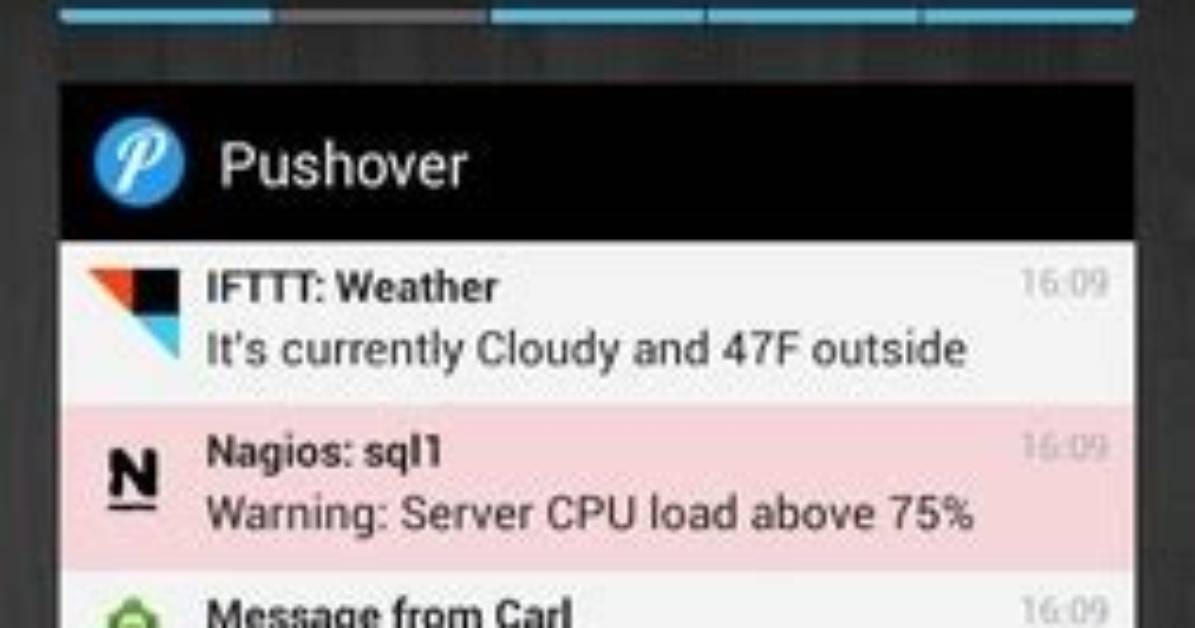
Send a pushover notification (with curl)[optional]
Send a twitter notification (requires twidge)[optional]
Suspend/Shutdown Computer OR leave it as it is.
Screenshot
Must Read
Setup
On Ubuntu
sudo apt-get install libnotify-bin
sudo apt-get install transmission-cli
On Ubuntu >= 13.04 (For twitter notification):
sudo add-apt-repository ppa:moorhen-core/moorhen-apps
sudo apt-get install twidge
For suspend action on non-Ubuntu distro (Ubuntu uses Upower) install powermanagement-interface package
sudo apt-get install powermanagement-interface
After installation:
Get the code from github-gist & save the file as
trsmanywhere on your hard-drive. Make the file executablechmod a+x trsm.Login to pushover & copy your user key. Paste it under
user-keyin the script.If you want notifications send with nice looking application (transmission) icon just create a fake app in pushover with transmission icon & then copy the application key (API/Token key) & paste it under
app-keyin the script.For twitter setup see twidge documentation.
Open transmission. Go to preference->web. Enable web client (default port
9091) & enable user authentication . Choose a username & password. Put that username & password in the script asusername&passwordrespectively.Click open web-client to check if it is working properly.
Finally save the script & go to downloading tab (in transmission preference) & click
call script when torrent is complete. Select the respective script.
Alexander Ross has covered the video game industry for a decade, writing deep dives on game design, esports tournaments, VR developments, and gaming culture.
