
Unit Testing Best Practices - Documentation for Bmc Ami Devx Mainframe Devops

For More Information About Effective Mainframe Testing, See Ten Steps to Effective Mainframe Testing. What Is Unit Testing? Unit Testing Is the Earliest Point...
For more information about effective mainframe testing, see Ten Steps To Effective Mainframe Testing .
What is Unit Testing?
Unit testing is the earliest point in development at which you can remove identified flaws and ensure program logic works. Failures are removed when developers can easily recall what they coded, making issues easier to resolve. Ultimately, the value of unit testing is that you to trap bugs within development, thereby minimizing the negative consequences of failures that otherwise would be externalized.
Mainframe applications are composed of many programs/sub-programs, sub-system services for databases, and stored procedures, file access and communications. Currently, Total Test treats a program, sub-program and stored procedure as the units that can be tested. An additional level of verification can be done on data that is written from a program into QSAM, VSAM, Db2 (Insert, Update, Delete), IMS (ISRT, REPL, DLET) or many CICS Commands (i.e., WRITEQ and many others).
However, mainframe unit testing has historically been a practice of manual processes that are laborious and time-consuming—to the extent that developers will cut short or even forgo unit testing to ensure other priorities are accomplished. The consequence of neglecting thorough unit testing is lower code quality throughout the delivery pipeline, which drives down efficiency in future testing due to extant low-level bugs. This reduces delivery velocity and quality.
Why automate Unit Testing?
Automated unit tests verify that a program works and continues to work as the developer intended for it to work. Without automation, setting up test environments takes a long time, and testing teams often serve more than one development team. Thus, changes by an individual developer may have to wait in a “queue” for quite some time before they know if their changes passed or failed their tests.
Due to these time constraints, if developers don’t accomplish unit testing, root causes of failure are much harder to identify in later stages of the application life cycle—any of the components that have been changed since the earliest stages of development could have caused the failures.
With automation, developers can quickly run tests independently after every code change so they get feedback immediately while they’re still familiar with the changes. As new changes introduce new failures, identification of the cause and location of each issue is made quick and simple through automated unit testing.
Once a developer’s changes pass all unit tests, they can be sufficiently sure their changes fulfill any new requirements and don’t break existing functionality. With this knowledge, they can start working on new requirements or new projects without as much fear of being interrupted later to revisit changes and resolve issues that should have been identified earlier.
In summary, automating unit testing not only reduces the time it takes to identify and resolve issues, thereby improving developer productivity; it also improves focus on tasks by decreasing the likelihood of interruptions, further improving productivity.
Better management and control of software projects
Automated unit testing improves managerial duties for product managers and functional managers, both of who are concerned with daily developer productivity, in the following ways:
- Project tractability: Automated unit testing exposes failures and incomplete implementations so they can be reported early in the life cycle and addressed before accumulating and causing project delays.
- Project manageability: Failures identified in automated unit testing can be classified once the cause and its type and location have been determined. When bugs are better classified, they can be prioritized to eliminate the worst problems first.
- Insurance against regressions: Automated unit tests can verify that developers’ new changes don’t break existing code. These tests virtually eliminate accidental or unintended side effects.
- Efficiency and speed: Automated unit tests are significantly faster to run than manual tests. They require just a few people to review results and identify test failures, which speeds time to error resolution because it’s faster and easier to assign the right person to fix the failure. Test setup can also be very time consuming and error prone. Automated test setup and tear-down provide additional time savings over manual testing and minimize the risk of a bad test setup.
- Planning and predictability: Applications are complex systems made from individual components that must be reliable to ensure the overall system works. Unit testing verifies the component making up the larger system. Automating unit testing is the only way to effectively and efficiently ensure the reliability of those individual components.
- Customer satisfaction: Automated unit testing can improve customer satisfaction by preventing copious errors from escaping and by providing a baseline assurance that the product works when shipped. Confidence is much higher with good automated unit tests.
Developer driven unit tests
Best practices of unit testing during the development process are as follows:
- Unit tests are created and executed during development, either manually by developers or through automation with a tool like Total Test. Functional/integration/system tests are usually created and executed by a test organization. These tests can also be automated with Total Test’s functional testing capabilities.
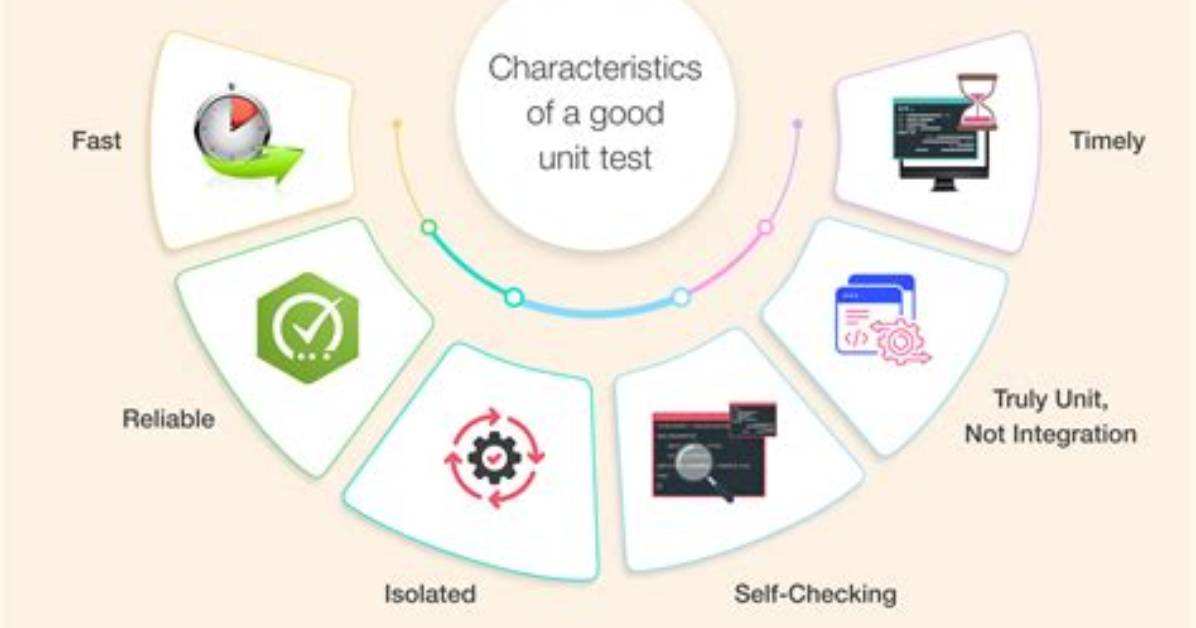
- Unit testing verifies a single program or a single part of a program. Functional/integration/system tests verify several components of the system work together. Unit tests try to test a component in isolation from the rest of the system. They may use mocking/stubbing to eliminate the need for other system components. This allows unit tests to focus on a specific component. Often, this helps the tests run more consistently by eliminating component behavior, which varies, for example, based upon the date of execution.
- Unit tests should be run after every build, which means they are run much more frequently than functional/integration/system tests. Developers will run unit test suites after making updates to ensure their most recent fixes haven't broken existing code. Functional/integration/system tests are scheduled for a team and run at scheduled times.
- Unit testing provides information about the specifics of a test failure, type of failure and location. Functional/integration/system tests usually require more development investigation to find the cause of a failure.
- You will have many unit tests but fewer functional/integration/system tests for a single program, partly because many will be executed manually and partly because each functional/integration/system test encompasses more features in a test case.
- With a tool like Total Test, unit tests will have automated test setup and tear-down, so the test can be run repeatedly whenever. Automatic setup and tear down can also be done for functional tests by Total Test. Without Total Test, a test engineer is generally required to set up test systems and test data.
Must Read
Improve Code Coverage
Verify how much ground your existing manual test cases cover with a code coverage tool that provides visibility into the blocks of code the application is executing. This review helps you understand if you have a good set of test data driving your application testing. Test cases may have limited coverage because you have limited data but adding more data won't help; you need specific data to drive execution through different logic branches.
Error path testing, or negative testing, is something you should strive to include in your automated testing. Code coverage identifies the gaps in your testing and helps you determine if you need additional test cases, thereby providing direction on what to test next. Code coverage generally will not hit error-handling blocks of code unless you specifically provide data to trigger the error handling.
If you have important error handling in your programs it should be tested. Creating purposefully wrong data should be used to drive the program execution into error-handling pathways. You need to carefully define what is a successful test versus a successful execution. A successful test verifies that the program error handling executes correctly and that the wrong data is identified and handled without the program crashing, or worse silently failing.
James Sterling reports on renewable energy developments, climate policy, ecological conservation, and green tech innovations around the globe.
