
Warm up & Cool Down | Static + Dynamic Stretching Exercises

By Myprotein Writersimon O'connorwhat Determines a Good Warm-up? a Good Warm Up, Is an Efficient and Relevant Warm-up to the Session You Are About to Do. It...
By Myprotein Writer
Simon O'Connor
What determines a good warm-up? A good warm up, is an efficient and relevant warm-up to the session you are about to do. It goes beyond a quick run on the treadmill and two second quad stretch. The worse thing anyone can do when lifting weights is go in cold, especially if lifting heavy.
The same goes for the importance of performing cool down stretches relevant to the exercises performed in your training session.
If you are training three or more times a week you are likely having great impact on your muscles. Muscle soreness and tightness from previous sessions can affect the quality of your training and range of movement, which is why a good warm-up is so important.
Do I Really Need To Stretch?
You might choose to suck it up and get on with the session but the thing is, and athletes will tell you, you’ll only get away with this for so long before you start getting those niggling injuries that can affect performance.
An injury can set you back weeks, maybe months so it’s worth spending the time to warm your joints, loosen muscles and raise your heart rate ready for more intense exercise.
Your body can take a huge amount of intense activity but the punishment takes its toll on your muscles, therefore on your posture too. Your body will look to adapt to survive and so training with tight muscles might cause a discrepancy that may have baring on your structure.
Something such as a rotated hip for instance, can cause unbalanced tension in the lower back and any heavy loading thereafter can end in tears. If you have ever had a bad lower back injury, you’ll know how difficult it is to even sit in a chair let alone exercise.
The Importance of Warm-Up & Cool Down Stretches
? Raise heart rate for more intense activity
? Lengthen muscles for full range of movement
? Iron out muscular knots to increase flexibility
? Warm joints for protection and support
? Warm muscles for maximum effort
? To maximise performance
Common Sensors
Every time your muscles contract there is a small sensory unit within your muscle fibres that coils like a spring and either pushes or pulls apart depending on whether the muscle is lengthening or shortening. The degree of contraction that occurs will depend on the degree of change in muscle length and the rate at which the change in length occurs. In other words, the greater the range of movement and the faster the muscle lengthens, the greater the contraction will be.
To generate enough force to optimise training you need a good range of movement from your muscles. Additionally, when you train you create tension that pulls on certain tendons. Such tendons are proprioceptors (sensors) to stop your muscle carrying out opposing actions. Therefore, a tight muscle group will play a part in creating muscular imbalance as your sensors will send a constant message to opposing muscles and inhibit movement.
Hip to be Square
The hip flexors, are often an area of the body most affected by movement, typically from muscle contraction; they are always at work even when sitting down. In fact, if you work at a desk your hips will shorten and become tight. This is bad for posture and can cause lower back issues, restricting any exercise.
Think of your muscles like a group of elastic bands; if you stretch the bands a hundred times, sooner or later they will get tangled. The best way to untangle them is to undo the knots. In other words, your muscles lengthen and shorten as the coils squeeze around the muscle fibres like a spring and when tight, restrict movement. Each muscle originates and inserts into many different locations, a tight muscle group will always have a knock on effect and if not addressed, can easily get worse over time. The human anatomy is a complicated phenomenon and the incorrect use of muscles can lead to a multitude of injuries. Training without a proper warmup may be responsible for poor form and inadequate control of weights.
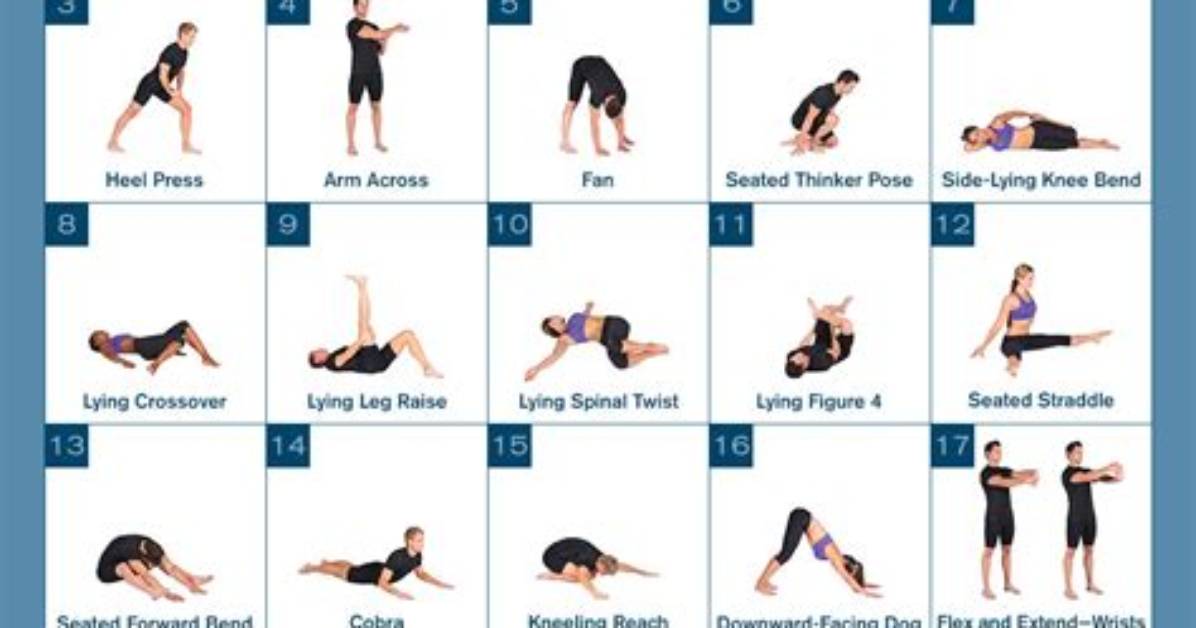
Therefore, a full body warm up consisting of static stretching, resistance band stretches, dynamic movements and also foam or ball rolling is necessary.
What Is The Correct Warm-up?
There’s no one correct warmup, however a good warm up should take a minimum of 15 minutes, although longer if you feel less mobile and really tight.
A 20-year-old athlete might be good to go after a 15-minute warmup, whereas someone over the age of 30 might need an extended time period to stretch out muscles. Likewise, someone who is over the age of 50, again might focus more of their time on mobility work.
It really becomes about listening to your body, knowing your past injuries (if any) and working within your own limitations.
Here is a full body warm-up followed by cool down stretches - b0th of which would suit most basic to intense training sessions.
James Sterling reports on renewable energy developments, climate policy, ecological conservation, and green tech innovations around the globe.
