
What Is a School Management Software?

If You’re Part of an Institution’s Leadership Team, You’ve Probably Used at Least One School Management Software. You May Have Been Interested in the Pricing...
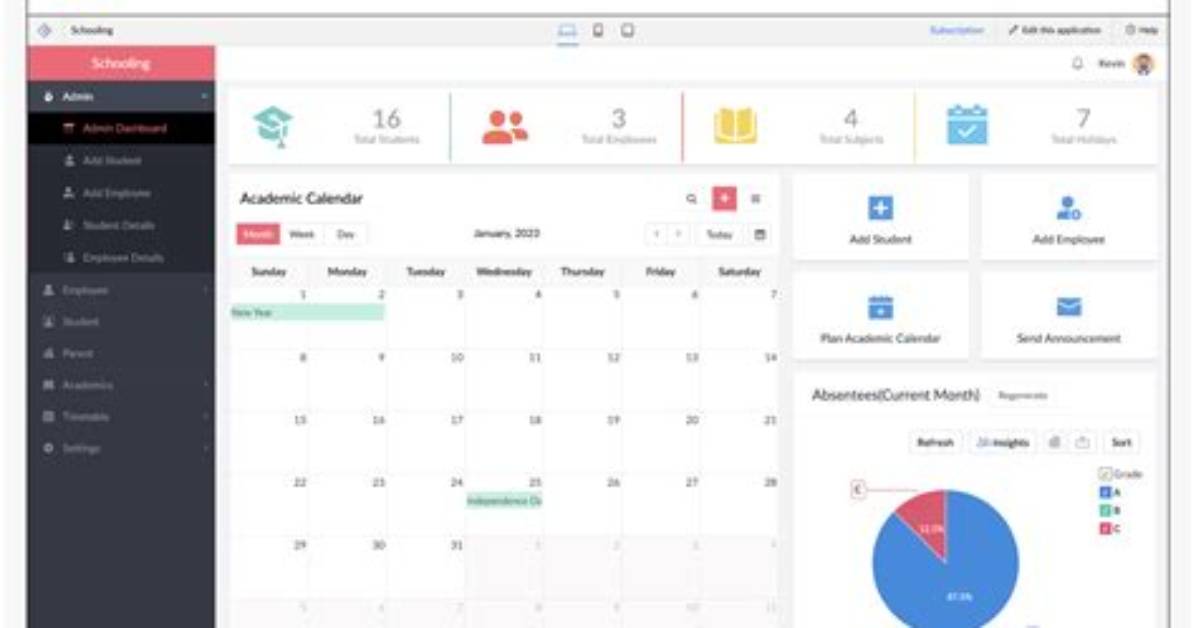
If you’re part of an institution’s leadership team, you’ve probably used at least one school management software. You may have been interested in the pricing complexity of other school management software tools. There are many different pricing methods on the market, and some pricing models can confuse first-time buyers.
There are hundreds of school management software available with different features and prices. This article serves as a primer for anyone who wants to buy a new school management software or replace the school’s existing software. This article applies not only to schools, but also to universities and other educational centers.
School management software pricing
1. Free
Free school management software
Some software is provided free of charge. Free school management software that is generally not open source is partly a paid product or service. For some paid products, you can use goods and services for free, but you must start paying after reaching a certain limit. It is important for institutions to be aware of the limitations before implementing partially monetized school management software.
Open Source School Management Software-
Some software is available as open source. You can download or buy the software here (open source doesn’t always mean free), and you can host the software on a server. There are advantages such as customization and flexibility, but there are various technical limitations for a regular school to run on open source software if adequate technical support is not available. You can choose to have a strong technical faculty within your institution.
Free and Open Source School Management Software-
In addition to open source, there is software that can be accessed and downloaded at any time without permission. Similar to the scenario above, this method can work if you have a technical professor who understands the software code and can implement the same code within your institution.
2. Paid
Price per user
Paid school management software comes with a variety of pricing models. One of the most widely implemented methods is pay per user. With this pricing model, smaller schools with fewer than 200 students will have to pay less than schools with 1000 or more students. The functionality is almost the same in both scenarios. You need to check in advance that the price you choose includes parent and teacher user accounts. Most school management software provides login access to both parents. So, in a school with 1000 students and 100 faculty, the total users could be 1000 students + 2000 parents + 100 faculty = 3100. So, check with your vendor to see if this 3100 user ID is available for 1000 students price. Also, keep in mind the number of students coming to school next year and see how this is reflected in the price. Also, don’t forget to ask if your license is renewed annually.
Fixed rate (per institution per year) –
To avoid the complexity of the above pricing, many vendors implement institutional flat rates and offer unlimited user licenses. The advent of cloud computing has drastically reduced hosting costs, and vendors have been able to give freedom to the number of user licenses. Institutions have a fixed annual fee. Prices range from hundreds of dollars to millions of dollars, depending on the supplier and institution.
Feature-based pricing-
Some vendors offer school management software packaged in different plans by function. So, smaller schools can opt for a minimum plan, and larger institutions can purchase higher level plans. With these prices available, take a software demo to get an in-depth understanding of each feature and see if the plan you choose is right for your institution this year and tomorrow.
3. Combo price
Most software vendors on the market offer combo pricing that combines all three pricing strategies above. For a combination price, you can calculate the total cost of ownership (tco) by collecting the total cost to pay the vendor if you use the software over the next 3 to 5 years. Find out how several factors, such as number of students, numbering agencies, features, etc. will change software pricing this year and in the future.
David Miller brings 15 years of experience in global economics, personal finance strategy, and market dynamics. He specializes in turning complex economic trends into actionable insights for everyday readers.
