
What Is a Tattoo Blowout?

A Tattoo Blowout Is a Symptom of a Tattoo Designer Rough Use of the Instrument or Inexperience with It. Because the Needle Was Used Incorrectly, the Ink...
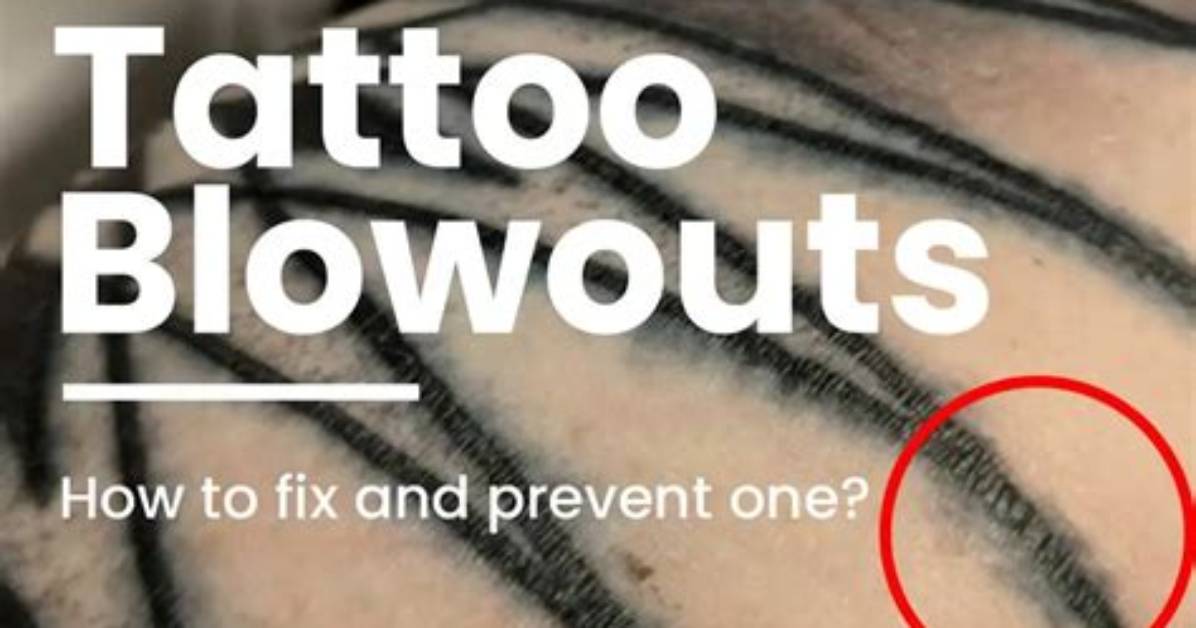
What is a Tattoo blowout? A tattoo blowout is a symptom of a tattoo designer rough use of the instrument or inexperience with it. Because the needle was used incorrectly, the ink penetrated the skin deeper than it should have. The ink on the surface of the skin will appear hazy and smeared after a tattoo blowout.
What Causes Tattoo Blowout?
Tattoo ink can leak out into adjacent layers of fat if applied too deeply into the skin. This creates the blurring look that is commonly associated with a tattoo blowout. Tissue samples performed from persons who have tattoo blowouts have shown that the ink reaches considerably deeper beneath the skin than is required during a tattooing operation.
The ink disperses down undesirable and unpredictable courses throughout the skin’s layers due to the change in tension and cell structure in this deeper layer of fat.
As most tattoo blowouts are obvious right away after the needle injects the ink into the wrong layer of skin, it can take up to a few weeks for the blown-out pigment to disseminate throughout the layer enough to be seen on the surface while your tattoo heals.
Needles inserted too deep or at the wrong angle
The most prevalent cause of tattoo blowout is this. As previously said, being overly aggressive with the needles and pushing them too deep will spread the ink into a skin layer that shouldn’t be touched. This can be painful. The artist might alternatively force the needles in at an inefficient angle, allowing the ink to spread into nearby tissue and generate a blowout effect.
Although more skilled tattoo artists can usually reduce the majority of the risk of blowouts, it’s occasionally difficult to avoid in particular parts of the skin, and you shouldn’t necessarily assume your artist made a mistake. Even the most seasoned artists are susceptible to this.
Of course, the less skilled an artist is, the more likely they are to make a mistake and overwork the region, potentially resulting in a blowout.
Tattoo is being drawn on very thin skin
When compared to great large slabs of skin, portions of your body with only very thin layers of skin are highly vulnerable, and the likelihood of a blowout in these areas is significantly higher.
Due to the extraordinary thinness of certain sections of skin, the needle is far more likely to intrude into the lower layers of skin, perhaps causing a blowout. Wrists, ankles, fingers, toes, and the tops of hands and feet are more prone to blowouts.
If a tattoo is placed on a ■■■■■, such as behind the knee or inside the elbow, it is more likely to smash out, albeit this is rare. When compared to a novice, a professional and experienced artist is considerably less likely to pierce too far into these delicate places but it can still happen.
Stretching and pulling at the skin too much
Artists frequently stretch and tighten the skin somewhat to ensure it’s level and equally dispersed before inserting the ink at the precise appropriate position. However, if the artist pulls too hard, especially on a more sensitive and thin portion of skin, the needle may emerge at odd angles as the skin is stretched, resulting in a tattoo blowout.
What Does A Tattoo Blowout Look Like?
Tattoo blowouts come in a variety of shapes and sizes, and they can be subtle or prominent. Regular healing can sometimes be misinterpreted as a tattoo blowout.
A blowout, on the other hand, usually makes the afflicted areas/lines on a tattoo look blurry and streaky, and the ink frequently spreads outside of the planned parameter.
Chloe Bennett explores the intersection of pop culture, streaming entertainment, digital trends, and contemporary lifestyle. Her weekly commentary reaches thousands of culture enthusiasts.
