
What Is Cobit? Cobit Explained

It Management Abounds with Best Practice Frameworks. These Frameworks Offer Philosophies and Tangible Paths Forward to Improve Cost and Resource Management...
IT management abounds with best practice frameworks. These frameworks offer philosophies and tangible paths forward to improve cost and resource management, measure risk, speed up customer service, and innovate analysis through predictive methods.
COBIT is one such best practice framework, but its scope is unique from most frameworks in that it focuses narrowly on security, risk management, and governance. If you’re looking to streamline business processes, sync IT with business needs, alter your IT infrastructure, or manage the multi-cloud, COBIT isn’t the answer.
But with most companies relying enormously on IT for business success – sometimes the IT itself is the product – COBIT is essential to developing, controlling, and maintaining risk and security for enterprises around the world, regardless of your industry.
Short for Control Objectives for Information and Related Technologies, COBIT was first developed to guide IT governance and management. Its latest iteration, COBIT 2019, has revamped parts of its framework while offering much-needed updates that accounts for ever-present cybersecurity threats and the incorporation of Agile and DevOps practices.
This article serves as a primer to the COBIT framework, offering guidance on whether COBIT is the right solution for your enterprise.
History of COBIT
International professional association ISACA first released COBIT in 1996 as a set of control objectives to aid the financial auditing community to work better around IT-related structures.
As value and potential beyond auditing became evident, ISACA released a more comprehensive version in 1998 and further expanded it by adding management guidelines in the third version released in the year 2000. Development of the AS 8015: Australian Standard for Corporate Governance of Information and Communication Technology and the ISO/IEC 38500 in January 2005 and January 2007 respectively upped the degree of awareness of the need for reliable information and communication technology (ICT) governance components.
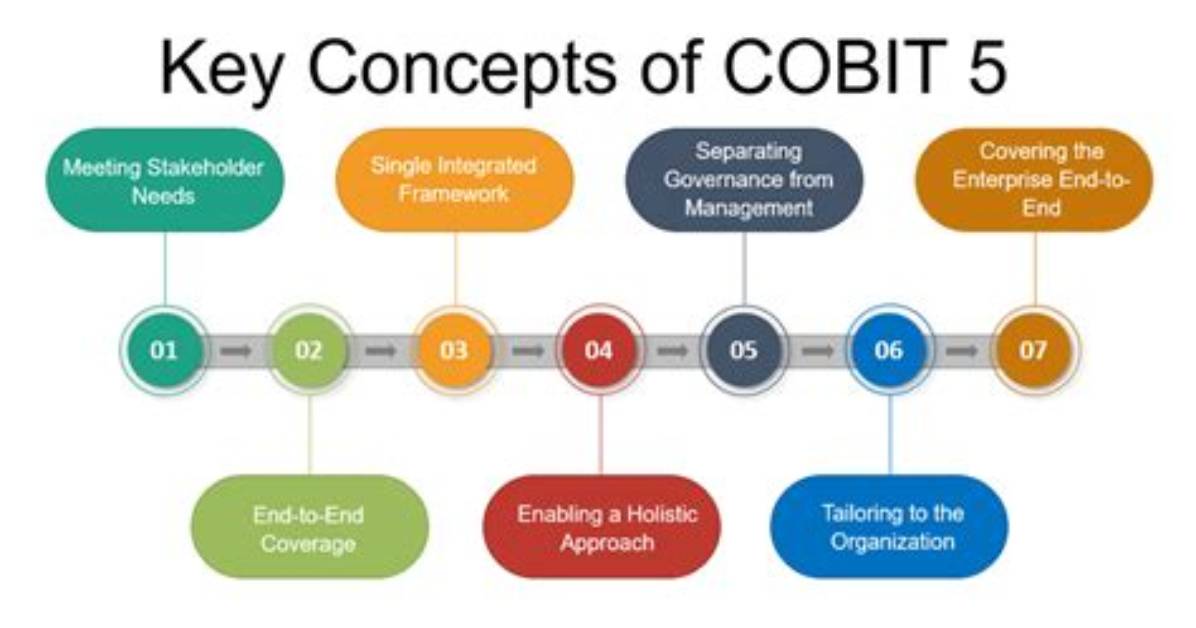
In 2011, ISACA released COBIT 5, which remained the standard for seven years. In November 2018, big changes came to COBIT when ISACA released COBIT 2019.
Must Read
IT innovations lead to change: COBIT 2019
The latest iteration of COBIT modernizes the framework for the immense expansion of IT within the business world. COBIT 2019 continues to fit in nicely with ITIL, TOGAF, and CMMI, and it serves as a good umbrella framework for unifying processes across an organization.
Within the COBIT Core Model, the heart of COBIT, there are now 40 governance and management objectives. Due to user feedback and IT reliability and needs, COBIT 2019 offers more flexible options for deploying maturity and capability measurements so that IT goals can keep up with data-driven business goals.
According to ISACA, COBIT 2019 has several new goals, too, including but not limited to the following:
- Improved alignment with global standards and best practices to encourage COBIT’s relevance
- New open-source model allows for global feedback, hopefully resulting in faster, more agile updates and improvements
- More guidance and prescriptions to make COBIT a best-fit governance system, not one that works against the enterprise
- Better measurement tools to align with CMMI
The COBIT 2019 guidebooks significantly revamp prior versions, resulting in four key guides:
- Introduction & Methodology
- Governance & Management Objectives
- Design Guide
- Implementation Guide
David Miller brings 15 years of experience in global economics, personal finance strategy, and market dynamics. He specializes in turning complex economic trends into actionable insights for everyday readers.
