
What Is Emm? Enterprise Mobility Management Explained

Enterprise Mobility Has Changed the It Landscape. Mobile Device Technologies Are Constantly Evolving. Bring Your Own Device (Byod) Power Users Demand Support...
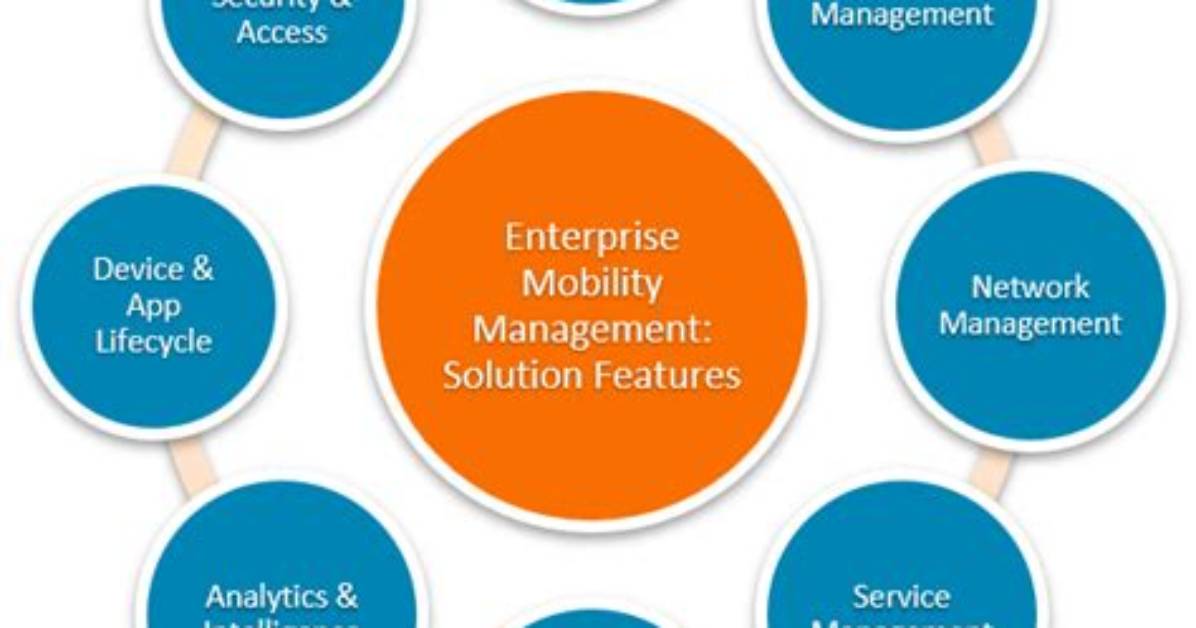
Enterprise mobility has changed the IT landscape. Mobile device technologies are constantly evolving. Bring your own device (BYOD) power users demand support for an ever-expanding range of OS platforms, apps, and device models.
At the same time, this extended network of sensors and connected devices must:
- Communicate with corporate networks
- Engage with machines
- Serve as a new service and marketing channel to consumers
All of these touchpoints enable rapid innovation, new business opportunities, and new streams of revenues—but they also require management.
Let’s take a look at enterprise mobility management (EMM), an ongoing, increasingly crucial practice for 21st century organizations.
What is enterprise mobility management?
Enterprise Mobility Management (EMM) is a collective set of policies, practices, and technology solutions that allow organizations to manage and control mobile devices for corporate use. These devices may be corporate-owned or BYOD (Bring Your Own Device) devices used to access sensitive business information.
EMM brings strong management capabilities to control the way mobile users, devices, and apps interact with the corporate network. The idea is to strike the right balance between productive mobile workforce operations and information security.
Features in EMM tools & solutions
An Enterprise Mobility Management tool integrates the enrolled devices with the corporate network, updating the necessary security configurations and applying a range of administrative controls.
An EMM solution typically includes the following set of features:
- Application Management controls which apps can be downloaded to the device, access corporate networks, and interact with accessed information.
- Content Management controls how organizational policies apply to the data stored in the device. Produces audit trails for activity around sensitive business information.
- Network Management controls network access, data transfer limitations, geofencing, and other Virtual Private Network (VPN) connections for enrolled devices connecting with the corporate network remotely. Devices can be remotely configured to the correct network settings.
- Service Management administers self-service and push-updates of apps, configurations, settings, and IT service requests as controlled by IT admins. The technology integrated with the organization’s ITSM tools can consistently apply the service management policies to mobile devices. It also helps control how devices consume the services, in the form of data usage and roaming cellular connectivity.
- Unified Endpoint Management manages and secures all endpoints from a unified platform. The centralized EMM platform can be used to manage devices including phones, tablets, laptops, mobile workstations, and IoT, enabling a unified experience for end-users with capabilities such as single sign-on management and Identity & Access Management (IAM).
- Analytics and Intelligence captures granular information on device, app, content and network activities, transforming that information into intuitive reports and intelligence on the productivity and performance of a mobile workforce.
- Device and App Lifecycle Management offers endpoint lifecycle management features, ranging from device onboarding and service provisioning to decommissioning and remote security measures such as data wipe.
- Data Security and Access Management applies additional layers of security to secure information, including encryption, password protection, and patching. This features helps control how devices and apps access corporate networks and sensitive data stored on the devices.
Alexander Ross has covered the video game industry for a decade, writing deep dives on game design, esports tournaments, VR developments, and gaming culture.
