
What Is Hyper Automation?

Hyper Automation Is the Continuous Integration of Automation into Business Operations. It Equates to More Machines Doing More Things. It’s the Next Phase of...
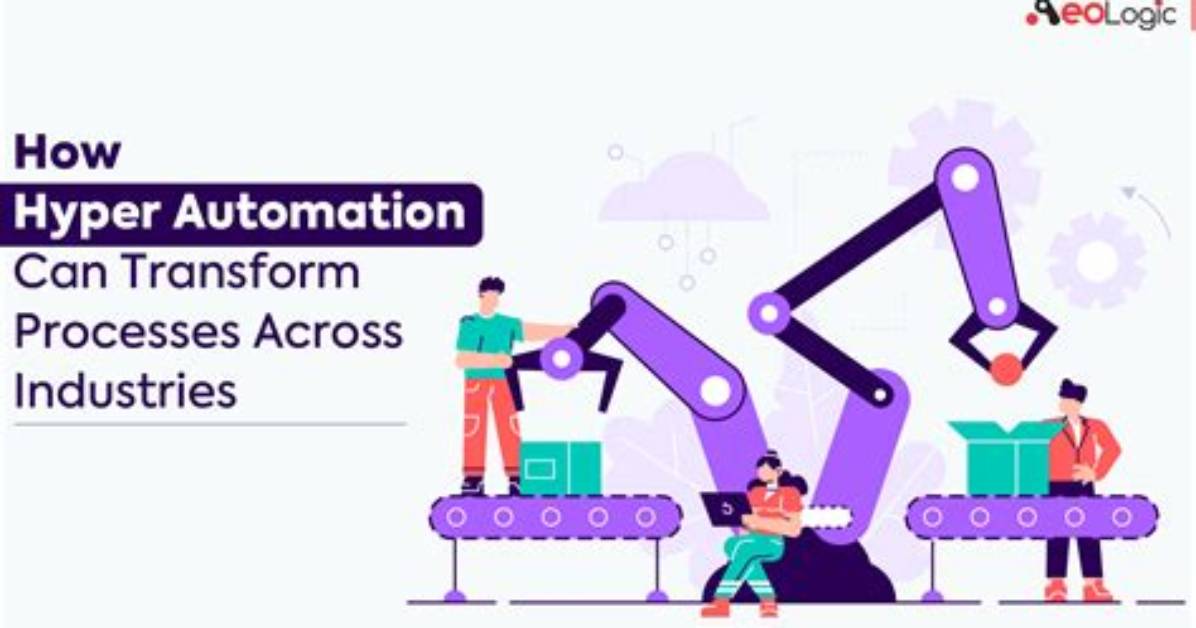
Hyper automation is the continuous integration of automation into business operations. It equates to more machines doing more things. It’s the next phase of digital transformation for businesses that are to remain competitive. If you are a digital enterprise, you are already familiar with many of the benefits of automation, like:
- Consistent products and services
- More efficient products and services
- Fewer errors in the supply chain
- More effective use of data throughout the business
Hyper automation takes automation a step further. When businesses achieve hyper automation they achieve high-performance. This makes way for specialists and a revisioning of the human element in business. Here’s the story on hyper automation:
Key components of hyper automation
A report by Gartner says:
“Hyper automation requires selection of the right tools and technologies for the challenge at hand. Understanding the range of automation mechanisms, how they relate to one another, and how they are combined and coordinated, is a major focus for hyper automation.”
Below are some key components of hyper automation that you can apply to your business with the right software. For hyper automation to occur, you must implement these components.
Robotic process automation
Robotic process automation, also known as RPA, is a convenient way to handle data migration when systems don’t have compatible APIs. If you are using at least one old system with outdated APIs, you may run into issues moving structural data from system A to system B. One way to use robotic process automation is to make this process less labor intensive for IT professionals. It can also be used to automate mundane repetitive tasks like data structuring and input.
The above mentioned Gartner report says of RPA:
“Tightly defined integration scripts structure and manipulate data, moving it from one environment to the next. Because the integration is based on interacting with the metadata that drives the screens of existing applications, these tools are usually more accessible to business end-users.”
Intelligent business process management
Intelligent business process management software (iBPMS) is virtual intelligence that coordinates people with machines and other things that make up a technological infrastructure. At the core of iBPMS is modeling and rules to determine the best practices of an organization. Robust APIs make integration easy with many systems.
Gartner says:
“An iBPMS enables citizen developers—most commonly business analysts—and professional developers to collaborate on iterative development and improvement of process and decision models.”
Artificial intelligence
Artificial intelligence (AI) enhances the service process and supply chain with a series of processes like:
- Machine learning
- Intelligent optical character recognition
- Natural language processing (NLP)
Using AI, businesses have begun to rapidly expand their services and service infrastructure. AI digitizes otherwise time-consuming routine processes, like answering basic customer questions or processing a return. Because artificially intelligent machines can do things like recognize faces and voices, machines are capable of performing many tasks. In order to achieve hyper automation, you must strategically employ AI.
Advanced analytics
With tools that allow business leaders to gain deep insights from customer, sales, and operational data, businesses can create KPIs while refining their processes. Digital businesses focus on efficiency by using advanced analytics to understand business trends and expand on them.
Must Read
What is a DTO?
A digital twin of an organization is sometimes called a DTO. In short, a DTO is a group of software models that make up an organization. It’s necessary to achieve DTO before attempting hyper automation.
DTO is a step in the process of becoming a hyper automated business because it allows companies to model any number of scenarios that could impact their digital business. With a series of software models defined to run scenarios that could occur within the organization, business leaders can better prepare for any potential shortcomings in the business model.
Chloe Bennett explores the intersection of pop culture, streaming entertainment, digital trends, and contemporary lifestyle. Her weekly commentary reaches thousands of culture enthusiasts.
