
What Is Potassium & How Does It Benefit Athletes?

The More Time You Spend in the Gym, the More You Hear People Discussing Electrolytes – “You Gotta Go Low-Sodium to Get Shredded, ” “Bro, Watch Your Salt...
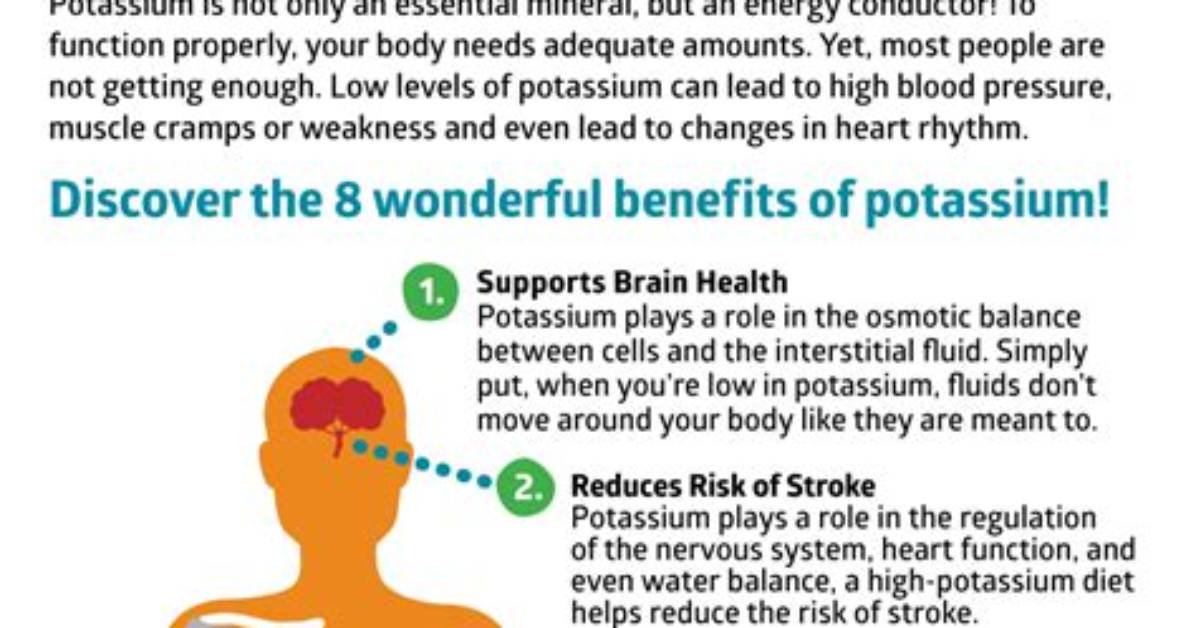
The more time you spend in the gym, the more you hear people discussing electrolytes – “You gotta go low-sodium to get shredded,” “bro, watch your salt intake,” “I get so bloated from salty foods” etc. When it comes to salt, it is in fact an essential electrolyte that plays many vital roles in the body and should not be eliminated from anyone’s diet. Unfortunately, most people overindulge in the mineral, leading to a handful of unwanted side-effects and an emphasized focus on sodium by the general public. In the shadow of this focus lies a severely-undermined electrolyte that is equally if not more important: Potassium. Giving this mineral the due acknowledgement it deserves, we will discuss what potassium is, its benefits to the athletic body, and where one can obtain it.
What is Potassium?
Like its salty counterpart, potassium (K) is a naturally-occurring mineral that is essential to human performance. It is the third-most prevalent mineral in the body, and is used in a variety of physiological mechanisms including muscular contractions, autonomic nervous system maintenance, blood pressure regulation, fluid balance, bone growth, and kidney stone prevention, among others. The Food & Drug Administration states that most adults need to consume 3,500 to 4,700 milligrams per day, yet only 2% of the American population actually consumes this quantity – the other 98% is significantly undernourished! For optimal performance both inside the gym and in your everyday life, you should make sure to consume adequate amounts of potassium.
Water Retention & Fluid Balance
As mentioned before, potassium is an electrolyte that is extensively utilized by the body. Your body and nearly all of its mechanisms are dependent on sodium/potassium pumps, which is why both electrolytes are so essential and should not be eliminated from your diet!
Many are aware that excess sodium is typically the culprit when it comes to bodily water retention or bloating (think back to the last time you had a salty restaurant or takeout meal – goodbye muscle definition!), but equally as many do not know that potassium is the key to preventing this retention. In fact, the American Journal of Kidney Diseases stated in a study that “dietary potassium restriction increases sodium and chloride retention, whereas potassium administration promotes both diuresis and natriuresis.” When sodium is consumed, it is absorbed into the body’s cells, bringing water along with it (to hydrate the body). This water is stored subcutaneously by the body, meaning it lies primarily between the muscles and the skin. When excess water is retained due to extra sodium consumption, your body will naturally store that water like it always does, yet only at the expense of a “bloated,” “full,” or “definition-lacking” physique. While this is only a temporary ailment that physique-conscious people commonly avoid by lowering their consumption of salty foods, sweating via exercise, supplementing with diuretics or other various tactics, consuming potassium may be the simplest answer! The body naturally strives to create a balance of electrolytes, so when potassium is consumed in the proper dosages, it pulls excess sodium & water out of cells through the electrolyte pumps and excretes them via urination (thus creating an electrolyte balance within the body). This approach, if you are already at a relatively low body fat percentage, can result in a harder and less-bloated physique.
Sophia analyzes international trade, startup ecosystems, retail transformation, and supply chain logistics for modern digital publications.
