
What Is Sdi? How Software-Defined Infrastructure Works

Several Decades Ago, Virtualization Was Introduced to Transform the Way It Infrastructure Resources Were Consumed. the Logical Abstraction Between the Physical...
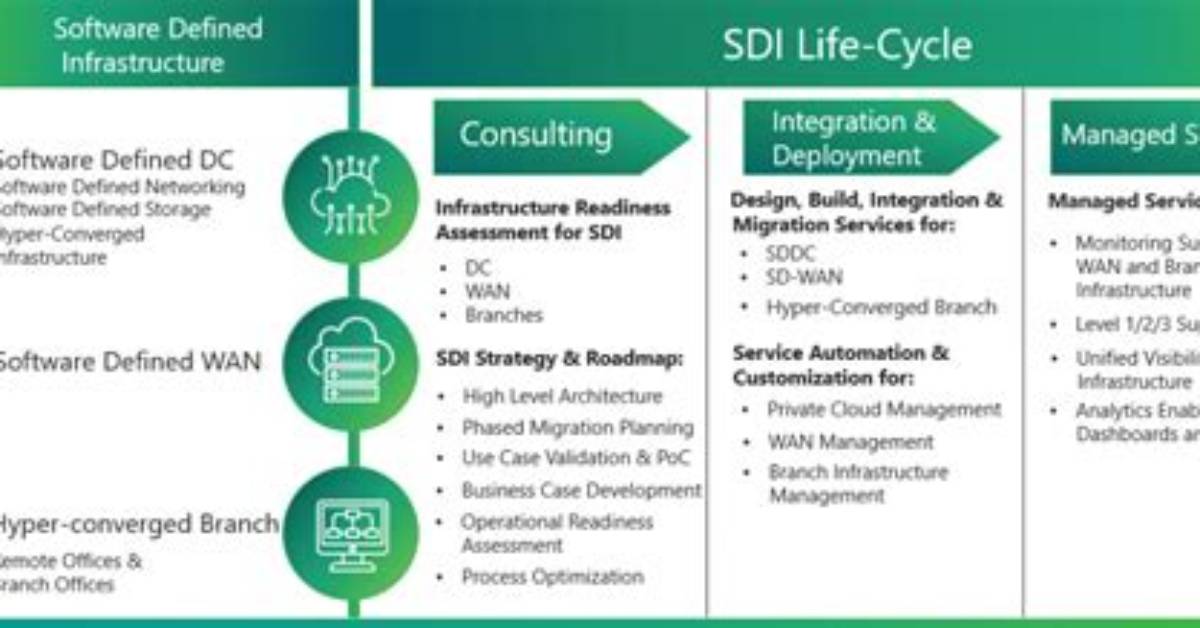
Several decades ago, virtualization was introduced to transform the way IT infrastructure resources were consumed. The logical abstraction between the physical hardware and the software resources allows organizations to improve IT service performance and delivery.
Since then, the industry has evolved and now experiences unprecedented demands on modern IT infrastructure, like:
- Service availability
- Flexibility
- Security
Increasing dependence on technology to reach end-users and customers has forced vendors to find new and effective ways to meet high standards of Service Level Agreements (SLAs). One popular was is software-defined infrastructure (SDI).
Let’s take a look.
What is software-defined infrastructure?
SDI is the operation and control of IT infrastructure entirely using software technologies and without involvement of the human element.
SDI has emerged as a promising approach to address the extensive demands on maximizing the value potential of infrastructure deployments.
Processes in SDI including infrastructure control, management, provisioning, configuration and other architectural operations are performed automatically via software as per application requirements and the defined operational policies. Since the changes are not dependent or limited to the human involvement, SDI enables intelligent infrastructure processes based on the changing IT operation requirements in real-time.
The IT infrastructure therefore becomes intelligent, taking smart decisions on its own in order to meet the defined goals on:
- SLAs
- Performance
- Security
- Other considerations
SDI allows the infrastructure to operate as a self-aware, self-healing, self-scaling and self-optimizing IT environment to enable truly agile business processes.
Must Read
How software-defined infrastructure works
The Software-Defined Infrastructure stack typically comprises of the following components:
- Physical infrastructure. At the machine level, SDI comprises the hardware resources such as servers and networking devices, as well as firmware, hypervisors, and other endpoint terminals. The infrastructure components may be scaled on an ongoing basis to address changing IT needs, while the SDI functionality can encompass the expanding infrastructure.
- Virtualization layers. Virtualization is applied to the infrastructure resources such as storage and network components. A heterogeneous architecture of computing resources is maintained. This component sits directly above the physical infrastructure level within an SDI architecture.
- Software-defined capabilities. Capabilities such as Software-Defined Networking (SDN), Software-Defined Compute, and Software-Defined Storage are applied to the virtualized layer of computing resources. Intelligent monitoring and control systems are deployed to automatically transform the network, compute, and storage resources per the architecture policies. End-users may define their requirements pertaining to resource provisioning and server deployment, while the intelligent control systems will take on the responsibility of configuring the underlying infrastructure and managing the virtualized resources.
- Management services. At the infrastructure management level, SDI may involve the user-interface to define parameters such as SLA performance, availability, scalability, and elasticity. IT admins or internal IT users may also request provisioning of resources. The management services layer will take care of all infrastructure operations necessary to ensure that desired standards of SLA and performance are maintained.
James Sterling reports on renewable energy developments, climate policy, ecological conservation, and green tech innovations around the globe.
