What Is the Difference Between Ordinary Dividends and Qualified Dividends?
Elena Rostova
••4 min read
1. What Are Ordinary Dividends?2. What Are Qualified Dividends?3. What Are the Tax Rates for Ordinary Dividends?4. What Are the Tax Rates for Qualified...
What is the Difference Between Ordinary Dividends and Qualified Dividends?
Dividends are a share of a company’s profits that are distributed to its shareholders. They are a popular source of income for investors, but not all dividends are treated equally. The two main types of dividends are ordinary dividends and qualified dividends. Understanding the difference between these two types is crucial for investors to properly manage their investment income and taxes.
1. What are ordinary dividends?
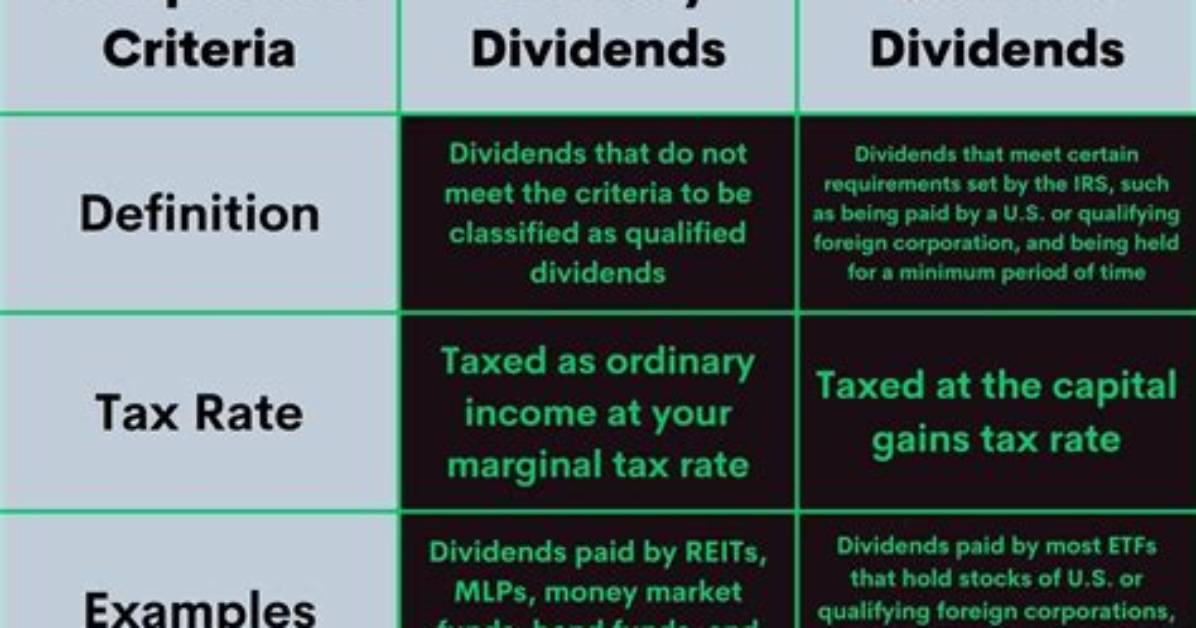
Ordinary dividends, also known as non-qualified dividends, are the most common type of dividend. They are paid out of a company’s earnings and profits and are subject to the ordinary income tax rates.
2. What are qualified dividends?
Qualified dividends are a special type of dividend subject to lower tax rates. To qualify for this treatment, dividends must meet specific criteria set by the Internal Revenue Service (IRS).
3. What are the tax rates for ordinary dividends?
Ordinary dividends are taxed at the same rates as your ordinary income. The tax rates range from 10% to 37%, depending on your income bracket.
4. What are the tax rates for qualified dividends?
Qualified dividends are taxed at lower capital gains tax rates, which are generally more favorable than ordinary income tax rates. The rates for qualified dividends range from 0% to 20%, depending on your income bracket.
5. How do I qualify for the lower tax rates on dividends?
To qualify for the lower tax rates on dividends, you must hold the shares of the paying company for a specific period, generally at least 61 days during the 121-day period surrounding the ex-dividend date. Additionally, the dividends must be paid by a U.S. corporation or a qualifying foreign corporation.
6. Are all dividends automatically qualified?
No, not all dividends are automatically qualified. Only dividends that meet the IRS requirements can be treated as qualified dividends.
7. Can dividends from foreign companies be qualified?
Yes, dividends paid by qualifying foreign corporations can be considered qualified dividends, subject to certain conditions.
8. How are non-qualified dividends taxed?
Non-qualified dividends are taxed at your ordinary income tax rates, similar to your salary or other sources of income.
9. Are there any circumstances where qualified dividends lose their preferential tax treatment?
Yes, if you fail to meet the holding period requirements or if the dividends are paid by a non-qualifying corporation, they will not be eligible for the lower tax rates on qualified dividends.
10. Are dividends received from mutual funds always qualified?
No, not all dividends received from mutual funds are automatically qualified. The type of income generated by the mutual fund’s investments determines whether the dividends are qualified or non-qualified.
11. How are dividends reported on tax returns?
Dividends are reported on Form 1099-DIV, which is provided by the company or financial institution distributing the dividend. The form details the amount of dividends received and whether they are ordinary or qualified.
12. Do state taxes treat ordinary and qualified dividends differently?
State taxes may have different rules regarding the taxation of dividends. It is important to consult your state’s tax laws or a tax professional to understand how dividends are taxed at the state level.
In conclusion, the main difference between ordinary dividends and qualified dividends lies in their tax treatment. Ordinary dividends are taxed as ordinary income, while qualified dividends are subject to lower capital gains tax rates. Understanding these differences can help investors make informed decisions about their investment income and minimize their tax obligations.
Elena Rostova holds a Master's degree in Public Health Journalism. She covers groundbreaking medical research, holistic wellness trends, mental health awareness, and nutritional science.