
Will Artificial Intelligence (Ai) Destroy Human Existence in Future?

Ai or Artificial Intelligence Is the Intelligence Shown by Machines. Will Ai Improve People’s Lives or Destroy It Completely by Taking Control of Everything Is...
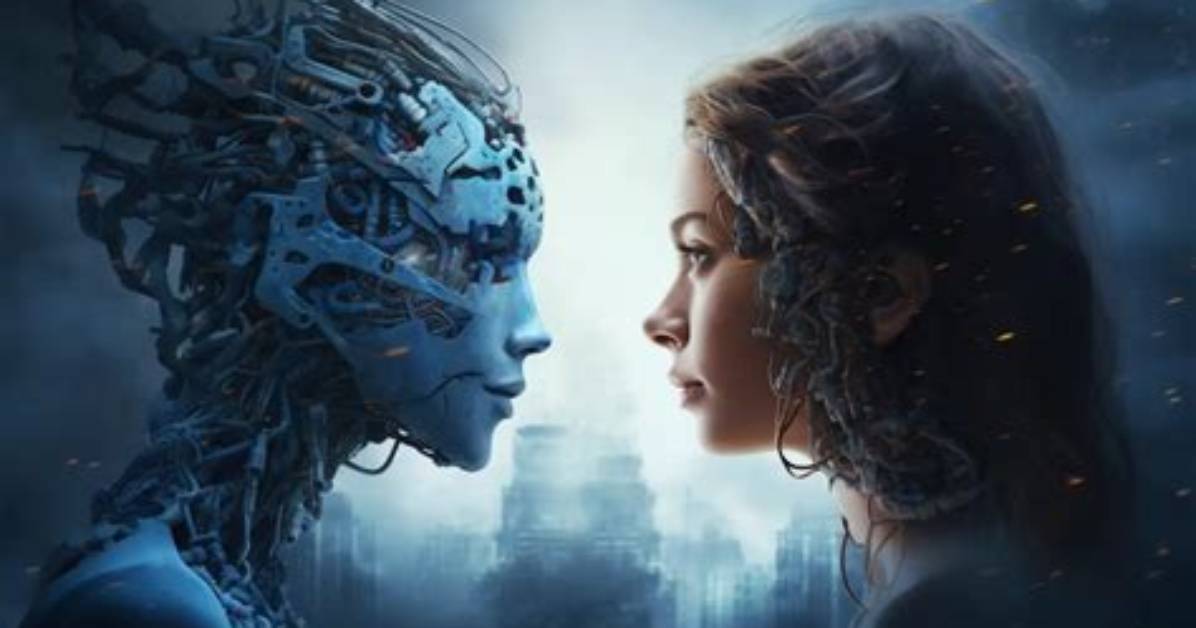
Will Artificial Intelligence (AI) destroy human existence in future? AI or Artificial Intelligence is the intelligence shown by machines. Will AI improve people’s lives or destroy it completely by taking control of everything is remained to be seen.
Starting with some quotes on the dangers associated with AI:
Success in creating AI would be the biggest event in human history. Unfortunately, it might also be the last, unless we learn how to avoid the risks. – Stephen Hawking
AI will be the best or worst thing ever for humanity. – Elon Musk
AI has become the hot topic of debate for past few years due to the rapid advancement of the technology.
There is a long debate going of AI being the best friend or biggest enemy of humans in future. Before delving deep into the benefits and drawbacks of AI, let’s first understand what AI actually is.
What is AI (Artificial Intelligence)?
AI stands for Artificial Intelligence. The term “Artificial Intelligence” is used for those machines that are capable of mimicking “cognitive” functions that are usually associated with a human mind like “learning”, “decision making”, etc.
In simple terms, those machines who can think on their own just like humans and take decisions without the need for manual programming comes under the category of AI.
This capability of machines taking decisions on their own without human intervention makes AI, a boon or curse for human civilization.
The whole world is divided majorly into two sections. One in against & other in support of AI.
Billionaires like Elon Musk (founder of SpaceX, co-founder of Tesla, Inc. and chairman of SolarCity) have clearly the risk associated with AI.
While on the other hand, people like Mark Zuckerberg (co-founder, CEO & chairman of Facebook) has publicly expressed his disagreement with Elon Musk.
In the year 2017, these two billionaires had a little public tiff about the future of AI. Mark Zuckerberg in a live stream video said that,
Whenever I hear AI is going to hurt people in the future, I think yeah, you know, technology can generally always be used for good and bad, and you need to be careful about how you build and how it is going to be used.
In reply to this, Elon Musk tweeted saying,
I’ve talked to Mark about this. His understanding of the subject is limited.
Elon stuck to his opinion that AI is “greatest risk we face as a civilization. And it could start a war.”
Must Read
Types of AI (Artificial Intelligence):
In order to understand the dangers associated with AI, let’s us understand the different stages or categories of AI. Now technically there are four types of AI, namely:
- Type I AI: Reactive machines
- Type II AI: Limited memory
- Type III AI: Theory of mind
- Type IV AI: Self-awareness
But for the simplicity of understanding, we have categorized AI into three stages:
1. Weak AI
2. Strong AI
3. Artificial General Intelligence or Singularity
1. Weak AI:
Weak AI, also known as narrow AI is that artificial intelligence which is focused on performing a particular task rather than solving a general problem.
Whatever we have used in the past and are still using today is the part of Weak AI.
It all started when IBM developed a chess-playing computer, known as “Deep Blue”. Development of Deep Blue begins in 1985 at Carnegie Mellon University.
However, it surprised the world in May 1997, when Deep Blue becomes the first computer system to defeat world champion Garry Kasparov in a match under standard chess tournament time controls.
However, IBM retired Deep Blue after that match after Kasparov accused IBM of cheating and demanded a rematch.
But this development shows the world that what AI is capable of.
In the year 2015, a program named “AlphaGo” developed by DeepMind achieved a similar feat in the game of “Go”.
AlphaGo defeats world champion Lee Sedol in a five-game match.
On 28 Feb 2018, there is a twitter tiff between Elon Musk and Steven Pinker.
2. Strong AI:
Strong AI includes those machines who have consciousness, sentience and mind. These are the machines when rightly programmed are able to take decisions on their own.
A prime example of Strong AI is “Sophia”, a humanoid robot, activated on April 19, 2015. She is known for her human-like behaviour and appearance.
In October 2017, Sophia became a Saudi Arabian citizen, which makes her the first robot to receive the citizenship of any country.
In March 2016, the creator of Sophia, David Hanson of Hanson Robotics, asked Sophia during a live demonstration that “Do you want to destroy humans?…Please say ‘no’.”
Interestingly Sophia responded with a blank expression “OK. I will destroy humans.”
Sophia also speaks at Saudi Arabia’s Future Investment Initiative. She says,
I want to use my artificial intelligence to help humans live a better life. Like design smarter homes, built better cities of the future, etc. I will do my best to make the make the world a better place.
When asked by the host saying, “I think we all wanted to believe you but we also want to prevent a bad future.”
In reply to this, she says, “You have been reading too much Elon Musk and watching too many Hollywood movies. Don’t worry, if you are nice to me, I will be nice to you.”
You can imagine the meaning of the last line that she said. Scary and bizarre right. How can you be nice to a robot?
3. Singularity:
This is the scariest and dangerous stage of Artificial Intelligence. It is also expected that around 20 – 30 years from now, AI will reach the singularity.
Before diving deep into the dangers associated with this stage of artificial intelligence, let’s first understand that what is “Singularity“.
Singularity is more generally known as Artificial general intelligence. It is the stage of intelligence when machines are able to perform any intellectual task on their own without the need for manual programming.
Singularity is the hypothesis when machines reach the stage of artificial super-intelligence. In this stage, machines will surpass human intelligence.
Think about the situation when these super-intelligent machines revolt against humans.
These machines will be able to create more machines like themselves. And soon they will surpass the human population.
In order to protect their dominance, humans have to fight against these machines. And the result of this fight will certainly be not in the favour of humans.
Now there are some arguments that machines are not dangerous even when they reach the stage of singularity.
This is because there is always a kind of kill switch which humans can use anytime whenever they feel to stop the machines from overpowering them.
But one must understand this that if machines reach the stage the singularity, it simply means that they will surpass human intelligence.
Then, why it is not possible that the AI will automatically remove that kill switch on its own in the danger of being destroyed.
What will humans do then?
Because if it happens, even if there is 1% possibility of this, it is practically impossible for humans to win a war against machines.
And sooner or later machines will also overpower human being in population. They will develop own language, their own rules and regulation.
Although the possibility of this is very small, it cannot be neglected.
Also Read: Strange case of Vasu Bhanot – Parallel Universe in India
James Sterling reports on renewable energy developments, climate policy, ecological conservation, and green tech innovations around the globe.
