
Your Guide to Gender-Fluid and Non-Binary Relationships

If You’re a Straight Person in a Relationship, There Are Templates for You to Follow. There Are Movies About Straight Relationships, Books, Songs, and a Horde...
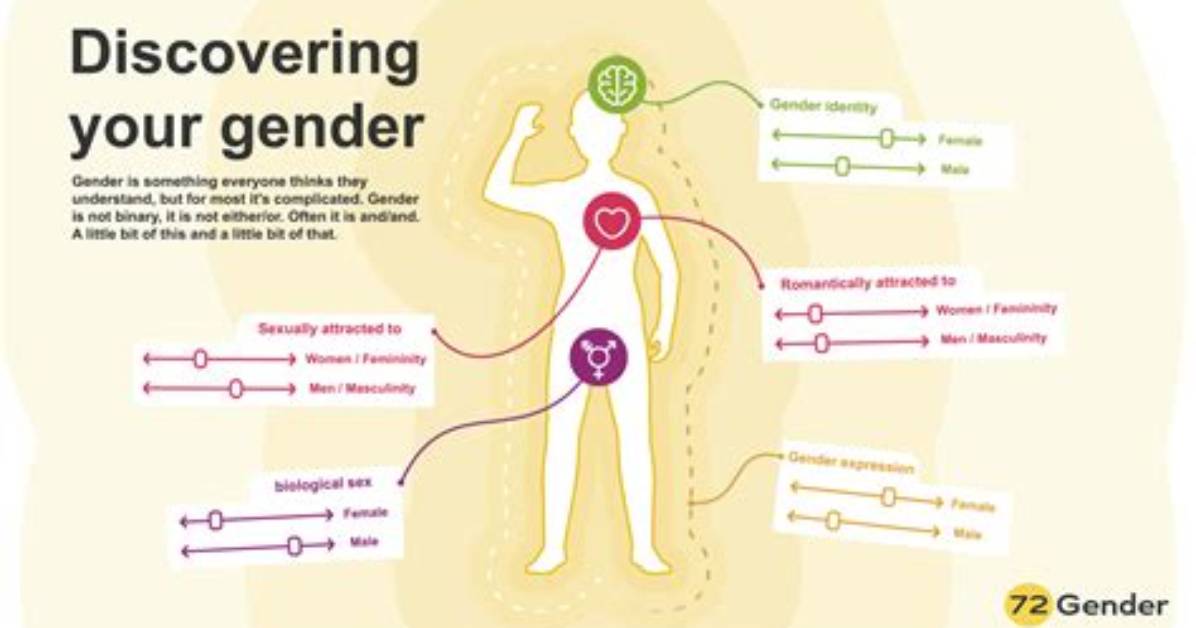
If you’re a straight person in a relationship, there are templates for you to follow.
There are movies about straight relationships, books, songs, and a horde of people with experience in straight relationships willing and able to dole out advice on them.
If you’re in a gay relationship, you might find yourself with fewer resources at your disposal. As gay and lesbian couples have faced judgement and discrimination for so long (and still do), the number of resources available for are much lower.
RELATED: What You Should Know About Transgender People & How To Be An Ally
However, if you’re in a relationship where one partner identifies as neither a man or woman, the usefulness of existing relationship advice might not apply in the same way.
Absent the traditional gender roles, what do relationships look like? And how do you handle the unique and often novel hurdles of a kind of relationship you probably weren’t prepared for by your upbringing?
In order to get a better sense of how relationships with non-binary, gender fluid, or genderqueer individuals work, AskMen spoke with a handful of dating experts, as well three members of such couples. Here’s what they had to say:
What Is a Non-Cisgender Relationship?
If you’re not familiar with the terminology already, it’s worth breaking down what exactly everything means in the sense of non-cisgender relationships.
“Cis,” short for “cisgender,” is a term created to exemplify the opposite of “trans” or “transgender.” The same way “heterosexual” and “homosexual” were framed as two opposite possibilities for sexual desire, “cis” and “trans” exemplify two possibilities for gender identity.
If you feel comfortable with the gender you were assigned at birth — typically the gender associated with your physical sex — you’re cis. After for those who consider themselves to be trans, it has come to exemplify and stand for many different approaches to gender. The most commonly understood ones are typically when people transition from male to female or vice-versa.
That said, not everyone who identifies as trans believes it to be that straightforward. Some people feel more comfortable in the middle, either associating with both male and female, or associating with neither, and some people feel most comfortable passing back and forth between the two.
RELATED: "Genderfluid" and 60+ Other Dating Terms, Explained
This plurality of approaches to gender has given us terms like “non-binary,” “genderqueer,” and “genderfluid,” among others. As for what they mean, let’s dig a little deeper.
“Non-binary (slang: enby) means that you don't identify with the gender binary which is based on one's sex assigned at birth (male or female),” says Jor-El Caraballo, relationship therapist and co-creator of Viva Wellness. “Instead of gender being either-or, it exists on a continuum ranging from stereotypically masculine to feminine. Non-binary folks don't necessarily subscribe to the ideas of fixed gender and often find themselves floating in their identity and/or expression. This could mean expressing gender through changes in name, pronouns used, clothing, hairstyles, etc.”
Looking at those who identify as genderfluid, sex and relationship therapist Shadeen Francis notes that they’re “often communicating that their relationship to their personal gender identity is open to change.”
Genderqueer, meanwhile, often means someon’s approach to gender involves a certain playfulness, a willing to experiment, and a fearlessness when it comes to mixing and matching various gender signifiers — someone whose gender expression leaps out rather than expressing a kind of quiet androgyny.
All of these terms fall under “gender non-conforming,” a subset of trans that specifically refers to those not gravitating towards either male or female.
“Identifying as gender non-conforming is a label that essentially says, ‘I don't participate in stereotyped conceptions of gender,’” says Francis. “Gender is a social construct, and so while it is ‘real’ in the sense that much of society uses it to relate to one another, it is also very limiting.”
Must Read
What Are Non-Cisgender Relationships Like?
What is it like to explore and develop relationships when your relationship to gender doesn’t match up with being straight or gay? For starters, it can hinge on what your partner (or prospective partner) thinks and feels about gender and sexuality in a big way.
“I only came out as non-binary about a year and a half after I was married, and by then I had already been with my partner for eight years,” says Jess, 30, a non-binary person. “My gender was a much larger deal when I first came out — the stakes were high! My gender essentially makes my spouse ‘not straight,’ and that could have been a big deal. It mainly comes down to discussions about transition steps from time to time, and emotional support through transphobia and frustrating situations.”
For couples where coming out is a bit easier — for instance, if your partner already identifies as queer — it can be less of a bumpy road internally. That’s not to say it’ll all be straightforward, but if you’re confident your partner won’t freak out about it, you can approach your trials and learning experiences together as a team.
On the other hand, if you’re not especially knowledgable when it comes to these matters, dating a non-binary, genderfluid, or genderqueer person can be an incredible learning experience when it comes to what gender is, how it works, and how we can all work to free ourselves from the very limiting ways it imposes itself on us.
In Jess’s marriage, the intimacy and intensity of the dialogue around gender was something that spilled over into other aspects of the relationship.
“As an added bonus to having to navigate potentially difficult conversations about gender and my transition together, our ability to communicate with each other about difficult topics is even stronger than it otherwise would be,” they noted.
Struggles People in Non-Cis Relationships Face
Part of being in a minority is experiencing struggles that most people have no idea about, and this is certainly true of gender non-conforming people and their romantic partners. When one (or both of you) are outside of the traditional gender boundaries, it can make for awkward encounters with society at large.
“We've encountered a lot of confusion from folks, including other queer folks, when they find out that we're in a relationship,” says Erin, 28, a non-binary person. “Part of that is, I think, the word ‘partner’ being equated with same-sex relationships, but another big part is people having a hard time understanding that Patrick is not a gay man and I'm not a butch lesbian. It can feel really alienating when your community doesn't see your relationship as valid or possible, or when people insist on viewing gender as binary and don't understand how a cis person and a non-binary person could be together.”
Erin notes how frustrating it can be when people think they and partner Patrick, 27, a pansexual man, are “just a cis, straight couple, because we are so deeply gay and I am so incredibly not cis.”
“I'm not going to be mad if some random person we pass on the street thinks that, but it's so aggravating to feel like you have to prove yourself over and over again to your own community,” they add. “Cis folks don't have that pressure put on them, so that's a big difference to me.”
Robert Thorne covers electric vehicle innovations, autonomous driving systems, global mobility trends, and automotive engineering developments.
